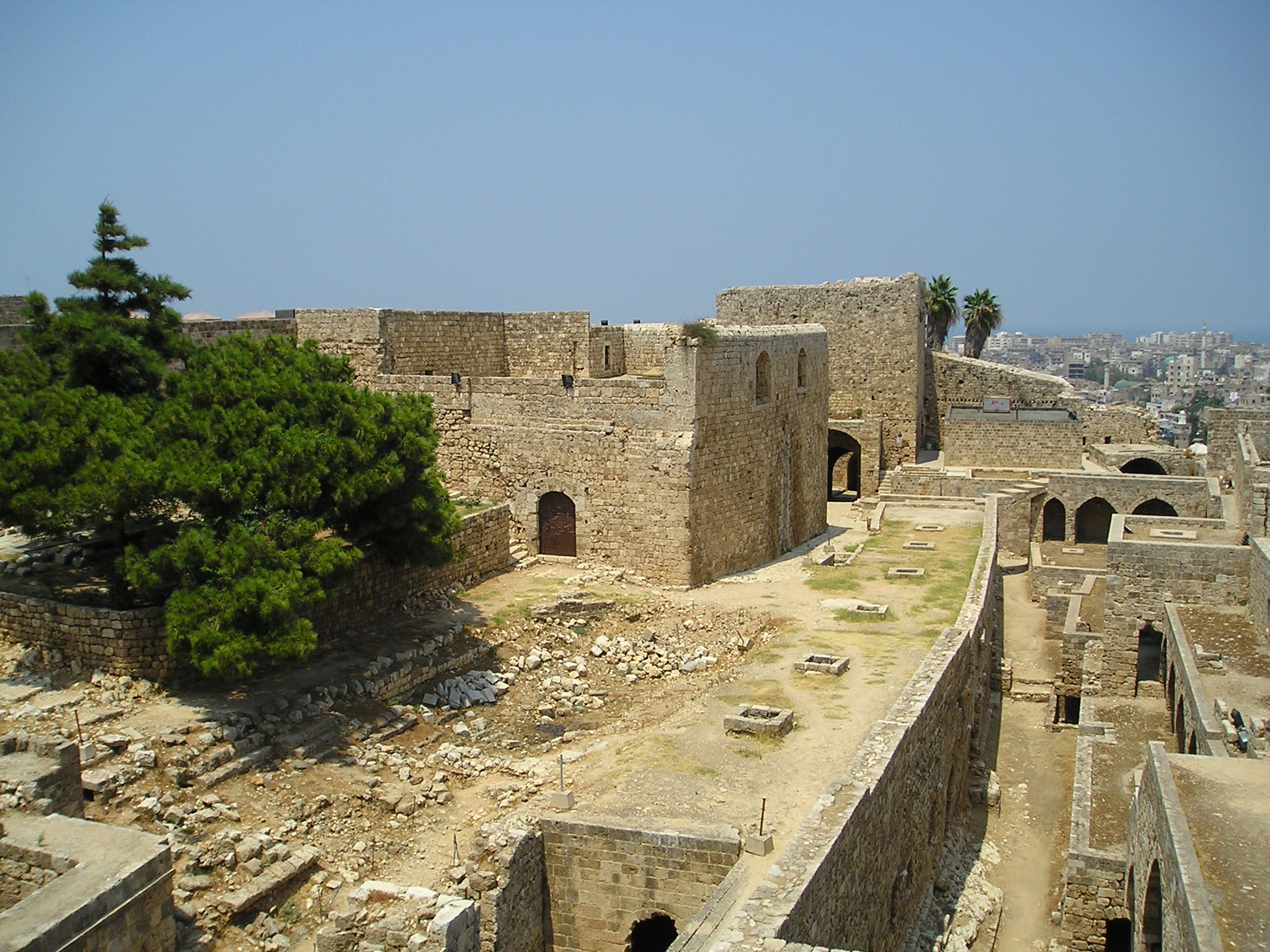
Citadel of Tripoli
Somewhere between the second and seventh year of their siege, the Crusaders decided they needed a castle. Between 1102 and 1109, while Raymond de Saint-Gilles and his knights struggled to take the coastal city of Tripoli from its Muslim defenders, they raised a fortress on the hilltop overlooking the port. Raymond called it the Castle of Mount Pilgrim. The locals called it the Castle of Saint-Gilles. Both names stuck, because in this corner of Lebanon, nothing has ever had just one story.
The Pilgrim's Fortress
Raymond de Saint-Gilles, Count of Toulouse, never saw his castle completed. He died during the siege in 1105, leaving others to finish what he had started. The fortress that grew atop Tripoli's hill served as the anchor of the Crusader County of Tripoli for nearly two centuries, a Latin outpost wedged between the Mediterranean and the mountains of Lebanon. From its walls, Frankish knights could watch ships approaching the harbor and caravans moving through the coastal plain below. The hilltop position was commanding, but it could not hold forever. When the Mamluk sultan Qalawun conquered Tripoli in 1289, his forces set the Mont Pelerin quarter ablaze. The castle of Saint-Gilles, damaged and abandoned, stood empty on its hilltop for eighteen years, its Crusader purpose extinguished.
A Sultan's Decree in Stone
The Mamluks rebuilt the citadel because they needed it. With the sultan's troops temporarily garrisoned at Krak des Chevaliers, too far away to respond quickly to coastal threats, Tripoli required its own stronghold. The fortress was restored and expanded. In 1345, an unusual document was inscribed above the second entranceway: a military decree from Sultan al-Kamil Sha'ban, a ruler whose lavish lifestyle had emptied his treasury. Sha'ban had imposed a heavy registration tax on feudal land grants, stirring discontent among his soldiers. To buy their loyalty, he abandoned his claim to the accumulated extra pay of soldiers who died before their contracts expired. It was, in effect, a bribe carved in stone. The decree survives at the citadel of Tripoli, the best-preserved copy of any from the Mamluk era, a reminder that even medieval politics required concessions.
Ottoman Reinvention
When the Ottoman sultan Selim I swept through Syria and Egypt in 1516, the citadel changed hands once more. His son Suleiman the Magnificent toured the conquered territories shortly after his accession and ordered the fortress rebuilt. In the years that followed, successive Ottoman governors adapted the citadel to their own military needs. The medieval crenelated battlements, designed for archers and boiling oil, were torn down to make room for cannon ports. Each renovation erased a little more of the Crusader original. Today, very little of Raymond de Saint-Gilles's stonework survives. What remains of the Frankish presence is scattered and understated: the graves of nameless knights, found here and there across the hilltop, the only physical evidence of the men who built a castle they called Pilgrim's Mountain.
Coins and Memory
The citadel now houses the North Lebanon and Akkar Museum, a small collection that traces the region's numismatic history from the Hellenic period through the Ayyubid era. The coins on display are modest in scale but vast in implication, each one a snapshot of a different regime that controlled this hilltop. Below the fortress, Tripoli's old city spreads along the banks of the Kadisha River, its Mamluk-era mosques, madrasas, and hammams forming one of the densest concentrations of medieval Islamic architecture in the eastern Mediterranean. The citadel presides over all of it from the same vantage point Raymond de Saint-Gilles chose nine centuries ago, a place where every stone carries the residue of someone else's ambition.
From the Air
Located at 34.433°N, 35.845°E atop a prominent hill in Tripoli, Lebanon's second-largest city. The citadel sits above the old medina on the Kadisha River's left bank. Tripoli Air Base is 3 km to the north. Approaching from the west over the Mediterranean, the hilltop fortress is visible against the backdrop of the Lebanese mountain range. Best viewed at 2,000-4,000 ft AGL.