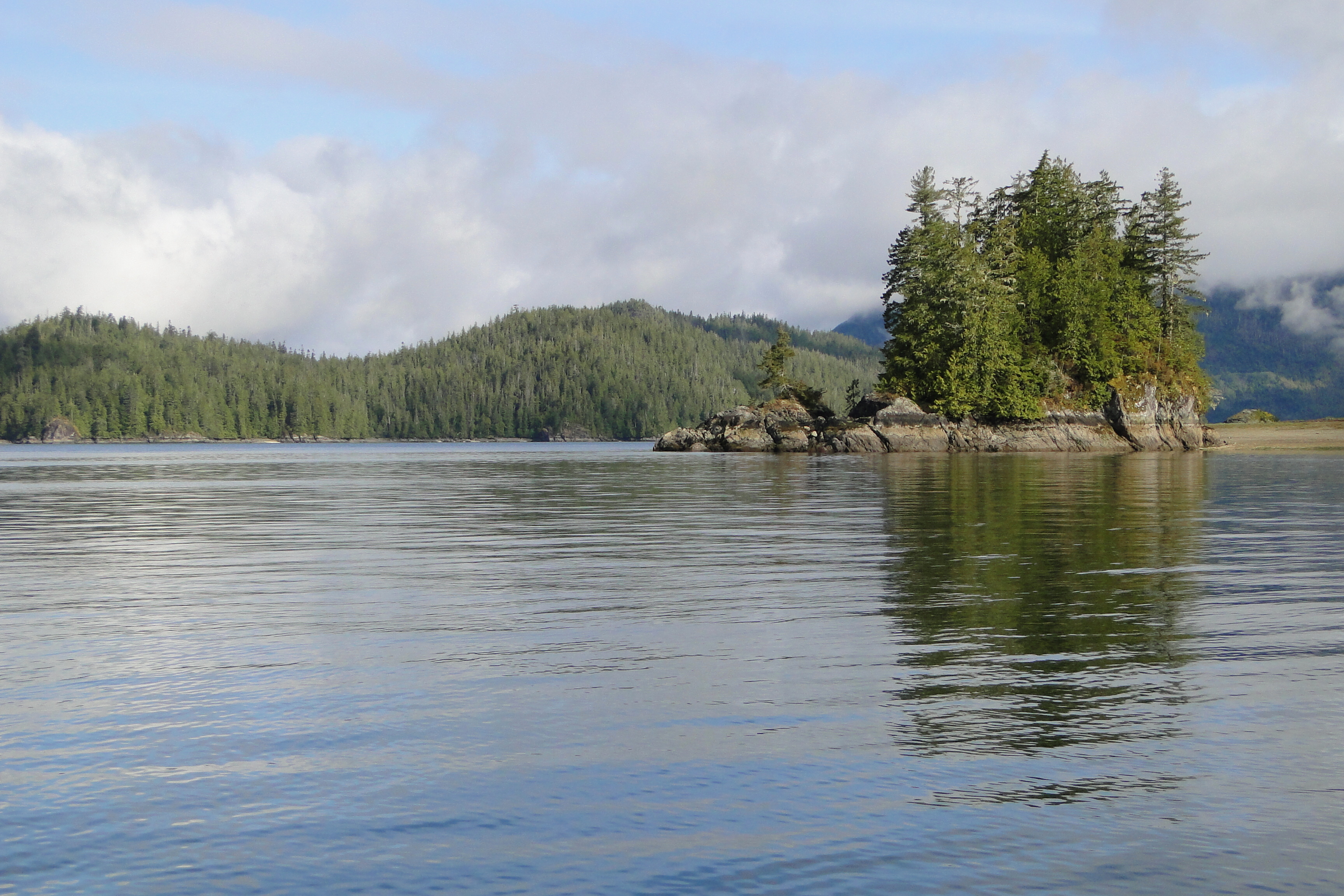
Clayoquot Sound
In the summer of 1993, more than 800 people were arrested on the logging roads leading into Clayoquot Sound. It was the largest act of civil disobedience in Canadian history at the time, and it saved one of the last great temperate rainforests on Earth. Three decades later, the 350,000-hectare region on Vancouver Island's west coast holds UNESCO Biosphere Reserve status, and the old-growth valleys that MacMillan Bloedel's chainsaws never reached still stand -- vast, moss-draped, and deeply quiet.
Nine Thousand Years of Shoreline
First Nations have inhabited the waters and forests of Clayoquot Sound for thousands of years. The oldest dated archaeological site in Nuu-chah-nulth territory, at Yuquot on Nootka Island, reaches back 4,200 years, though rising post-glacial sea levels have likely submerged far earlier evidence. Most scholars place the beginnings of human habitation beyond 9,000 years before present. Three major Nuu-chah-nulth nations share the sound today: the Hesquiaht in the north, the Ahousaht in the middle, and the Tla-o-qui-aht in the south. The name Clayoquot itself derives from the Nuu-chah-nulth people who lived at Clayoqua, and in their language means 'different' or 'changing.' In the late 18th century, Spanish explorers Jose Maria Narvaez and Juan Carrasco mapped the sound's complex inner waterways in 1791, and their commander, Francisco de Eliza, befriended Wickaninnish, the powerful chief of the Tla-o-qui-aht.
The War in the Woods
The region's wealth of timber attracted logging companies throughout the 20th century, but tension reached a breaking point in the late 1980s when the British Columbia government approved MacMillan Bloedel Corporation's permit to log Meares Island. The Ahousaht and Tla-o-qui-aht First Nations went to court, and in 1985, for the first time in British Columbia history, a court froze resource development on Crown land due to an Aboriginal title claim. Protests and blockades of logging roads continued from 1980 through 1994, but the summer of 1993 was the crescendo. Arrestees included members of local First Nations bands, New Democratic Party MP Svend Robinson, and representatives from Greenpeace and Friends of Clayoquot Sound. International media coverage turned the 'War in the Woods' into a global cause. Greenpeace launched a boycott of BC forest products. By July 1995, the provincial government had accepted all 127 recommendations from a scientific panel, and clear-cuts in the area were capped at a maximum of four hectares.
Rainforest and Reef
Clayoquot Sound is a labyrinth of inlets and islands. Major waterways include Sydney, Shelter, Herbert, Bedwell, Lemmens, and Tofino inlets. Flores Island, Vargas Island, and Meares Island anchor the geography. The surrounding land holds the largest area of intact, unlogged temperate rainforest remaining on Vancouver Island, a designation that helped earn the region its UNESCO Biosphere Reserve status and a $12 million fund for research, education, and training. The sound also encompasses portions of Pacific Rim National Park Reserve and Strathcona Provincial Park. Beneath the surface, the ecological complexity continues: roughly twenty salmon farms operate in the sound's waters, though a 2019 mass die-off of farmed fish -- possibly linked to an algal bloom -- and the discovery of a highly contagious virus variant from Norwegian salmon farms have fueled fierce debate about whether industrial aquaculture belongs in these waters.
From Chainsaws to Canoes
With logging drastically curtailed, the communities surrounding Clayoquot Sound have reinvented their economies. Tofino, Ucluelet, and Ahousaht now emphasize ecotourism, surfing, whale watching, and selective logging managed under co-governance agreements between First Nations and the provincial government. The 1994 Interim Measures Act formalized co-management of land and resources, and as of 2007, both logging tenures within Clayoquot Sound are controlled by Indigenous-owned companies: Iisaak Forest Resources and MaMook Natural Resources. The transformation is visible from any vantage point. Where clearcuts once scarred the hillsides, unbroken canopy now stretches from ridgeline to waterline. The war was fought, and the forest held its ground.
From the Air
Located at 49.16N, 125.93W on the west coast of Vancouver Island, British Columbia. Clayoquot Sound is a large body of water with numerous inlets, islands, and old-growth forest visible from altitude. Major islands include Flores, Vargas, and Meares. Nearest airport is Tofino/Long Beach Airport (CYAZ). The Pacific Rim National Park Reserve coastline is visible to the south. The sound's complex geography of inlets and forested islands is dramatically visible from any altitude.