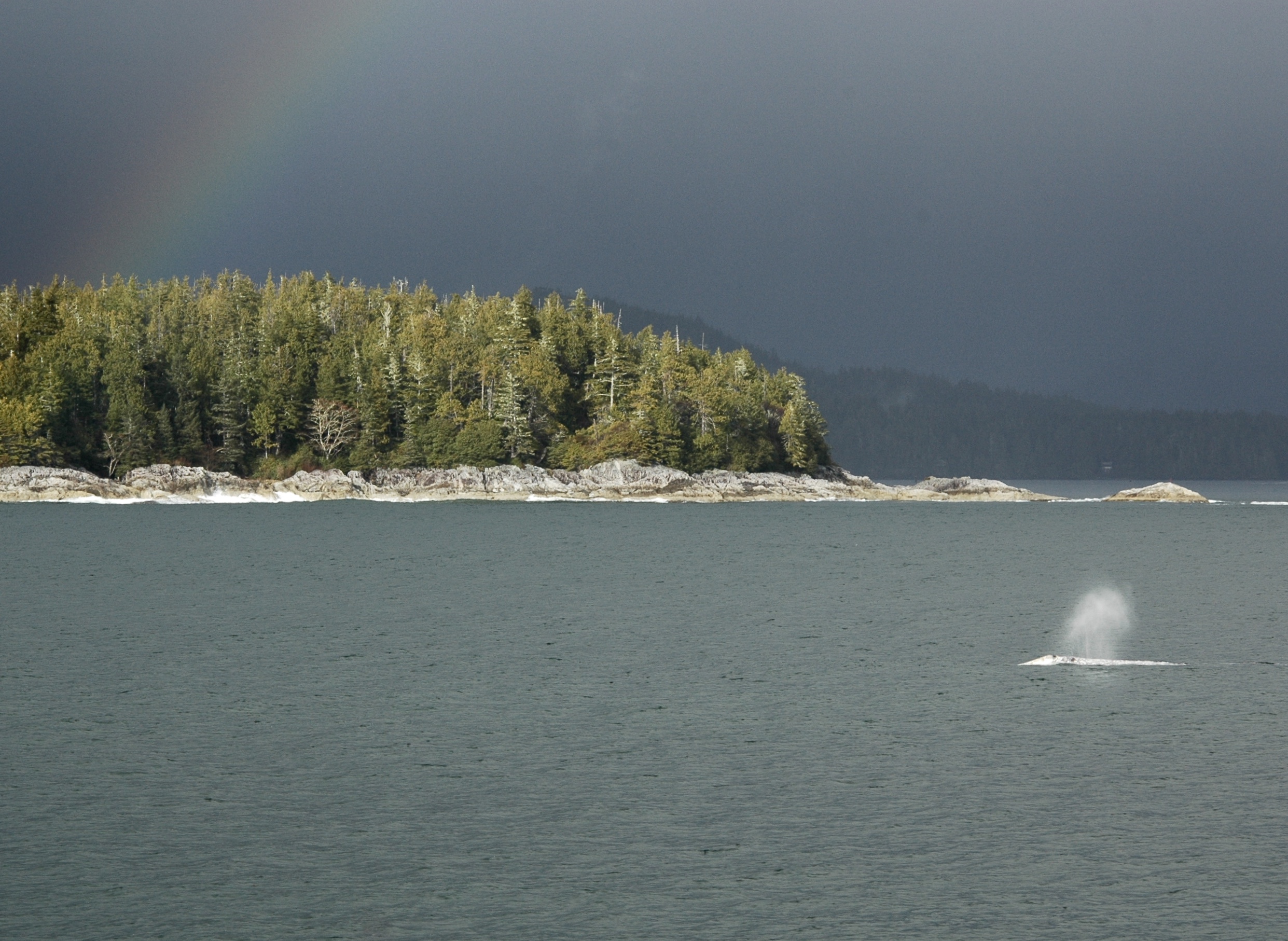
Clayoquot Sound Biosphere Reserve
Nine of the large forested valleys in Clayoquot Sound have never been logged. Not once, not partially, not selectively. In a region where industrial forestry once defined the economy, these valleys stand as they have for thousands of years -- old-growth western red cedar, Sitka spruce, and Douglas fir rising from moss-covered floors in a temperate rainforest that receives some of the heaviest rainfall on Vancouver Island. UNESCO designated Clayoquot Sound a Biosphere Reserve in recognition of what survives here: an interconnected web of marine, coastal, and alpine ecosystems that harbors roughly 300 vertebrate species, including the rare Vancouver Island wolf, and serves as a refuge for species being displaced by development elsewhere along the Pacific coast.
Cathedral Forest
The primary habitat is Coastal Western Hemlock forest, covering 85 percent of the terrestrial component and extending from sea level to about 900 meters in altitude. Western hemlock, western red cedar, amabilis fir, Sitka spruce, Douglas fir, and red alder dominate -- trees that in old-growth conditions can reach enormous size, their canopies creating a multilayered structure that supports everything from black bears and cougars to the American mink and the gray wolf. Above 900 meters, Mountain Hemlock takes over, a sparser and colder zone where fewer species thrive. The transition between these two forest types is visible from the air as a change in canopy texture: the dense, dark green of the lowland rainforest gives way to the lighter, more open growth of the subalpine.
Where Whales Feed in Eelgrass
The marine component of the biosphere reserve holds the largest cover of eelgrass on Vancouver Island's west coast -- a detail that matters far beyond botany. Eelgrass beds are nursery habitat for juvenile fish, stabilize sediments, sequester carbon, and support the food chains that feed the reserve's cetacean populations. Humpback whales, gray whales, and orcas are common in these waters, along with Steller's and California sea lions. The mud flats, beaches, and estuaries where fresh water meets salt create transition zones of extraordinary biological productivity. Commercial aquaculture of native salmon, Atlantic salmon, oysters, and scallops has become a significant economic activity, threading modern industry through an ecosystem that demands careful management.
From Chainsaws to Conservation Economy
The biosphere reserve's permanent population of about 5,000 includes at least one-third Nuu-chah-nulth First Nations peoples, whose traditional territories encompass the entire reserve. Since 2000, the local economy has undergone a fundamental shift -- from industrial forestry and fisheries toward what planners call a conservation economy, informed by Nuu-chah-nulth cultural principles that emphasize sustainable relationships with territory and resources. The transformation was not voluntary for everyone; the Clayoquot Sound logging protests of 1993, when 856 people were arrested blocking logging roads, forced a reckoning that eventually changed the region's economic trajectory. Tourism and related services now drive much of the economy, with about one million seasonal visitors arriving annually, drawn by the same wildness that the biosphere designation seeks to protect.
Twenty Parks in One Sound
The reserve contains an extraordinary density of protected areas: twenty named parks and ecological reserves, from Clayoquot Plateau Provincial Park in the alpine to Maquinna Marine Provincial Park on the coast, from the Megin River Ecological Reserve to the Wah-nuh-jus-Hilthoois Tribal Park on Meares Island. Pacific Rim National Park Reserve and Strathcona Provincial Park overlap the boundaries. This patchwork of protection is the institutional expression of a simple geographic truth: Clayoquot Sound contains ecosystems that, once fragmented, cannot reassemble themselves. The nine unlogged valleys, the eelgrass meadows, the wolf packs, the old-growth canopy -- they persist because enough people decided they were worth more standing than cut. From the air, the reserve reads as an unbroken green sweep of forest and water, one of the last places on the Pacific coast where the temperate rainforest runs uninterrupted from alpine peak to ocean shore.
From the Air
Clayoquot Sound Biosphere Reserve is centered at approximately 49.30N, 125.93W on the west coast of Vancouver Island. The reserve encompasses a vast area of coastline, islands, and forested valleys visible as dark green old-growth forest from the air. Tofino and Ucluelet are the main towns, accessible via Tofino/Long Beach Airport (CYAZ). Flores Island, Vargas Island, and Meares Island are prominent features. From 5,000-8,000 feet, the contrast between logged and unlogged valleys is strikingly visible. Expect frequent cloud cover, rain, and marine fog.