Clonfert Cathedral
Run your hand along the mermaid carved into the chancel arch and you will feel how smooth the stone has become. Centuries of human palms have polished her, this strange creature clutching a mirror in a 15th-century Irish cathedral. She is just one detail in a building that has been accumulating layers of faith, art, and violence since Saint Brendan the Navigator founded a monastery here in 563 AD. Clonfert Cathedral stands in a hamlet so small it barely registers on a map, yet its western doorway is widely regarded as the finest example of Hiberno-Romanesque carving in Ireland.
Brendan's Foundation
The saint who may have crossed the Atlantic a thousand years before Columbus chose this spot in County Galway to found a monastery. Brendan -- Breanainn in Irish -- established his community at Clonfert in 563 and was buried here after his death around 577. The Chronicon Scotorum records that the monastery was "founded at the order of an angel" in 561. For centuries the site was a magnet for power and plunder alike. Viking raiders burned it in 844 and again in 845. In 838, a great assembly of the men of Ireland gathered at Clonfert, where a king named Feidlimid took the abbot's chair and declared himself full king of Ireland. The monastery was plundered, vacated, refounded, and burned again more times than any single chronicle can easily track.
A Doorway Like No Other
What survives from all that tumult is the cathedral's extraordinary western doorway, dating to around 1180. Six receding orders of carved arches frame the entrance, each decorated with a different vocabulary of ornament: animal heads with bared teeth, tangled foliage, and rows of human faces staring outward with expressions that range from serene to grotesque. Above the doorway, a pointed hood encloses alternating triangles and bizarre human heads. Below it, an arcade of yet more carved faces watches anyone who approaches. The effect is overwhelming and intentional -- a display of Hiberno-Romanesque virtuosity meant to announce that this was a place of consequence. No two faces are alike. Some scholars see Norse influence in the intertwining beasts; others trace the motifs to continental Romanesque traditions filtered through an unmistakably Irish sensibility.
Medieval Layers
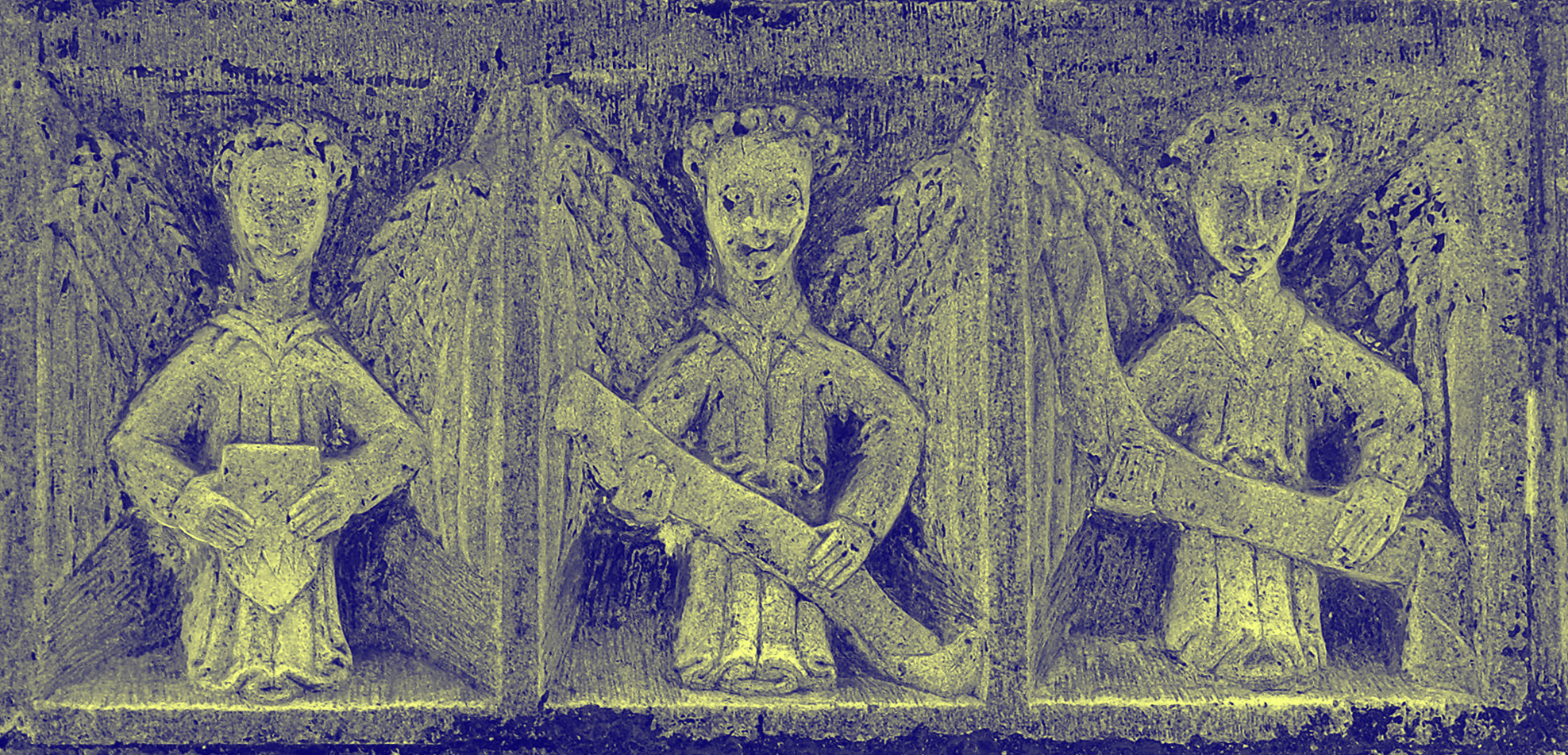
Step inside and the centuries pile up visibly. The earliest surviving stonework dates to 1180, but the chancel arch was inserted in the 15th century, decorated with angels, a rosette, and the famous mermaid with her mirror -- a symbol scholars have debated for generations. Was she a warning against vanity? A fertility symbol? A nod to Brendan's seafaring legends? The tower arches at the west end carry 15th-century carved heads, and the innermost order of the Romanesque doorway was also added at this time, meaning medieval craftsmen respectfully inserted their own work inside a structure they recognized as exceptional. The church once had a Romanesque south transept, now in ruins, and a Gothic north transept, since removed entirely. A 14th-century wooden statue of the Madonna and Child survives in the Roman Catholic church a mile to the south.
Survival Against the Odds
By the 21st century, the soft sandstone of the doorway was weathering badly. Prior conservation efforts had not fully addressed the building's problems, and biological growth was compounding the deterioration. The congregation had dwindled, and resources were scarce. In 2000, the World Monuments Fund placed Clonfert Cathedral on its Watch list, and American Express provided financial assistance to help stabilize the structure. Today the cathedral is one of five in the Church of Ireland Diocese of Tuam, Limerick and Killaloe. It remains an active place of worship, its dean holding the combined titles of four historic deaneries. The faces on the doorway continue to stare out across the Galway countryside as they have for over eight hundred years, worn but unbroken, each one a reminder that someone once spent weeks chiseling a single expression into stone for a building they believed would last forever.
From the Air
Clonfert Cathedral is located at 53.241N, 8.059W in County Galway, in a very small rural hamlet. From the air, the cathedral is a modest stone building surrounded by fields and scattered trees -- easy to miss unless you know what you are looking for. The nearest significant town is Ballinasloe, about 20 km northeast. Nearest airports: Galway Airport (EICM) approximately 65 km west; Shannon Airport (EINN) about 80 km south. Recommended viewing altitude: 1,500-2,500 ft for best visibility of the church and its graveyard setting.