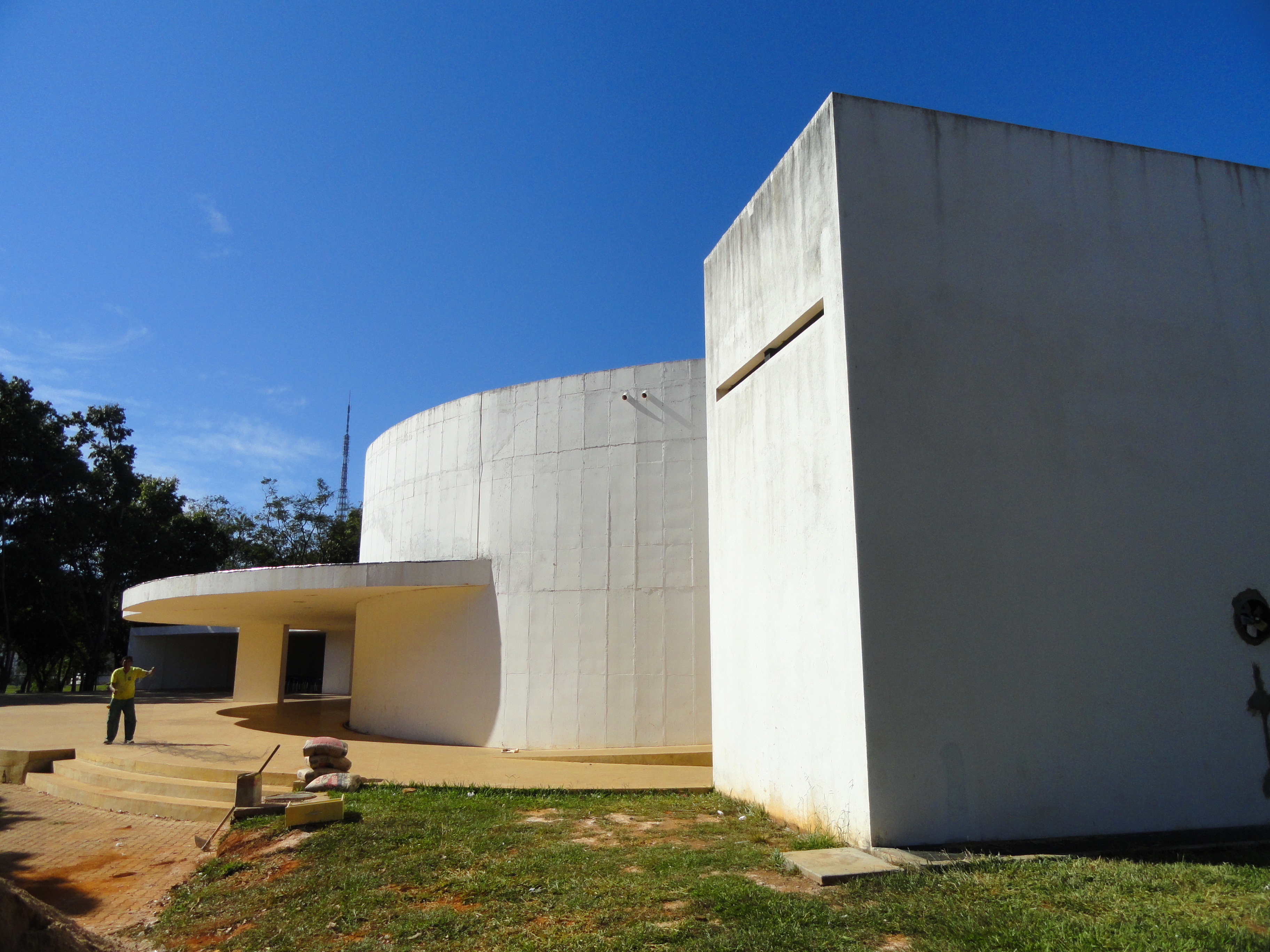
Clube do Choro de Brasília
On November 28, 2023, Paul McCartney sent an announcement out at 9 a.m. local time in Brasília. That same evening, he would play a surprise concert at a venue most tourists to Brazil have never heard of: the Clube do Choro, tucked behind the city's planetarium. Tickets were scarce. Thirty went to students of the Raphael Rabello School of Choro, ten more to local music professionals, and the rest to whoever managed to reach the ticket office in the hours after the announcement. By the time the former Beatle took the stage in front of roughly 500 people, musicians including Samuel Rosa from Skank and Joao Barone from Paralamas do Sucesso were in the audience. The club had hosted 2,500 shows in its history. This was the one that traveled around the world.
A Cloakroom Becomes a Club
Choro is Brazil's first urban instrumental music - born in late nineteenth-century Rio de Janeiro from a Brazilian fusion of European polkas and schottisches with African rhythms, played on flute, guitar, seven-string guitar, cavaquinho, mandolin, and pandeiro. By the mid-twentieth century, the style was fading from popular radio, kept alive mostly by older musicians and dedicated fans who gathered in rodas de choro - circles where players traded tunes in someone's living room. In 1977, a group of such enthusiasts in Brasília found a sympathetic venue in an unlikely place: the old cloakroom of the Ulysses Guimarães Convention Center, the space where visitors to conventions would check their coats. On September 9, 1977, the Clube do Choro de Brasília was officially founded in that converted coat-check room, with a guitarist elected as its first president.
Jacob do Bandolim's Cure
The club would not exist without a famous illness. In 1967, the legendary Rio-based mandolinist Jacob do Bandolim - one of the most important choro composers of the twentieth century - fell seriously ill for four months. Conventional Brazilian medicine offered no recovery. Two choroes, one of them a medical doctor who had trained in Germany in neural therapy, treated Jacob over those months, and he recovered. Grateful and intrigued, he relocated to Brasília for six months to continue treatment. During those six months, he held soirees in the new capital with local musicians, many of whom were civil servants who had moved to Brasília to staff the just-opened federal bureaucracy. Those soirees seeded the community that would found the club a decade later. The two musicians who had treated Jacob - mandolinist Arnoldo Veloso and cavaquinho player Assis Carvalho - were there at the founding meeting.
Two Decades of Near Collapse
The 1980s were hard on the club. The converted cloakroom had no insulation, limited infrastructure, and no security. Equipment was stolen. Audiences dwindled. The space became, for a period, a shelter for homeless people in central Brasília, and the club was threatened with eviction - in danger of losing the historic room that had hosted its first shows. The renovation finally came in 1997, restoring the venue and drawing audiences back. Partnerships formed with the Raphael Rabello School of Choro, founded in 1998 as the first school in Brazil dedicated exclusively to the genre. Both the club and the school would eventually be listed as Intangible Heritage of Brasília - the club in 2008 by Decree No. 28,995, the school later. Choro, the musicologists argued, was not just music; it was a cultural form worth protecting as carefully as an Oscar Niemeyer building.
Niemeyer's Curving Hall
In 2007, the club commissioned a permanent building - and went straight to the architect who had designed the capital itself. Oscar Niemeyer, then nearly 100 years old, accepted the project. Construction took about four years. The new Espaço Cultural do Choro was inaugurated on November 10, 2011, on the site of the original cloakroom. The building is vintage Niemeyer: a 2,000-square-meter semicircle divided into three sections - classrooms for the choro school, a concert hall and the Cafe-Concerto with 420 seats, and an open courtyard. The curves are unmistakable. Inside the concert hall, the acoustics are engineered for small-ensemble music: a flute and seven-string guitar sound fine-grained and immediate, not fighting an arena's reverberance. The semicircular shape lets the school and the venue share a courtyard - young students practicing in classrooms while audiences gather for the evening's roda.
Why McCartney Chose This Room
The McCartney concert made international news because it was unusual for a stadium-touring Beatle to choose a 420-seat room. The reasoning, according to the Brazilian press, traced back to McCartney's long appreciation of cultural institutions that support traditional music at risk of disappearing. The reserved tickets for choro students and local musicians signaled his explicit intent: support the school, support the form, perform in a venue where Brazilians themselves celebrate the music they invented. The show had the atmosphere of a music-lesson circle, not a stadium concert. What McCartney found inside the Niemeyer semicircle was what the club's founders had been building since 1977 - a room where an acoustic instrument can be heard clearly, where musicians and audience share the same air, where Jacob do Bandolim's mandolin phrases and a Wings hit could both make sense on the same stage.
From the Air
Located at 15.79 degrees south, 47.90 degrees west, on Brasília's Monumental Axis near the Brasília Planetarium and the Ulysses Guimarães Convention Center. The club sits in the cultural zone at the center of the capital's plan. From the air, look for the Planetarium's distinctive dome and the curving Niemeyer semicircle nearby. Nearest airport: Brasília International (SBBR). The building is small and hard to spot from altitude; the Planetarium is the landmark.