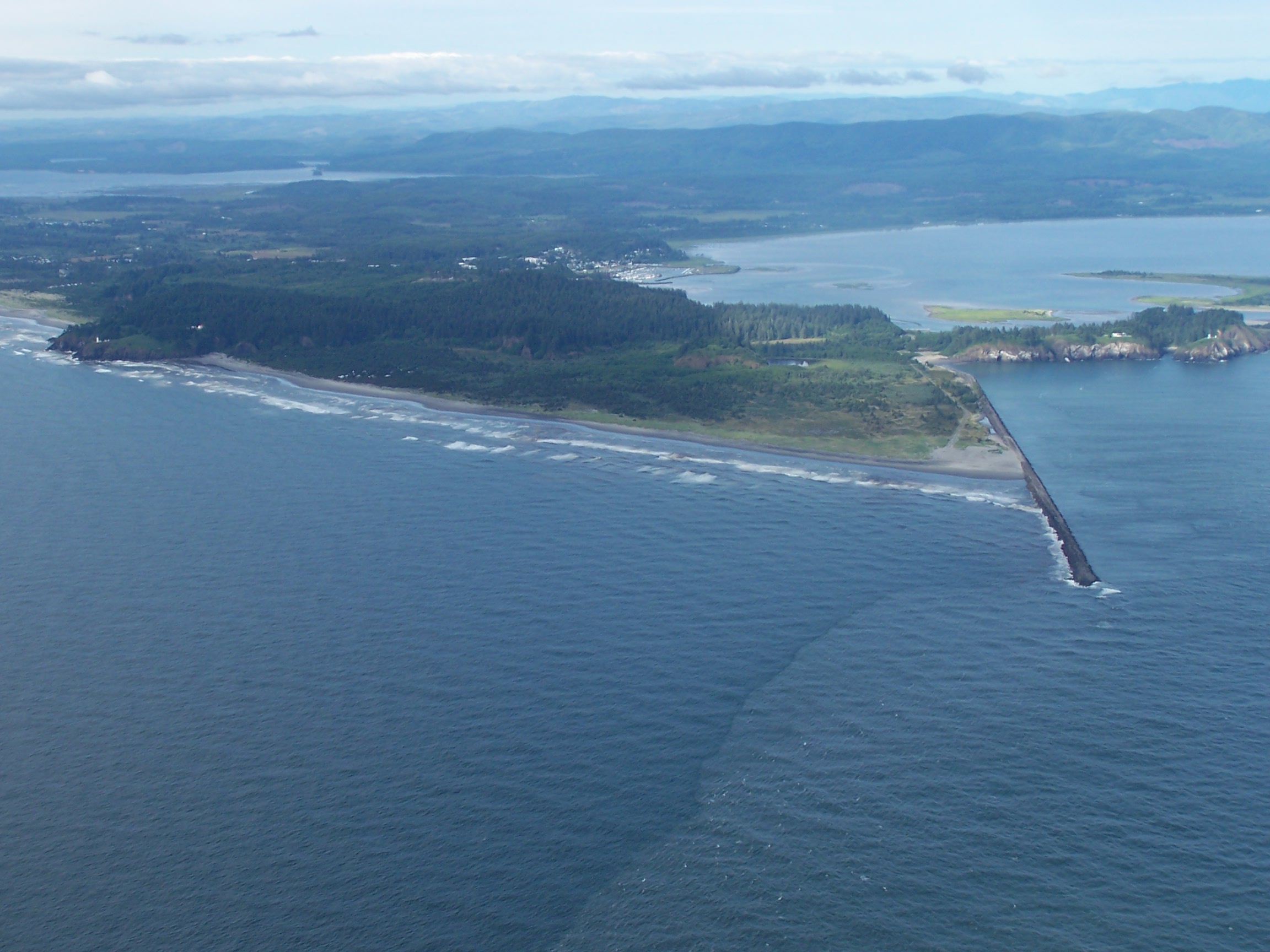
Coast Guard Station Cape Disappointment
Fewer than 100 people in the entire United States Coast Guard hold the qualification of Surfman -- the highest classification for small-boat operators in heavy weather. Many of them earned that distinction here, at Station Cape Disappointment, where the Columbia River empties into the Pacific Ocean with the force of a fire hose aimed at an incoming wall of ocean swells. The station sits on a headland that a Spanish explorer named Bruno de Heceta first charted as "San Roque" in August 1775, after recognizing the mouth of a great river but lacking a crew healthy enough to enter it. His men were dying of scurvy. Two centuries later, 50 Coast Guard crew members are stationed at Cape "D," as they call it, operating nine rescue boats in water that has earned the surrounding coastline a name no mariner forgets: the Graveyard of the Pacific.
Where the River Fights the Sea
The Columbia is the largest river flowing into the Pacific from North America, and unlike most major rivers, it reaches the ocean without the moderating effect of a delta. The full force of its current slams directly into incoming ocean swells, creating a bar crossing that can turn from calm to life-threatening in as little as five minutes. During winter storms, wind-driven swells reach 20 to 30 feet at the bar entrance. Combine a strong outgoing tide with those incoming walls of water and the result is chaos -- standing waves, breaking surf, and currents that can roll a boat end over end. Since 1792, approximately 2,000 vessels have wrecked in and around the Columbia Bar, and over 700 people have drowned in its waters. The station's area of responsibility stretches from Ocean Park on the Washington Coast south to Tillamook Head on the Oregon Coast, covering 50 nautical miles of some of the most unforgiving water on Earth.
Volunteers, Then Professionals
Search and rescue operations at Cape Disappointment began in 1877, when the U.S. Life-Saving Service established a station on the site of Fort Canby. For the first five years, the station was staffed entirely by volunteers -- local men who knew the water and understood what the bar could do. In 1882, the first full-time crew was sworn in. When the Life-Saving Service merged with the Revenue Cutter Service in 1915 to form the Coast Guard, Cape Disappointment became one of its most critical postings. The station moved to its current location in 1920, and the existing facilities were first occupied in February 1967. Beside it stands the Cape Disappointment Light, first lit on October 15, 1856 -- the oldest operating lighthouse in the Pacific Northwest. Less than two miles to the northwest, North Head Light provides a second beacon for the northern approaches to the bar. Between the two lights, the message to mariners has been the same for over 160 years: proceed with extreme caution.
The School That Uses Storms as Classrooms
In 1968, the Coast Guard formalized what experienced surfmen at Cape Disappointment had been doing informally for years -- teaching younger operators how to survive in heavy surf. The National Motor Lifeboat School began as surfmen from the Oregon and Washington coasts comparing notes and training each other. By 1980, it had been designated a national training center and given its official name. The school's curriculum is built around the 47-foot motor lifeboat, a vessel designed to be self-bailing and self-righting after being rolled or even pitchpoled by a breaking wave. But the point of the training is to avoid those situations. Students learn to read the water, time the sets, and find the channels between breaking waves where a boat can pass safely. The fall and winter seasons bring the most extreme conditions, which is precisely when the school holds its advanced courses. Graduating from the heavy weather course is just the beginning: it can take up to six years of active rescue work before a coxswain qualifies to even begin Surfman training.
A Hundred Calls a Year
Station Cape Disappointment's crew responds to between 100 and 200 calls for assistance annually. The heaviest workload falls between early June and mid-September, when recreational boaters flood the Columbia River entrance chasing salmon and bottom fish. Many of these boaters have never crossed a major bar before. They see calm conditions inside the river and head out, unaware that the bar can transform in minutes. The station's fleet includes the 52-foot motor lifeboat Triumph II, two 47-foot motor lifeboats, and two 29-foot Defender-class response boats -- all designed for heavy surf operations, all capable of being rolled by a breaking swell and righting themselves with minimal damage. Beyond search and rescue, the station provides maritime law enforcement and homeland security presence at the Columbia River entrance. But rescue remains the core mission, as it has been since the first volunteers rowed out from Fort Canby in open surfboats 148 years ago, into water that has never stopped demanding respect.
From the Air
Coast Guard Station Cape Disappointment is located at 46.281N, 124.046W on the Cape Disappointment headland at the mouth of the Columbia River. From the air, the station is visible on the rocky promontory at the northwest tip of the headland, with the Cape Disappointment Lighthouse perched above on the cliff. The Columbia River Bar -- where river meets ocean -- is immediately to the south, with the north and south jetties clearly visible extending into the Pacific. North Head Light is visible approximately 2 miles to the northwest. Nearest airports: Astoria Regional Airport (KAST) approximately 8nm south across the Columbia River, Willapa Harbor Airport (S80) approximately 30nm north. Best viewed at 1,500-2,500 feet to see the station, lighthouse, and bar in context. Winter conditions often bring low visibility and heavy weather.