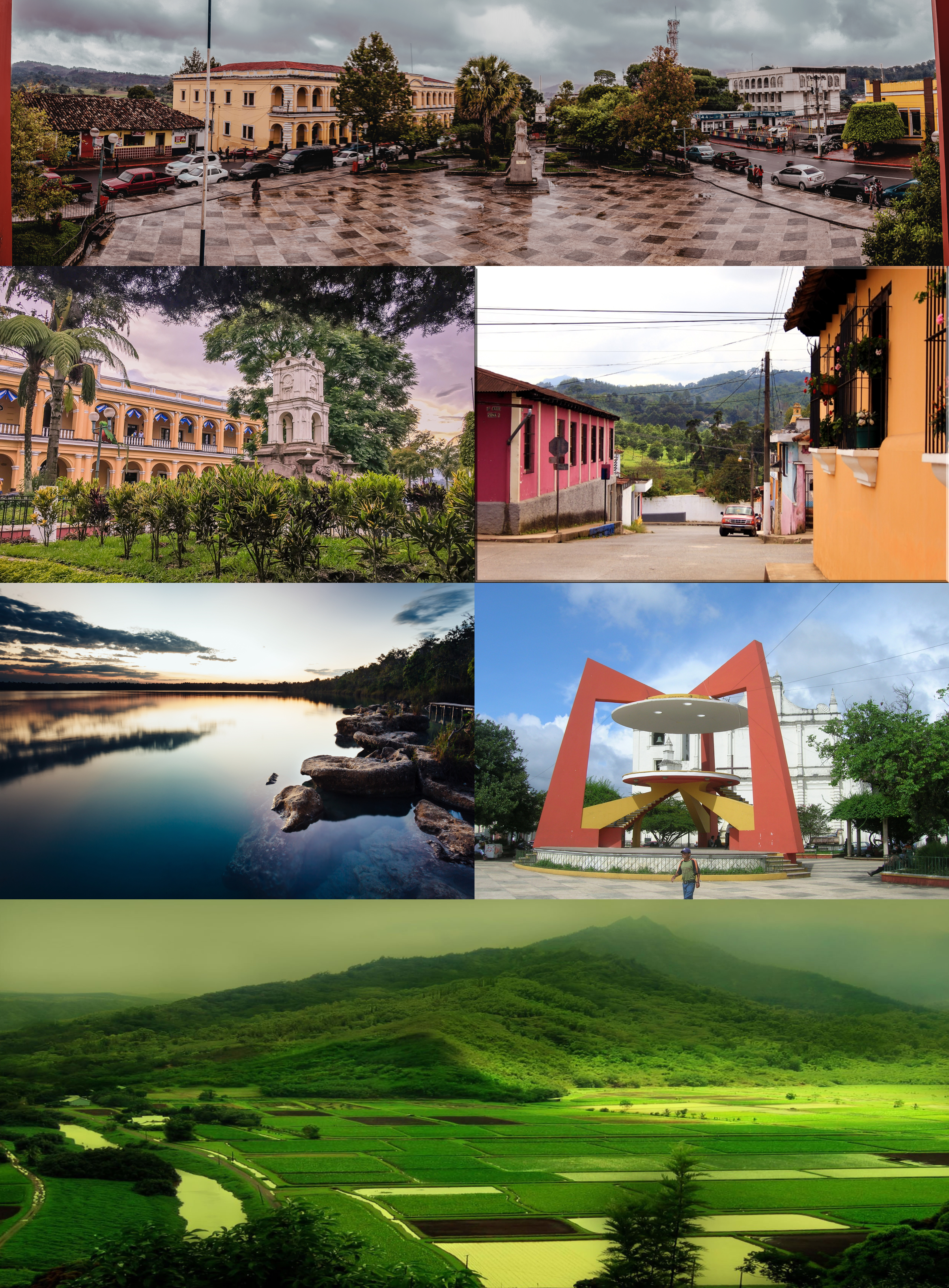
Coban
The Spanish renamed it "Vera Paz" -- true peace -- and for once the name was not entirely ironic. While conquistadors put the rest of Guatemala to the sword in the 1530s, the highland region around what is now Coban was converted through negotiation, Christian hymns set to indigenous melodies, and the sheer stubbornness of Bartolome de las Casas, a Dominican friar who had spent years arguing that the sword was the wrong tool for spreading the Gospel. The city that grew from that experiment sits at 1,320 meters above sea level in the department of Alta Verapaz, 219 kilometers from Guatemala City, surrounded by cloud forest and coffee plantations that still define its economy and its character.
The Friar Who Chose Words Over Swords
By the mid-1530s, every Spanish attempt to conquer the Tezulutlan -- the "War Zone" -- had failed. Pedro de Alvarado tried from Guatemala, Francisco de Montejo from Yucatan, others from Chiapas and New Spain. The indigenous people of the region knew what conquest meant and had retreated into the jungle. Bartolome de las Casas proposed an alternative. In 1537, he secured the Tezulutlan Capitulations from Governor Alonso de Maldonado: a written guarantee that the region's indigenous people, once converted, would not be handed over as forced labor under the encomienda system but would be direct subjects of the Spanish Crown. Las Casas and fellow friars recruited indigenous converts, taught them Christian hymns, and sent them into the highlands as ambassadors. A local cacique named Don Juan converted and helped convince others, including a resistant leader called Coban, whose burned church was rebuilt through diplomacy rather than punishment. By 1547, the region's name had been officially changed from Tezulutlan to Verapaz.
The German Colony in the Cloud Forest
Three centuries after the Dominicans, a different group of Europeans remade Coban. Beginning in the late nineteenth century, German coffee planters arrived under generous land concessions from Guatemala's liberal presidents -- Manuel Lisandro Barillas Bercian, Jose Maria Reyna Barrios, and Manuel Estrada Cabrera. By 1930, roughly 2,000 Germans lived in the city. They founded the Deutsche Verein, a German club, in 1888 and opened a German school in 1935. British archaeologist Alfred Percival Maudslay, who visited around 1890, described Coban as having "a larger proportion of foreigners than any other town in the Republic," nearly all Germans engaged in coffee planting who enjoyed a "delicious climate" in which their "rosy-cheeked children" could be raised in comfort. The community operated with a degree of independence that resembled a colonial outpost within a colonial country -- a German-speaking enclave in the Maya highlands, sustained by Verapaz coffee's high market reputation.
War, Expulsion, and the Shadow of the Swastika
During the Nazi era, rumors spread that the Germans in Verapaz intended to establish a National Socialist "new Germany" in Guatemala. The fears were not entirely baseless: Guatemala's dictator Jorge Ubico admired Mussolini and Franco, and when Nazi Germany held a vote on the annexation of Austria, a German ship anchored in Puerto Barrios for the occasion, with attendees counted as Nazi supporters. After Pearl Harbor, the United States pressured Latin American governments to expel their German populations. Ubico complied -- though some historians suggest his motivation was as much about seizing German-owned land as about wartime loyalty. The German community that had shaped Coban for half a century was dismantled. Their plantations were confiscated, their families deported or scattered, and their era ended abruptly.
The Daughter of the King
Modern Coban belongs to the Q'eqchi' Maya. The Q'eqchi' language fills the market squares where farmers from surrounding hills sell their harvests. Each July, the city hosts La Fiesta Nacional Indigena de Guatemala, a week-long festival of indigenous culture whose centerpiece is the crowning of the Rabin Ahau -- "the Daughter of the King" in Q'eqchi'. The competition honors Guatemala's indigenous women and draws participants from across the country. In May, four thousand runners gather for the international half-marathon of Coban, the region's signature sporting event. The annual religious festival on August 4 is dedicated to the city's patron, Santo Domingo de Guzman -- the founder of the Dominican order that made Coban's peaceful origins possible.
Orchids, Quetzals, and the Monja Blanca
The mountains surrounding Coban are heavy with orchids, including the rare Monja Blanca, a white orchid that serves as the departmental symbol. Nature reserves ring the city: Las Victorias National Park and San Jose la Colonia National Park are close at hand, while Laguna Lachua National Park and the Biotopo Mario Dary Rivera protect deeper reaches of cloud forest. In these forests lives the resplendent quetzal, the bird that gave its name to Guatemala's currency and that the ancient Maya considered divine. Coban has become a center for ecotourism, drawing visitors to its caves, waterfalls, and canopy trails. The El Calvario Church, the Dieseldorff coffee plantation, and the central plaza anchor the city itself, but the real draw is what surrounds it -- a landscape where the cloud forest holds species that exist nowhere else.
From the Air
Located at 15.48N, 90.37W at 1,320 meters elevation in Guatemala's central highlands. The city sits in a valley surrounded by cloud-forested mountains in the department of Alta Verapaz. Nearest major airport is La Aurora International Airport (MGGT) in Guatemala City, approximately 219 km to the south. Coban has a small airstrip. From the air, the city is identifiable by its position amid a patchwork of coffee plantations and dense green forest. The terrain is mountainous with frequent cloud cover.