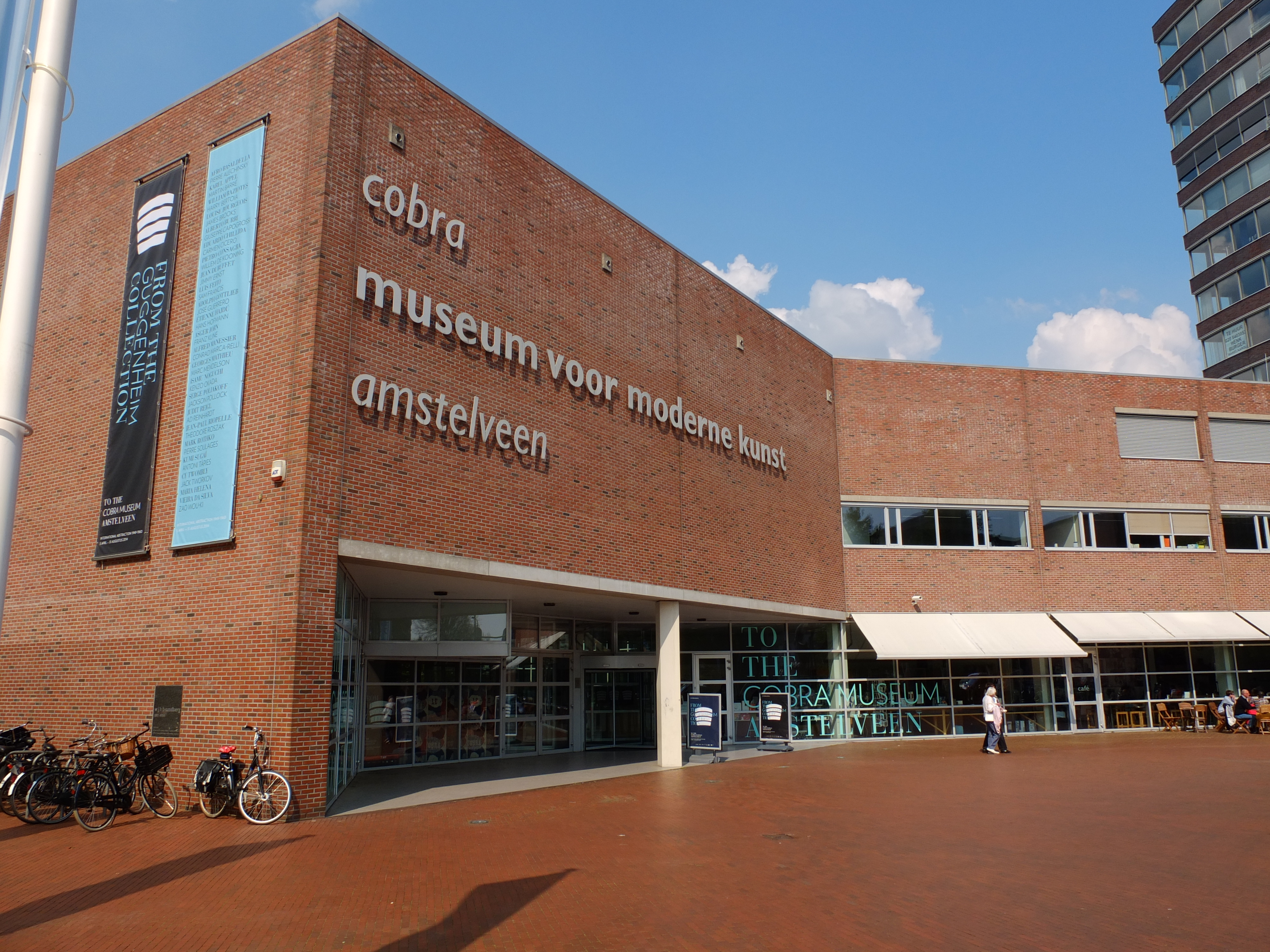
Cobra Museum
The newspapers called it tampering, clattering, slandering. In 1949, when Willem Sandberg mounted the first major Cobra exhibition at Amsterdam's Stedelijk Museum, Dutch critics did not know what to do with the paintings on the walls. The work looked like children had made it - or worse, like adults pretending to be children. Smeared color, scrawled creatures, gestures that refused to add up. Cobra had been founded in a Paris cafe the previous November, taking its name from the cities of its founders: Copenhagen, Brussels, Amsterdam. Cobra. The Second World War had just ended. The movement lasted three years and dissolved in 1951. But what it did to European art lasted, and in Amstelveen, just south of Amsterdam, a museum opened on 8 November 1995 - the 47th anniversary of Cobra's founding - to keep what they did alive.
What Came After the War
The founders of Cobra had spent their twenties under occupation. Karel Appel was Dutch, Asger Jorn was Danish, Constant Nieuwenhuys and Corneille belonged to the Amsterdam contingent, with Belgians and Danes filling out the international roster. They emerged from the war with one shared conviction: the old painterly traditions had failed. The careful European academy that had produced fascism was not going to paint its way out of the rubble. Something simpler and more savage was needed - the joy of total spiritual and artistic freedom, as they put it, to counterbalance the nightmare. They looked to children's art, to outsider art, to folk traditions and the gestures of unpracticed hands. They painted bright, fast, primitive-looking figures. They wrote poetry alongside the painting. The painters and the poets cross-pollinated each other's work, and the manifestoes flew. Cobra disagreed about almost everything. That was the point. The movement's vitality came from its contradictions - never a consensus, never a doctrine, only an insistence that art come back to life.
The Building on Sandbergplein
The Cobra Museum sits on Sandbergplein in Amstelveen, a deliberate choice. Willem Sandberg ran the Stedelijk Museum during Cobra's brief existence, and he was the one who pushed through that controversial 1949 exhibition that scandalized the press. The square that holds the Cobra Museum bears his name. Architect Wim Quist designed the building, 2,500 square meters across two floors, and his brief from founding director Leo Duppen was clear: everything inside should be white and gray. The color must come from the paintings. Large windows on the ground floor pull in northern light. The walking route is logical. There is nothing superfluous - which, for a museum dedicated to artistic excess, is an interesting choice. Walking through Quist's calm white rooms with Appel's screaming faces and Constant's monstrous birds on the walls turns the contrast into a kind of argument. Restraint outside the frame. Total freedom inside it.
Appel's Only Fountain
In 2001, Karel Appel turned eighty. To mark the birthday, he made a sculpture - the only fountain he would ever make, five meters tall, installed in front of the Cobra Museum's entrance. Four water outlets. A fist that means strength. A bird that means freedom. Various elements assembled from objets trouves, found objects given new lives in the work. The model of the fountain stays on permanent display inside the museum, donated by Appel himself. By that point Appel was an old man with a long career behind him, but the fountain pulls the same trick his early paintings did: it looks like a child made it, and underneath that surface is fifty years of deliberate practice. Behind the museum sits an inner garden you cannot enter, a circular Japanese zen garden designed by sculptor Shinkichi Tajiri for the museum's 1995 opening. Standing plates of corten steel - now weathered to that orange-brown rust patina - represent mountains, sea, and clouds. The sun overhead is the fire. The pebbles are raked monthly into flowing concentric patterns. It is a haiku rendered in iron and stone, sitting quietly behind a museum dedicated to shouting.
Beyond Cobra
The Cobra Museum's permanent collection grew from a private trove assembled by J. Karel P. van Stuijvenberg. The familiar names anchor it: Appel, Constant, Lucebert, Corneille. But the curators have made a point of including the less famous - Anton Rooskens, Eugene Brands, Jan Sierhuis, Theo Wolvecamp, and Lotti van der Gaag, the only woman regularly counted among the original group's circle. The museum has also extended its mission into the present, awarding the Cobra Kunstprijs Amstelveen biennially from 2005 to 2017 to a visual artist whose innovative work demonstrates commitment in the spirit of Cobra. The temporary exhibitions sweep across modern art history - Miro and Cobra, Le Corbusier, Frida Kahlo and Diego Rivera, Claude Cahun, the Boijmans Surrealists. The argument the museum makes is that Cobra was not an isolated three-year flash. It was a hinge in twentieth-century European art, and you can still feel its push wherever painters trust the gesture over the plan.
From the Air
Located at 52.304 N, 4.858 E in Amstelveen, the suburb directly south of Amsterdam. Geohash u173w. The museum sits on Sandbergplein near the Amsterdamse Bos (Amsterdam Forest), with the green expanse of the bos and the adjoining waterways visible to the west. Schiphol Airport (EHAM) is just 6 km west - Amstelveen sits almost directly under the Polderbaan and Aalsmeerbaan flight paths. Aircraft on final approach pass low overhead. The museum is recognizable from above by its location at the southern edge of Amstelveen's town center, adjacent to the Stadshart shopping district.