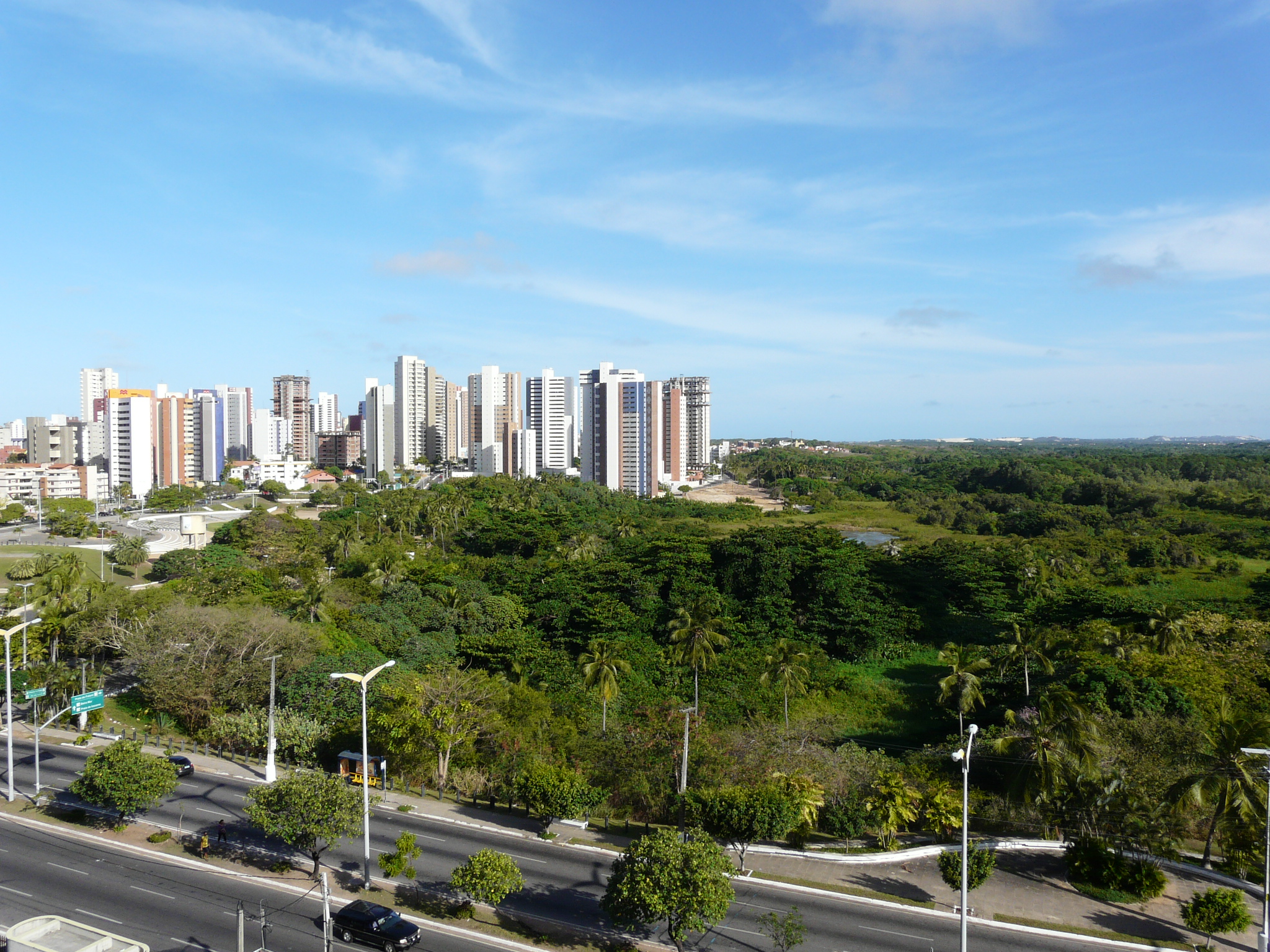
Cocó Park
A city of 2.5 million people should not have a mangrove forest in the middle of it. Fortaleza does. The Cocó Ecological Park runs for 1,155 hectares through the heart of the Ceará capital, a green spine of tidal creeks and dense canopy that follows the Rio Cocó from the southern neighborhoods toward the Atlantic. That it exists at all is an act of four-decade civic defiance, fought house by house and decree by decree against the same economic pressure that flattens every other urban wetland.
A Mangrove in the City
Most visitors to Fortaleza come for the beaches. Praia do Futuro, Iracema, the long curve of Beira Mar. The Cocó is the city's other shoreline, an inland edge where salt water pushes upstream twice a day and the trees have learned to live with their feet in the tide. Red mangroves, their roots arching like bent knees. Black mangroves breathing through vertical pneumatophores that stick up from the mud. Egrets and herons work the shallows. Capuchins move through the higher canopy. Endemic plant species grow here that appear nowhere else in the northeast, and the whole system sits inside a city doing everything a tropical city does: spreading, building, widening roads, throwing up towers along the beach.
The Slow Wins
The paperwork fight started in March 1977, when the park was first declared a public good. Nothing much changed on the ground. It took another twelve years for a state decree on September 5, 1989 to formally create the ecological park of Cocó, and a further expansion in 1993 to push the protected area out to its current 1,155.2 hectares - a size that puts it among the largest urban parks in South America. Every step met opposition. Developers wanted the waterfront. Road planners wanted the routes. The state had to decide, again and again, whether a city this hot, this dense, and this coastal could afford to keep a mangrove instead of paving it. The answer, so far, has been yes.
What the Park Does for the City
Fortaleza sits under a relentless sun. Air temperatures on concrete streets in February can run several degrees above the adjacent park, because the forest transpires and shades. The Cocó works as a giant floodplain too - when the heavy rains come between January and May, the tidal creeks absorb runoff that would otherwise rush down storm drains and into neighborhoods. The park holds an annual flow of tourists who come for kayaking, bird watching, and the simple experience of walking through a jungle that you can reach by city bus. A study cited from the University of Delaware has connected access to urban parks with lower rates of obesity and diabetes. A Chicago study found vegetated spaces correlating with lower crime. In a city where two out of five residents in some neighborhoods live in slums, a free park with shade and water is not a luxury.
The Viaduct Fight
The fight is not over. A government proposal to run a viaduct through part of the reserve has drawn sustained opposition from architects, university professors, environmental NGOs, and neighborhood groups under banners like Salvem as Dunas do Cocó and SOS Cocó. The critics point out what every urbanist knows: once a highway bisects a park, the park is no longer one park. Wildlife corridors break. Noise pollution penetrates. The edges fray. Alternative proposals have come from the same critics - more buses, more bike lanes, fewer private cars in the choked downtown - the kind of integrated transit plan that cities elsewhere have built with mixed success. Whether Fortaleza chooses the viaduct or the alternatives will shape not just the park, but the kind of city Fortaleza becomes in the next thirty years.
From the Air
Located at 3.76°S, 38.49°W, in the southern and eastern portions of Fortaleza, Ceará. The Rio Cocó runs roughly 45 km from its source to the Atlantic, with the protected park covering 1,155 hectares along the lower course. Best identified from FL050-FL100 as a green corridor cutting through otherwise dense urban fabric southwest of downtown Fortaleza. Nearest airport: Pinto Martins International (SBFZ) sits immediately adjacent to the park, with final approaches often overflying the mangroves. Weather: rainy season January-May; tropical humidity year-round.