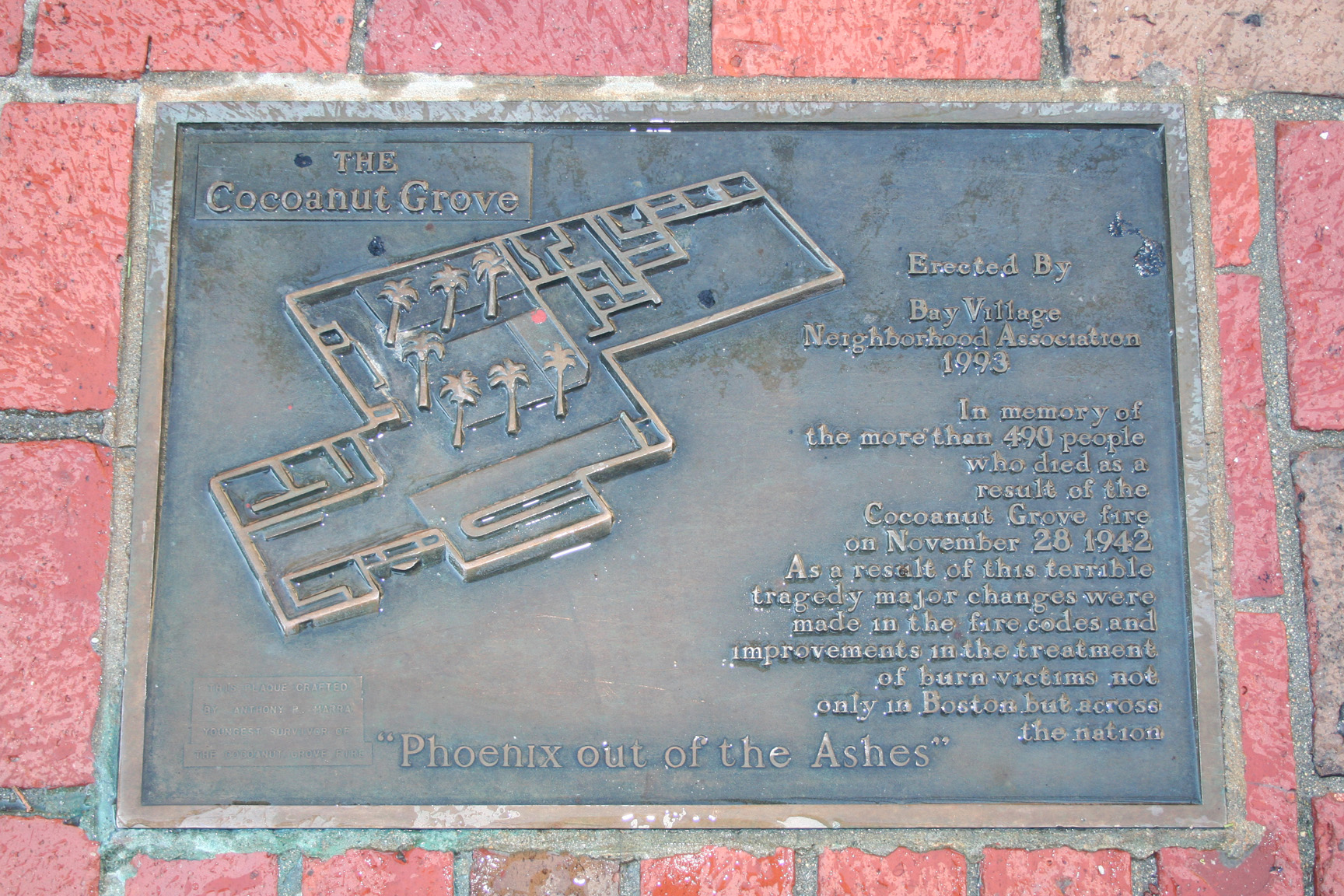
The Cocoanut Grove Fire: 492 Dead in Boston's Deadliest Night
On the evening of November 28, 1942, the Cocoanut Grove nightclub in Boston was packed with nearly 1,000 people - double its legal capacity. College football fans, servicemen on leave, young couples celebrating a Saturday night. At 10:15 PM, a busboy struck a match in the basement Melody Lounge, looking for a light bulb he'd removed to create romantic darkness. A fake palm tree caught fire. Within five minutes, 492 people were dead or dying. The fire burned for less than 15 minutes, but it killed more people than any nightclub fire in American history. The survivors would change the way Americans think about fire safety forever.
The Club
The Cocoanut Grove was Boston's hottest nightclub - a tropical paradise of fake palm trees, satin draperies, and rattan furniture. The main dining room featured a rolling roof that could open to the stars. The Melody Lounge in the basement was decorated like a tropical grotto, complete with cloth palm fronds and leatherette walls.
The club was owned by Barney Welansky, a lawyer with mob connections and friends in City Hall. Building inspectors looked the other way. The club's capacity was 460 people. On the night of November 28, nearly 1,000 were crammed inside. Fire exits were locked or hidden. The main entrance was a revolving door. The club was a death trap waiting to be sprung.
The Spark
In the Melody Lounge, a soldier unscrewed a light bulb to create intimacy with his date. When a bartender noticed, he sent 16-year-old busboy Stanley Tomaszewski down to fix it. Stanley lit a match to see the socket. A fake palm tree caught fire.
Stanley tried to beat out the flames. Patrons tried to help. A bartender threw water. But the fire climbed the tropical decorations like they were kindling - because they were. The cloth palm fronds, the satin drapes, the leatherette walls - all of it was flammable. The fire reached the ceiling and raced up the stairway in seconds.
The Trap
The fire moved faster than panic. Survivors described a rolling ball of flame that swept through the club at head height, killing people before they could stand. The power failed. The emergency lights didn't work. People who had been dancing moments earlier crawled over tables in total darkness, unable to breathe, unable to see.
They found the exits locked. The revolving door at the main entrance jammed immediately as bodies pressed against it from both sides. A side door opened inward and couldn't be pushed open against the crush. Another exit was hidden behind a curtain - most patrons didn't know it existed. Bodies piled up at every blocked exit, six deep in some places.
The Dead
The fire burned for less than 15 minutes. When it was over, 492 people were dead - more than half the people in the building. Many died from smoke inhalation, their lungs seared by superheated gases. Others were trampled in the crush at blocked exits. Some burned. Some suffocated under piles of bodies.
The aftermath was chaos. Hospitals received hundreds of burn victims with no preparation. The dead were laid out in garages and warehouses. Identification took weeks - many victims had been burned beyond recognition. Some bodies were never claimed.
The Revolution
The Cocoanut Grove fire transformed American fire safety. Within months, Boston passed new codes requiring outward-opening doors, illuminated exit signs, automatic sprinklers, and limits on flammable decorations. Other cities followed. The National Fire Protection Association rewrote its standards.
The fire also revolutionized burn treatment. Boston hospitals, overwhelmed by hundreds of burn victims, developed new techniques for treating severe burns - techniques that are still used today. The concept of burn centers emerged from the Cocoanut Grove. Even the psychology of grief was advanced, as psychiatrist Erich Lindemann studied survivors and developed the modern understanding of bereavement. The 492 who died that night saved countless lives in the decades that followed.
From the Air
The Cocoanut Grove site (42.35N, 71.06W) was at 17 Piedmont Street in Boston's Bay Village neighborhood. The building was demolished; a plaque marks the location. Boston Logan International Airport (KBOS) is 5km east across the harbor. The neighborhood is dense urban terrain near the Theatre District. The site is not visible from the air, but Bay Village's distinctive brick rowhouses mark the area.