Codelco
In 1898, miners at Chuquicamata unearthed something unexpected: a mummified man, dated to around 550 A.D., crushed beneath a rockfall in an ancient shaft. They called him "Copper Man," and his presence proved what the landscape had long suggested -- people have been pulling copper from this stretch of the Atacama Desert for at least fifteen hundred years. Today, the operation that inherited those ancient diggings is Codelco, the National Copper Corporation of Chile, and it is the largest copper mining company on Earth.
From Foreign Hands to National Treasure
Codelco's story is inseparable from the story of Chilean sovereignty over its own mineral wealth. For most of the twentieth century, American corporations controlled Chile's richest copper deposits. The Guggenheim family's Chile Exploration Company began industrial mining at Chuquicamata in 1915, using steam shovels purchased from the Panama Canal project. Production rose from 4,345 tonnes that first year to over 135,000 tonnes by 1929. But Chilean resentment over foreign ownership grew alongside the profits flowing north. In 1971, the Chilean government nationalized the copper mines, and in 1976, Codelco was formally established to manage them. The company produced 1.44 million tonnes of copper in 2024, narrowly edging out BHP for the global lead. Its reserves -- 118 million tonnes of copper in its mining plan as of 2007 -- represent more than 70 years of production at current rates.
The Pit That Swallowed a City
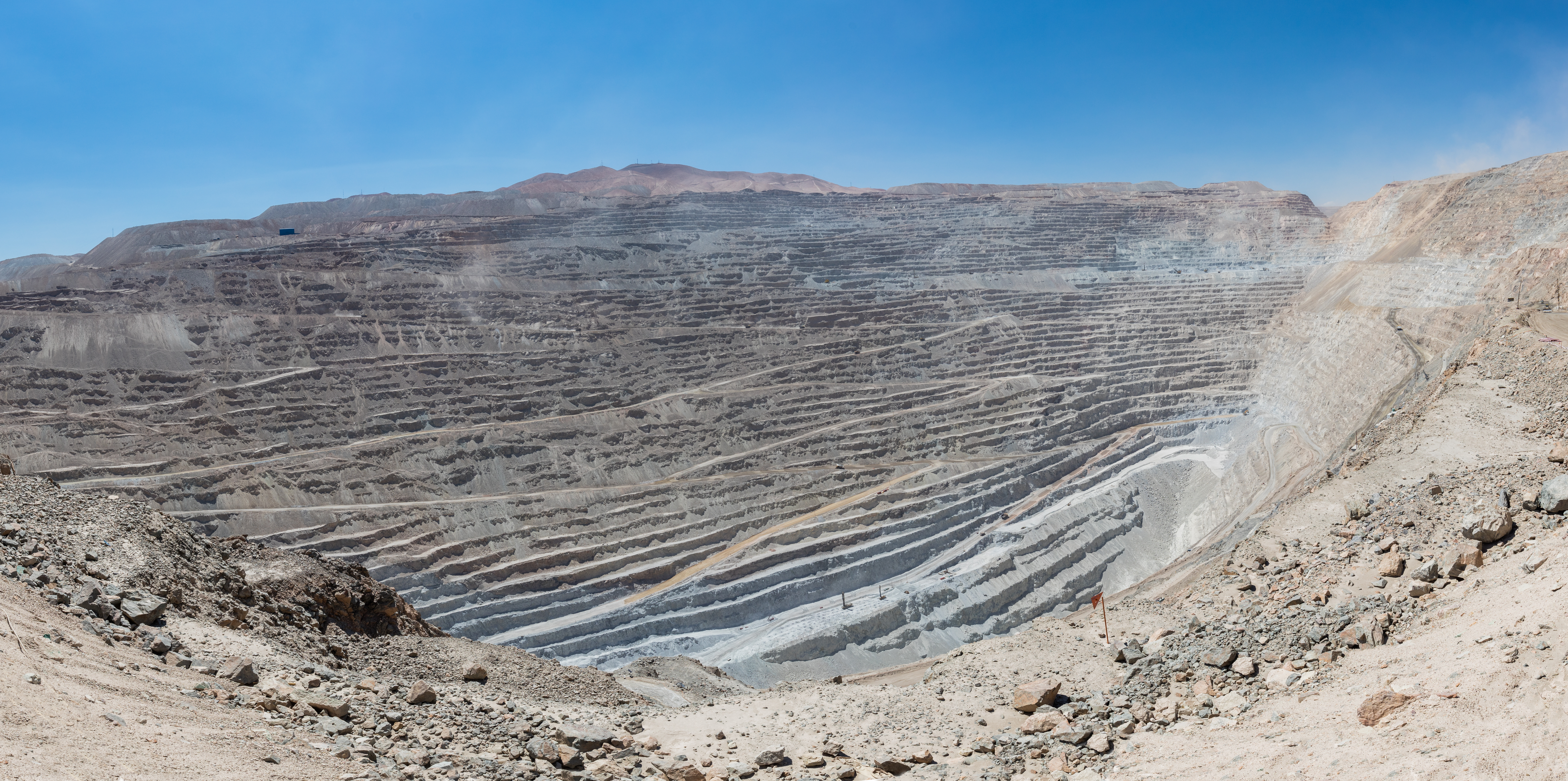
Chuquicamata is the mine that defined Codelco, and its scale defies easy comprehension. For decades it was the world's largest annual copper producer, and it has yielded over 29 million tonnes of copper in total -- far more than any other mine in history. The open pit grew so enormous that the entire company town of Chuquicamata had to be abandoned; its residents were relocated to Calama, sixteen kilometers away, to escape the dust and arsenic that decades of smelting had deposited in their blood. The pit is now transitioning underground, where block caving will extract an estimated 1.15 billion tonnes of ore from beneath the exhausted surface. Nearby, the Radomiro Tomic deposit extends the mineralized zone another five kilometers north, part of a porphyry copper complex stretching at least fourteen kilometers.
Underground Empire at El Teniente
Seven hundred kilometers to the south, in the Andes east of Rancagua, El Teniente claims to be the largest underground copper mine in the world. The Jesuits knew the orebody in the sixteenth century and operated a small mine called the Socavon de los Jesuitas. American engineer William Braden built the mine camp of Sewell in 1906, a settlement so steep it earned the nickname "city of stairs" -- it looked as though someone had poured a town down the mountainside. At its peak, fifteen thousand people lived there. Sewell is now a UNESCO World Heritage Site, emptied of residents since the 1970s but preserved as a monument to the human cost and ingenuity of high-altitude mining. El Teniente itself continues to burrow deeper, having overcome serious rockburst problems that once threatened to shut it down entirely.
Copper, Lithium, and the Weight of the Future
Codelco faces a paradox common to aging mining giants: its deposits remain vast, but extraction grows harder. Production in 2023 fell to 72 percent of 2004 levels, dragged down by geomechanical instabilities at three major mines. The company is spending billions to transition surface operations underground and to address decades of environmental damage -- its Ventanas smelter north of Valparaiso processes concentrates from across its network, while acid plants now capture 98 percent of sulfur emissions that once poisoned surrounding communities. In 2024, Codelco entered the lithium business through a partnership with Sociedad Quimica y Minera to exploit brine from the Salar de Atacama, positioning itself for a future where copper wiring and lithium batteries power the same electric revolution.
Desert Colossus
From the air, Codelco's operations transform the Atacama into a landscape of geometric abstraction. The Chuquicamata pit is a terraced spiral descending into ochre earth, surrounded by tailings ponds and processing facilities that spread across the desert floor like a circuit board. The scale is industrial in a way that redefines the word -- this is not a factory but a reshaping of geology itself, one truckload at a time. The company's board is appointed by the President of Chile; its chairman is the Minister of Mining. In a country where copper revenues have built roads, schools, and hospitals for generations, Codelco is less a corporation than a national institution, its fortunes tied to Chile's in a way no private company could replicate.
From the Air
Codelco's Chuquicamata mine is located at approximately 22.29S, 68.90W, near Calama in northern Chile's Atacama Desert at about 2,870 m elevation. The massive open pit is clearly visible from cruising altitude. Nearest airport is El Loa Airport (SCCF) at Calama, roughly 16 km south. The Radomiro Tomic pit is visible 5 km north of Chuquicamata. Dry desert conditions provide excellent visibility year-round.