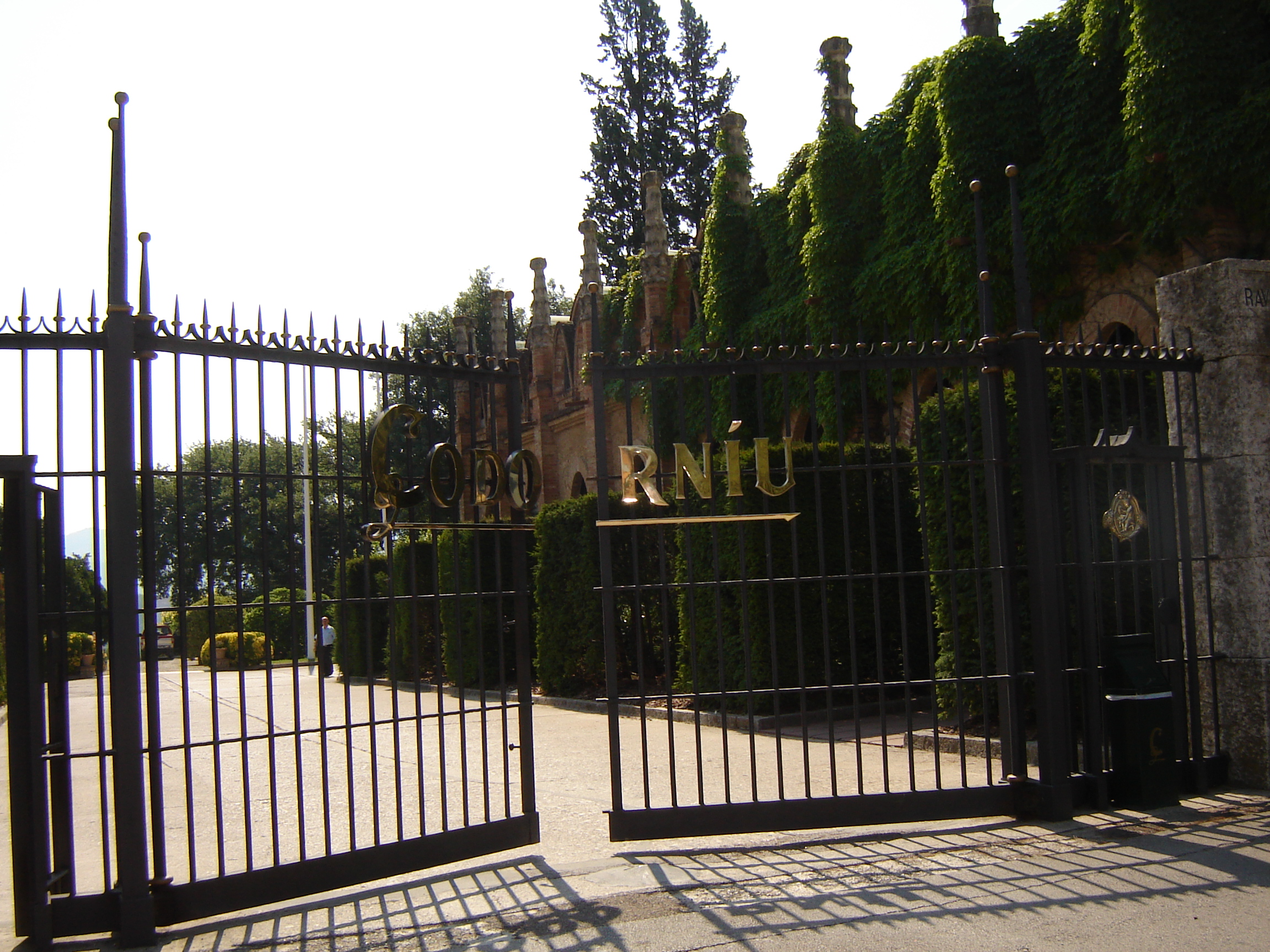
Codorniu Winery
When Manuel Raventos commissioned an architect to design new cellars for his family winery in the 1890s, the structure seemed absurdly large. Codorniu was producing about 100,000 bottles of cava per year -- a respectable output, but hardly enough to justify a building that looked more like a cathedral than a warehouse. Raventos chose Josep Puig i Cadafalch, one of Catalonia's leading Modernista architects, and insisted the cellars be built close to the vineyards rather than near the road or railway, an eccentric decision for the era. Both choices proved prescient. The Codorniu cellars at Sant Sadurni d'Anoia, completed between 1895 and 1915, are now a National Monument -- and the winery that once seemed too grand for its production is one of the oldest continuously operating wine businesses in the world.
Five Centuries of Family Wine
The Codorniu family's wine business traces to the mid-sixteenth century. Documents from the period record that the family owned machines and implements for winemaking, and the continuity is unbroken from 1551 to the present -- making Codorniu one of the oldest companies in Spain and one of the oldest wineries on Earth. The pivotal marriage came in 1659, when Anna Codorniu married Miquel Raventos, uniting two families with long wine traditions. The combined enterprise would remain in the Raventos-Codorniu line for centuries, evolving from still wine to the sparkling variety that would define the brand.
The Birth of Spanish Sparkling Wine
In 1872, Josep Raventos did something no one in Spain had done before: he produced sparkling wine using the methode traditionnelle -- the same labor-intensive process of secondary fermentation in the bottle used in Champagne. The wine was called cava, and Raventos had effectively created an entirely new industry in the Alt Penedes region southwest of Barcelona. The town of Sant Sadurni d'Anoia became the epicenter of Spanish sparkling wine production, a status it retains today. What distinguished cava from Champagne was not the method but the grapes: indigenous varieties like Macabeo, Xarel-lo, and Parellada, which gave the wine a character distinct from its French cousin.
A Modernista Monument
Puig i Cadafalch's cellars are a work of Catalan Modernisme transplanted to the countryside. The architect, best known for urban buildings like Barcelona's Casa Amatller, brought the same ornamental ambition to an agricultural facility: parabolic arches, exposed brickwork, ceramic tile details, and a sense of scale that seemed extravagant for its purpose. Manuel Raventos wanted the building near the vines because he understood that proximity to the vineyard was the key to quality -- a conviction that modern winemakers take for granted but that was unusual in an era when most cellars sat in town near transport links. In 1976, King Juan Carlos I declared the cellars a National Monument of Historical and Artistic Interest, recognizing the building's architectural significance alongside its industrial heritage.
From Vineyard to Glass
Codorniu today remains the oldest and second-largest cava producer in Spain, controlling its production process from vineyard planting through the final corking. The winery's modern installations sit alongside Puig i Cadafalch's century-old cellars, where underground galleries stretch for kilometers beneath the vineyards. The contrast is deliberate: Codorniu markets its history as enthusiastically as its wine, and visitor tours move from the Modernista architecture above ground to the cool, vaulted tunnels below where bottles rest during their months of secondary fermentation. The landscape of the Alt Penedes -- rolling hills of vines, stone villages, the distant outline of Montserrat -- provides a setting that makes the wine taste, if not better, then at least more storied.
From the Air
Located at 41.434N, 1.797E in Sant Sadurni d'Anoia, in the Alt Penedes wine region approximately 40 km southwest of Barcelona. From the air, the winery complex and its surrounding vineyards are visible in the rolling agricultural landscape between the Coastal Range and the Prelitoral Range. Nearest airport is Barcelona-El Prat (LEBL), 35 km east-northeast. The Montserrat massif is visible to the north. Best viewed at 3,000-5,000 feet AGL, where the contrast between the winery's Modernista architecture and the geometric patterns of surrounding vineyards is most apparent.