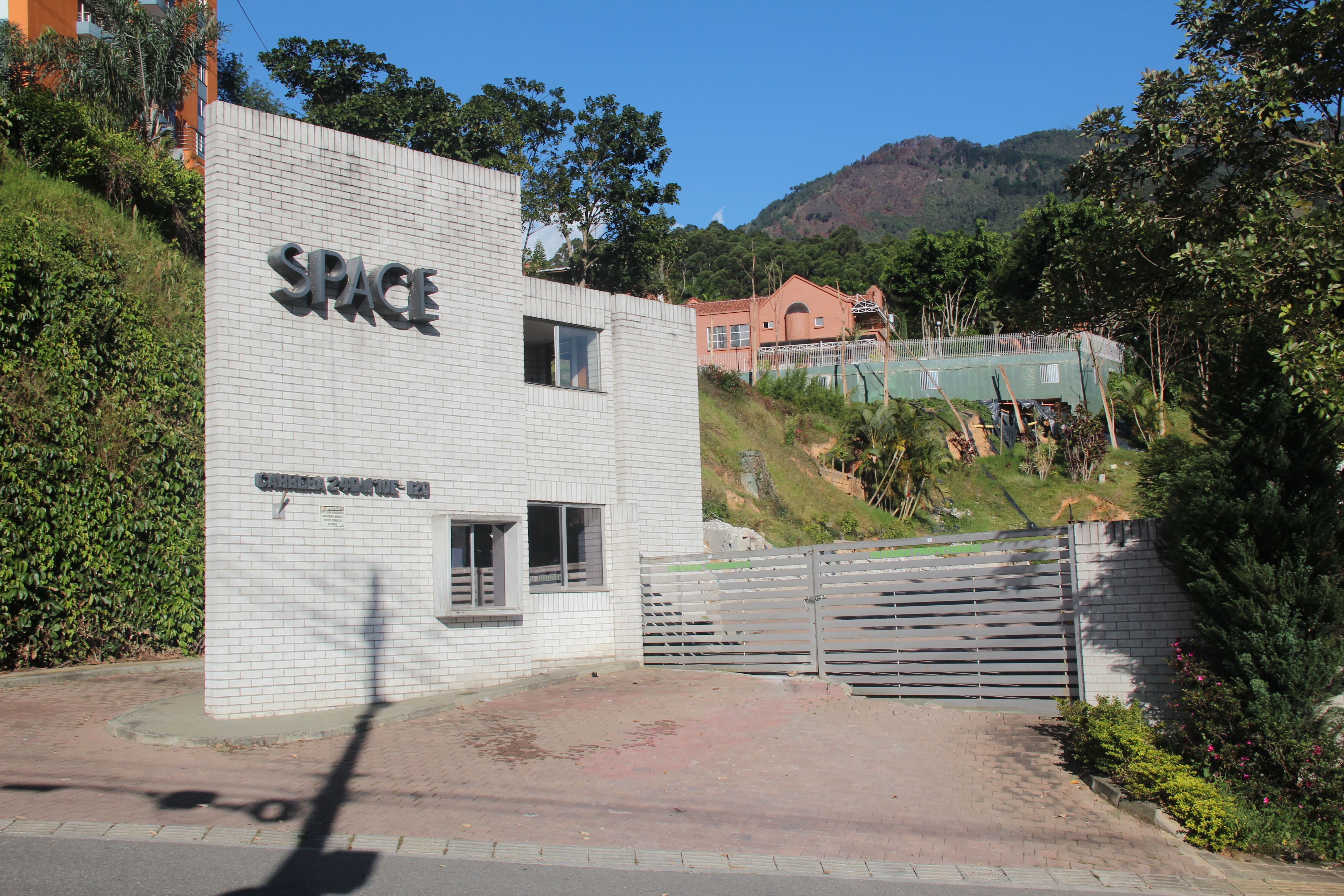
Collapse of the Space Building
The residents of Tower 6 had been told to leave. The day before, on October 11, 2013, someone had noticed a column failing on one of the lower floors of the Space Building, a residential complex in El Poblado, one of Medellin's wealthiest neighborhoods. Workers from the CDO construction company were sent in to repair the damage. They were still working when, at 8:20 PM on October 12, all twenty-four floors of Tower 6 pancaked into the ground. Twelve people died -- eleven construction workers and one resident who had not yet evacuated. The building had been completed just months earlier.
A Structure Built on Miscalculation
The Space Building sat at Carrera 24 D in El Poblado, on a hillside in Medellin's comuna 14. Built by Lerida CDO between 2006 and 2013, the complex consisted of six interconnected towers, or 'stages,' each with a different number of floors and basements. Stage 6, the last to be completed, was the tallest: twenty-four floors above four basement levels. The problems were structural and fundamental. Investigators later discovered that the columns of Tower 6 followed the same design specifications as Tower 1 -- despite Tower 1 being only a third of Tower 6's height. The concrete columns that held up the tallest tower in the complex were never engineered to support the loads they carried. Approximately 6,000 construction errors were eventually identified across the project.
The Warning Signs Nobody Heeded
The Space complex had shown signs of distress long before the collapse. In August 2013, just two months before the disaster, engineers identified differential settlement problems -- meaning the foundation was sinking unevenly -- and attempted to shore up the building's base. Other structural problems were noted but not treated as urgent. On the morning of October 11, residents reported cracking sounds and visible damage to a column in Tower 6. The building was evacuated, and CDO dispatched repair crews. What happened next exposed a grim calculation: rather than bring in independent structural engineers to assess whether the building was safe to enter, the company sent its own workers into the damaged tower to patch the failing column. They were inside when the structure gave way.
The Domino That Kept Falling
After Tower 6 collapsed, the entire Space complex was evacuated. The Mayor's Office of Medellin hired the Universidad de los Andes to investigate, and their conclusion was blunt: the building's columns lacked the structural capacity to support the loads they bore under normal conditions. Had the building been designed in compliance with Colombia's Law 400 of 1997, which establishes seismic resistance standards for construction, Tower 6 would not have fallen. On February 27, 2014, Tower 5 was demolished in a controlled implosion. On September 23, 2014, what remained of the entire complex followed. Where the Space Building once stood, there was nothing.
Accountability and the Law That Followed
The National Professional Engineering Council of Colombia, known as COPNIA, spent three and a half years investigating the people responsible for the building's design, review, and construction. The structural designer, Jorge Aristizabal, and the structural reviewer, Edgar Ardila, both had their professional registrations permanently canceled. The builders, Maria Cecilia Posada and Pablo Villegas, received suspensions of twenty to twenty-two months. The soil engineer, Bernardo Vieco, was suspended for six months. CDO was ordered to pay approximately 30.9 billion Colombian pesos in compensation. In January 2018, courts sentenced the responsible directors and engineers to prison terms of forty-nine to fifty-one months for culpable homicide. The disaster also prompted Colombia's housing minister, Luis Felipe Henao, to push through legislation -- sometimes called the 'Anti-Space Law' -- that strengthened enforcement of structural compliance requirements. In 2018, three researchers from the Universidad de los Andes received the ACI Design Award from the American Concrete Institute for their forensic analysis of the collapse.
From the Air
Located at 6.213N, 75.556W in the El Poblado neighborhood of southeastern Medellin, on the valley's eastern hillside. The site of the demolished building is in a densely developed residential area at approximately 1,700 meters elevation. Visible on approaches to SKMD (Olaya Herrera Airport, 3 km northwest in the valley center) or SKRG (Jose Maria Cordova International, Rionegro, 20 km east over the mountain ridgeline). El Poblado's hillside tower developments are distinctive from the air -- tightly packed high-rises climbing the green slopes above the valley floor.