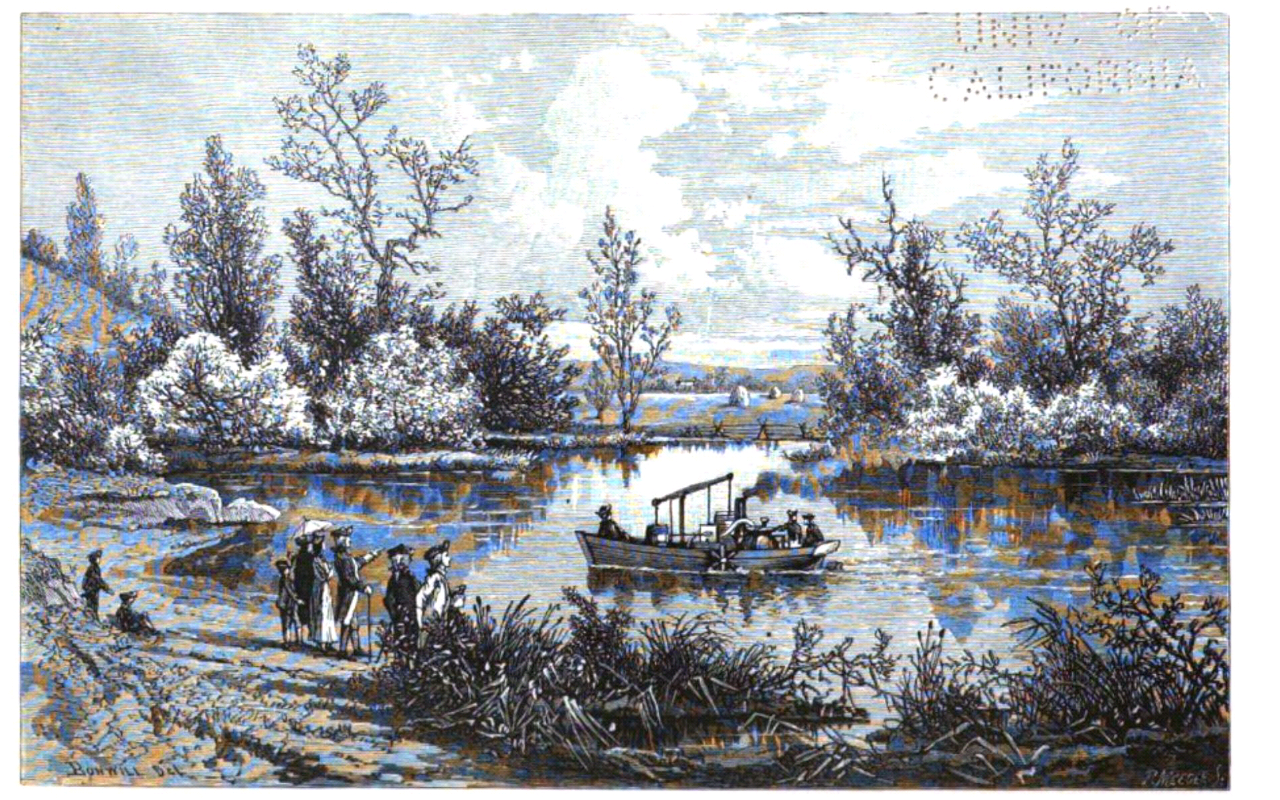
Collect Pond
Somewhere beneath the sidewalks of Chinatown, sixty feet of water once shimmered. The Collect Pond -- or Fresh Water Pond, as the Dutch and English colonists called it -- was Manhattan's lifeline for two centuries: a 48-acre lake of clear freshwater in a landscape otherwise hemmed by brackish tidal rivers. Families picnicked along its banks in summer and skated across its surface in winter. It was, by every account, a beautiful place. And then the city killed it.
From Picnic Ground to Open Sewer
The trouble began in the early 18th century, when commerce arrived at the water's edge. Coulthards Brewery set up along the shore. Nicholas Bayard built a slaughterhouse on Mulberry Street -- a venture so rank that locals renamed the road "Slaughterhouse Street." Tanneries clustered along the southeastern bank. German potters Johan Willem Crolius and Johan Remmey fired their kilns on Pot Bakers Hill to the southwest. Every one of these industries used the pond's water and returned their waste to it. By the late 1700s, the Collect had become what one observer called "a very sink and common sewer." Dead animals floated in the water that had once sustained the entire settlement. The pond that gave Manhattan life was choking on Manhattan's ambition.
The Road Not Taken
Pierre Charles L'Enfant -- the same visionary who would later design Washington, D.C. -- saw an alternative future. He proposed cleaning the pond and building a recreational park around it, letting the residential neighborhoods of the growing city radiate outward from this green heart. The idea was rejected. Instead, the city chose to erase the Collect entirely. Workers leveled the nearby hills of Bayard's Mount and Kalck Hoek, shoveling the earth into the polluted basin. They dug a canal northward to drain the remaining water into the river -- a canal that would give its name to Canal Street. By 1811, the landfill was complete, and developers built middle-class homes on the reclaimed ground. But the soft, wet fill beneath those homes had a long memory.
Sinking Into Infamy
The land settled. Foundations cracked. Respectable families fled the subsiding, foul-smelling neighborhood, and the area deteriorated into one of the most notorious slums in American history: Five Points. It was here, at the intersection where Mosco Street crossed Baxter and Worth, that New York's poorest and most desperate crowded into crumbling tenements built on a drowned lake. In 1838, the city compounded the irony by constructing its jail directly atop the vanished pond. Designed by John Haviland to resemble an Egyptian mausoleum, the 253-by-200-foot prison earned the nickname "The Tombs" -- a name that stuck through three successive buildings on the same cursed ground. The original structure began sinking almost immediately, its lowest cells notorious for leaks and perpetual dampness. When it was finally demolished, builders drove concrete caissons 140 feet down to bedrock, a depth that speaks to just how unstable the old pond bed remained.
A Pond Remembered
In 1960, the city transferred the site to the Parks Department, and what had been "Civil Court Park" was eventually renamed Collect Pond Park to honor the vanished lake. A $4.6 million reconstruction in 2011 uncovered the granite foundations of the original Tombs during excavation, prompting an archaeological investigation before work could resume. The rebuilt park, which reopened in May 2014, features a reflecting pool that gestures toward the body of water that once dominated this landscape. Walk the streets around the park today and you can still read the ghost of the Collect in the terrain. Centre Street, running through where the pond's center once lay, sits at the lowest elevation in the neighborhood. The gentle dips and rises of the surrounding blocks trace the shores of a lake that has been gone for more than two centuries but refuses to be entirely forgotten.
From the Air
Located at approximately 40.716N, 74.002W in Lower Manhattan's Chinatown neighborhood. The site sits between the courthouses of Foley Square to the north and the dense blocks of Chinatown to the south. From altitude, look for the small green rectangle of Collect Pond Park bounded by Lafayette, Leonard, Centre, and White Streets. Nearby airports: KJFK (John F. Kennedy International), KLGA (LaGuardia), KEWR (Newark Liberty). Best viewed at 2,000-3,000 ft AGL.