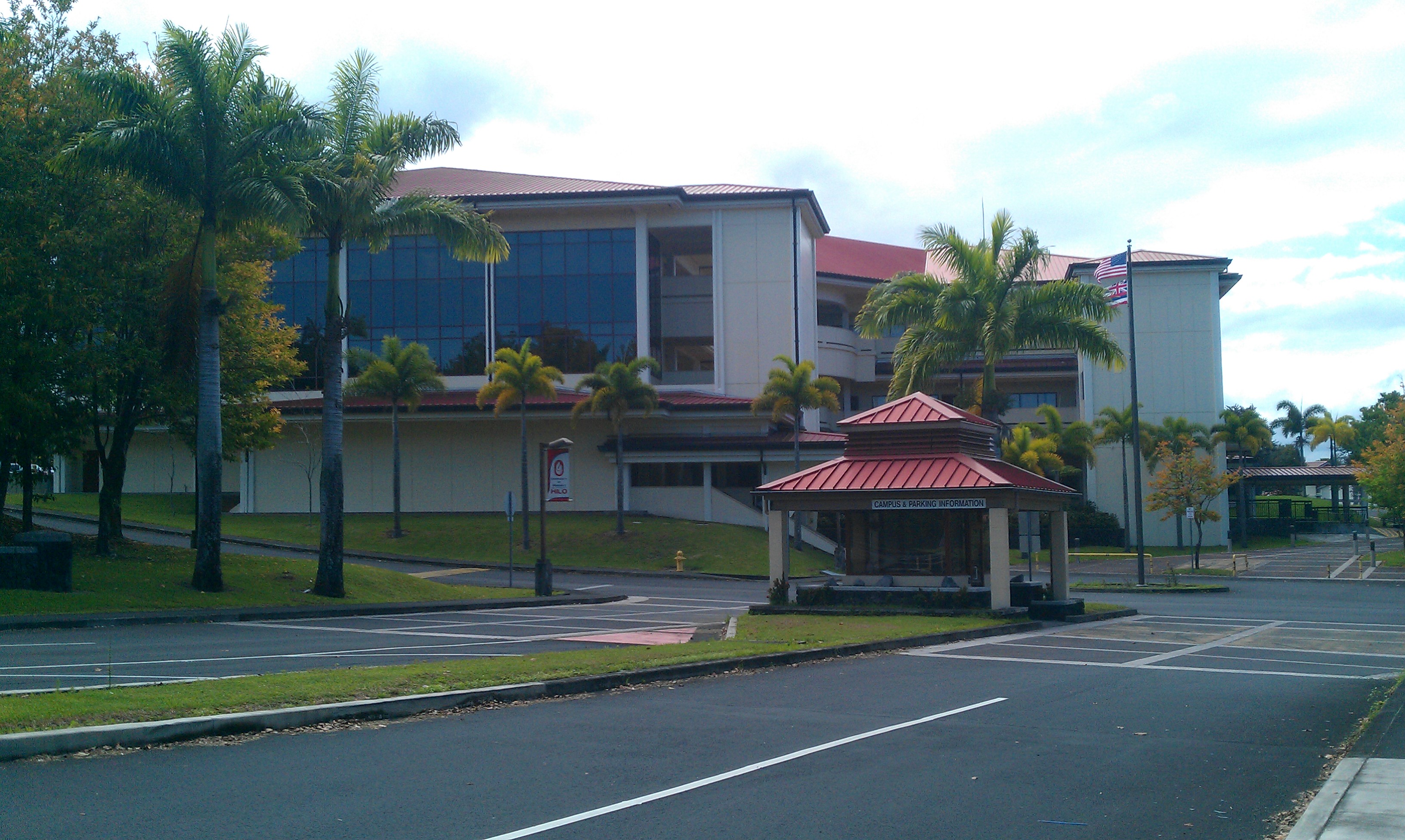
College of Hawaiian Language
By 1983, fewer than two thousand people in Hawaii spoke Hawaiian as a native language. Fewer than fifty of them were under the age of eighteen. The math was terminal: within a generation, the language that had named every mountain, bay, and wind current in the islands would exist only in dictionaries and old recordings. That it did not die is one of the most remarkable language rescues in modern history, and the institution at the center of that rescue sits on a hillside in Hilo, overlooking the bay where Polynesian voyagers once landed.
The Silencing
Hawaiian was not dying of natural causes. In 1896, the Republic of Hawaii passed Act 57, an English-only law that banned Hawaiian as the medium of instruction in publicly funded schools. Children caught speaking their own language at school faced physical punishment. The policy was devastatingly effective. Within two generations, a language that had sustained an entire civilization - its navigation, its governance, its spiritual life - was reduced to a handful of elderly speakers and a few rural communities where the law's reach was weakest. By the time Hawaii became a state in 1959, most Hawaiian families had shifted entirely to English. The language survived in place names, in songs, and in the memories of kupuna - elders - who remembered a world conducted in Hawaiian.
The Nests
The rescue began with children. In 1983, a group of Native Hawaiian parents who wanted their children to speak Hawaiian as their first language formed 'Aha Punana Leo - the Language Nest Corporation. Modeled partly on Maori language nests in New Zealand, the Hawaiian immersion preschools created environments where Hawaiian was the sole language of instruction and play. The concept was radical at the time. A constitutional amendment in 1978 had designated Hawaiian as one of the state's two official languages, but legal recognition without living speakers is an empty gesture. The preschools provided what policy could not: actual children growing up with Hawaiian on their tongues. By the mid-1980s, immersion programs had expanded into elementary schools, and the first generation of children raised in Hawaiian-medium education was proving that a language on the brink could be pulled back.
A College Built on Revival
Ka Haka 'Ula O Ke'elikolani - the College of Hawaiian Language at the University of Hawaii at Hilo - was founded in 1997, named for Ruth Ke'elikolani, a nineteenth-century Hawaiian princess known for her devotion to Hawaiian cultural traditions. Its motto captures the stakes: "'O ka 'Olelo ke Ka'a o ka Mauli" - Language is the fiber that binds us to our cultural identity. The college offers bachelor's, master's, and doctoral programs. The PhD in Hawaiian and Indigenous Language and Culture Revitalization trains scholars to lead language recovery efforts not only in Hawaii but in indigenous communities around the world - from Alaska to Australia, from Scandinavia to South America. In 2014, the college moved into Hale'olelo, a $21 million facility designed by WCIT Architects, giving the program a physical home commensurate with its ambition.
From Fifty Speakers to a Living Tongue
The numbers tell a story of recovery that few linguists would have predicted. A handful of children in the first immersion classes of the 1980s has grown to more than 2,500 students enrolled annually across eleven preschool and twenty-one immersion and charter school sites throughout Hawaii. The college's graduates teach in those schools, conduct research on Hawaiian literary resources from the nineteenth and twentieth centuries, and carry the language into domains - academic publishing, digital media, scientific discourse - where it had never existed before. Alaska's indigenous language programs have cited the Hawaiian model as a template. The college's faculty, including professors like Larry Kimura, who helped pioneer the immersion movement, and William Pila Wilson, who co-founded 'Aha Punana Leo, are both scholars and practitioners of the revival they study. What nearly vanished in the 1980s is now studied at the doctoral level in a building named for a princess, in a language that refuses to become a relic.
From the Air
Located at 19.700°N, 155.088°W on the University of Hawaii at Hilo campus, on the windward coast of Hawaii Island. The college is housed in the Hale'olelo building within the campus. Best viewed at 2,000-3,000 feet AGL. Nearest airport: PHTO (Hilo International Airport), approximately 3 miles south-southeast. The UH Hilo campus is visible as a cluster of buildings on the hillside above Hilo Bay, with the distinctive titanium cones of the nearby 'Imiloa Astronomy Center as a landmark.