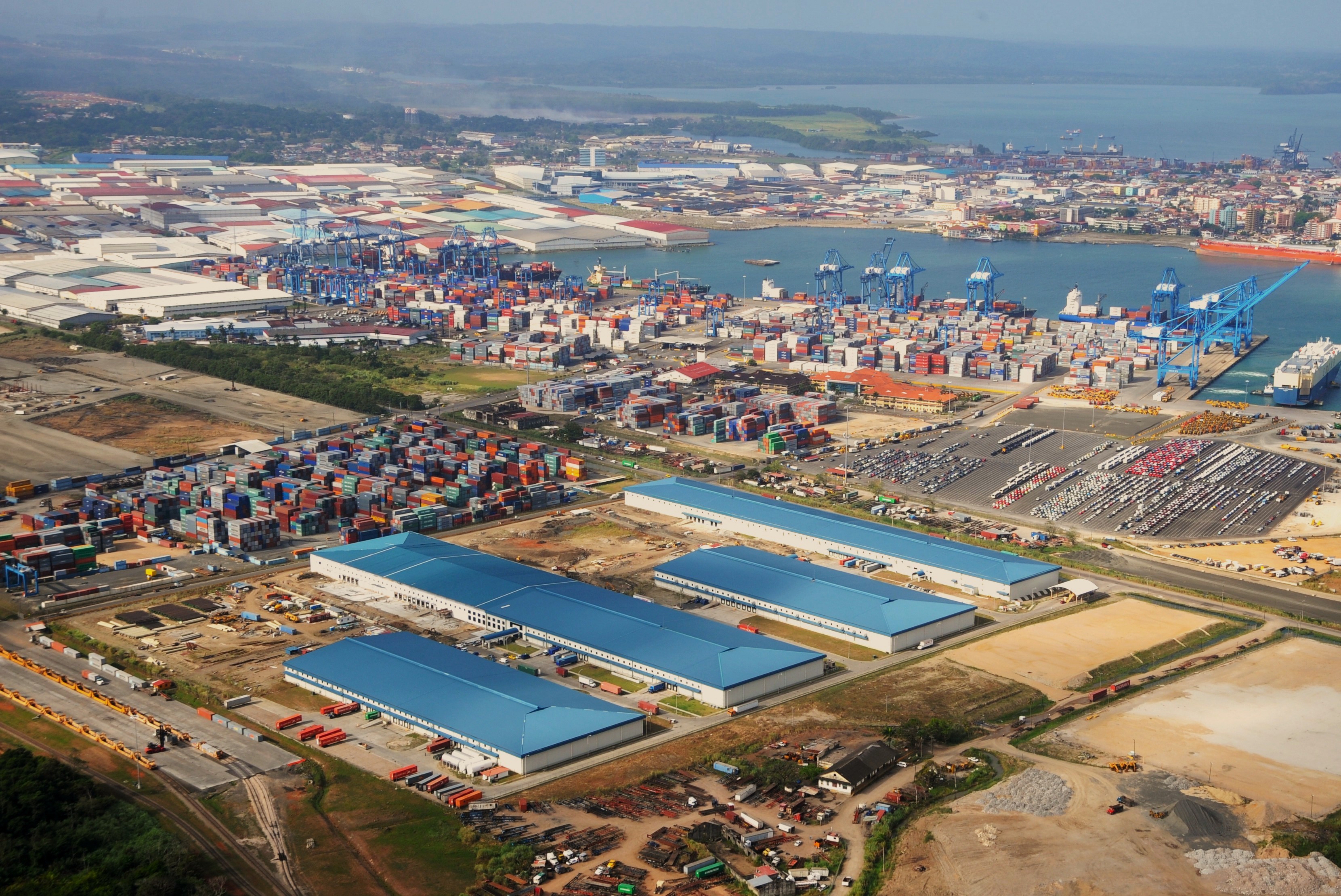
Colon, Panama
For a city that has burned to the ground three times, Colon has a remarkable talent for survival. Founded in 1850 on Manzanillo Island, a marshy islet so inhospitable that the Panama Railroad Company had to drain swamp and build a causeway before anyone could live there, the city exists because it occupies the single most important point on the Atlantic side of the isthmus: the Caribbean entrance to the Panama Canal. That location has brought Colon booms, fires, riots, dictators, a free trade zone, and a list of famous natives that includes Baseball Hall of Famer Rod Carew, jazz legend Billy Cobham, and -- born at the Coco Solo naval base -- U.S. Senator John McCain.
Two Names for One Swamp
The city's founding was a byproduct of transit logistics. When New York financiers created the Panama Railroad Company to meet California Gold Rush demand for a fast route to the Pacific, they needed an Atlantic terminus. They chose the western end of Manzanillo Island, a spit of mangrove swamp in Limon Bay. The American emigre community called the settlement Aspinwall, after railroad promoter William Henry Aspinwall. The local Hispanic community called it Colon, honoring Christopher Columbus. For years both names circulated, an early sign of the cultural duality that would define the city. The Panama Railroad connected the island to the mainland by causeway, drained enough land to erect permanent buildings, and by January 1855 trains ran coast to coast. Colon had a reason to exist. Whether it had a reason to last was another question.
A City That Kept Burning
Fire has been Colon's recurring catastrophe. The Burning of Colon during the Colombian Civil War of 1885 destroyed much of the city. A massive fire swept through again in 1915. Then, on April 13-14, 1940, the Great Colon Fire consumed one-third of the remaining city. Each time, Colon rebuilt on the same marshy ground, in part because geography left no alternative and in part because the canal made the location too valuable to abandon. The 1914 boundary treaty had made Colon an exclave of the Republic of Panama, entirely surrounded by the Canal Zone. Under the 1936 Hull-Alfaro Treaty, the United States ceded a narrow corridor of land just wide enough for a four-mile road connecting the city to the eastern part of the republic. During periods of Panamanian nationalist unrest from the 1950s onward, U.S. military checkpoints on that single road deepened the resentment that had sparked the protests in the first place.
Free Trade and Hard Decline
In 1948, the southeastern corner of Manzanillo Island became the Colon Free Trade Zone, which grew through land reclamation and annexation of former U.S. military properties into the second-largest free trade zone in the world, after Hong Kong. The zone brought commerce but not prosperity for most residents. Politically instigated riots in the 1960s destroyed the municipal palace and accelerated a decline that the military dictatorships of Omar Torrijos and Manuel Noriega, spanning 1968 to 1989, deepened further. As the economy contracted, the city's cosmopolitan character eroded. European and American communities departed, along with Panamanians of Greek, Italian, Jewish, Chinese, and South Asian heritage, many relocating to Panama City or overseas. Today the city's population is predominantly West Indian and mestizo, with sizable South Asian and Arab communities concentrated in the remaining prosperous neighborhoods and gated communities on the outskirts.
Champions and Creators
Colon's most enduring export has been its people. Alfonso Panama Al Brown, born here, became the first Hispanic world boxing champion. Rod Carew, the seven-time American League batting champion inducted into the Baseball Hall of Fame in 1991, grew up on these streets. Billy Cobham, whose drumming helped define jazz fusion, was born in Colon in 1944. So was psychologist Kenneth B. Clark, whose research on the psychological effects of segregation on children became key evidence in Brown v. Board of Education. The city's boxing tradition runs deep: Ismael Laguna won the World Featherweight Championship in 1965, and Celestino Caballero held the WBA Super Bantamweight title. Cricket legend George Headley, born here in 1909 to West Indian parents, became one of the greatest batsmen in the history of the sport.
Renovation and Rain
Colon's climate matches its temperament: intense. Lying in a tropical monsoon zone driven by Caribbean trade winds, the city receives average monthly rainfall of around 415 millimeters from June through December, rivaling La Ceiba, Honduras for the title of wettest sizable city in Central America. A massive restoration project launched in late 2014 has been renovating parks, avenues, and historic buildings, including the First Baptist Church. The effort aims to reverse decades of decline, though the scale of neglect is substantial. The city is served by the Panama Canal Railway, whose route roughly follows the original 1855 railroad alignment, and by Enrique Adolfo Jimenez Airport. For all its scars, Colon remains what it has been since 1850: the Atlantic face of the isthmus, a place where geography forces convergence whether the residents are ready for it or not.
From the Air
Colon sits at 9.36N, 79.90W on the Caribbean coast of Panama, at the Atlantic entrance to the Panama Canal. From altitude, the city is visible on Manzanillo Peninsula jutting into Limon Bay, with the canal channel and Gatun Locks to the south. Enrique Adolfo Jimenez Airport (MPEJ) is located within the city's former Canal Zone territory. The Colon Free Trade Zone is visible as a large commercial complex on the southeastern portion of the peninsula. Expect extremely wet conditions year-round, with heavy tropical rainfall June through December, frequent convective activity, and reduced visibility in rain showers.