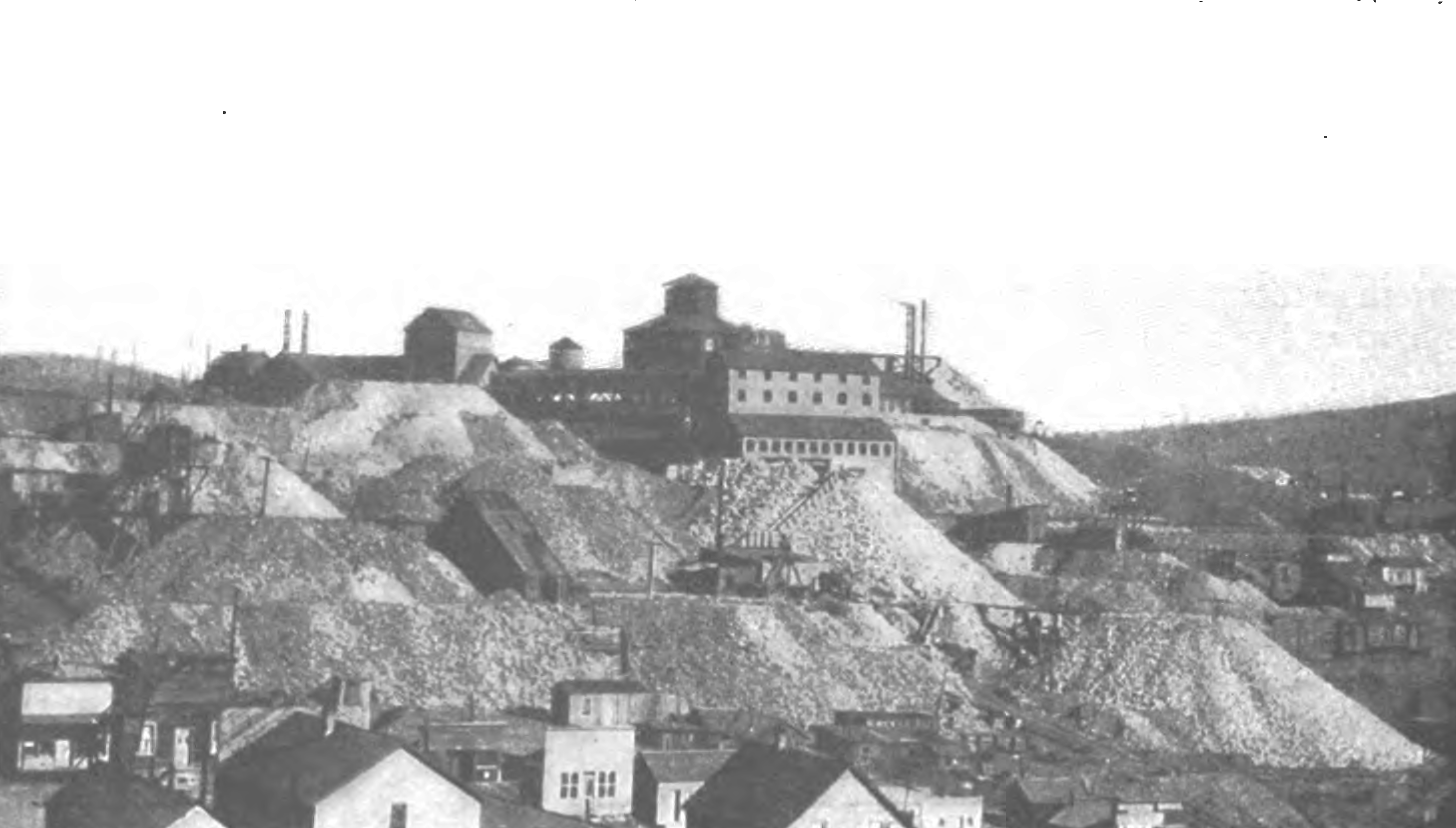
Colorado Labor Wars
Two scholars of American labor violence called it unmatched: "There is no episode in American labor history in which violence was as systematically used by employers as in the Colorado labor war of 1903 and 1904." Across the mining districts of Cripple Creek, Telluride, Colorado City, and Idaho Springs, seventeen thousand members of the Western Federation of Miners faced off against mine owners, Pinkerton agents, and the Colorado National Guard in a conflict that would reshape the American labor movement. What began as a fight over the eight-hour workday spiraled into dynamite explosions, mass deportations, martial law, and a conspiracy so tangled that detectives were caught inciting the very violence they were hired to prevent.
The First Shot at Cripple Creek
The roots of the Colorado Labor Wars reached back to January 1894, when mine owners tried to stretch the workday from eight to ten hours without raising pay. The miners struck. The owners brought in strikebreakers. When intimidation failed, the owners raised a private army of 1,200 armed men, deputized by the El Paso County Sheriff. But the miners won that round, and the victory enabled the Western Federation of Miners to build labor organizations across the district, the state, and the entire Rocky Mountain region. By late 1902, the WFM boasted seventeen thousand members in one hundred locals. The union's central argument was simple and hard to dispute: working long hours underground in a mine or inside a smelter was hazardous to a man's health, and the eight-hour day should be law. Colorado's Republicans disagreed, and the state Supreme Court declared such a law unconstitutional.
Spies, Provocateurs, and Broken Promises
The mine operators fought the WFM with espionage as much as force. Pinkerton detective A.H. Crane infiltrated the Colorado City mill workers' union in 1902, becoming "rather influential" before forty-two union men were fired for the crime of joining. Charles MacNeill of the United States Reduction and Refining Company promised to rehire all but fourteen union members after the first strike, then reneged, leaving forty-two WFM men without work. At the Thiel Detective Service Company, agent Charles Beckman worked undercover as a member of Victor Miners Union No. 32 while his wife secretly infiltrated the union's Ladies' Auxiliary. Most damningly, three detectives later admitted they had tried to induce WFM members to derail a train. The line between investigating crime and manufacturing it had dissolved entirely.
Martial Law and the Guard's Dark Secret
When the mine owners at Telluride requested National Guard troops in November 1903, a state committee reported that the town was peaceful. Governor Peabody asked President Theodore Roosevelt for U.S. Army soldiers; Roosevelt refused. Peabody sent in 500 Colorado National Guard troops anyway. The Guard's role was supposed to be peacekeeping, but a sworn affidavit from Major Francis J. Ellison revealed something far darker. Under orders from General Reardon and Major McClelland, soldiers staged deliberate street fights with civilians in Victor. When the Mine Owners' Association balked at paying the Guard's bills, Reardon ordered Ellison to fire sixty shots into the Vindicator mine shaft house at midnight to manufacture a crisis that would force the owners to pay up. The plan worked. The money appeared the next day.
Dynamite and the Independence Depot
Violence erupted from all sides. On November 21, 1903, two management employees died in an explosion at the Vindicator mine's 600-foot level. The union blamed a management plot gone wrong. Then came the Independence Depot explosion, the war's most notorious act. WFM member Harry Orchard later confessed to placing dynamite beneath the platform and triggering the blast with a 200-foot wire as miners crowded to meet an arriving train. Orchard would eventually confess to a string of bombings and shootings that killed at least seventeen men, including the later assassination of former Idaho governor Frank Steunenberg. Yet Orchard's credibility was hardly unimpeachable: he was a self-confessed bigamist, arsonist, burglar, and insurance fraudster. Historian Elizabeth Jameson concluded that while individual WFM members may have committed violent acts, "violence was not union policy. It was, however, the policy of the Mine Owners' Association, the Citizens' Alliance, and the militia."
Ashes and Aftershocks
The WFM suffered devastating losses at Cripple Creek: its strongest local was destroyed and its most prominent leaders arrested. Hundreds of union members and sympathizers were deported under martial law. But the Western Federation of Miners did not die. In 1905, WFM miners and leaders traveled to Chicago to help found the Industrial Workers of the World. In 1909, the Colorado State Legislature paid $60,000 to the WFM as compensation for damages inflicted by state troops on union cooperative stores and the union hall in Victor. The WFM eventually became the International Union of Mine, Mill, and Smelter Workers, which merged with the United Steelworkers. The old WFM union hall in Victor still stands today, its brick walls pocked with bullet holes, a physical testament to the most violent labor conflict in American history.
From the Air
Located at 38.76N, 105.18W in Teller County, Colorado, centered on the Cripple Creek mining district at approximately 9,500 feet elevation. The conflict spread across multiple Colorado mountain towns including Telluride, Colorado City, and Idaho Springs. Nearest airports include Meadow Lake Airport (00C) and Colorado Springs Airport (KCOS). The terrain is rugged Rocky Mountain mining country with peaks exceeding 10,000 feet. Best viewed at 10,000-12,000 feet AGL on clear days.