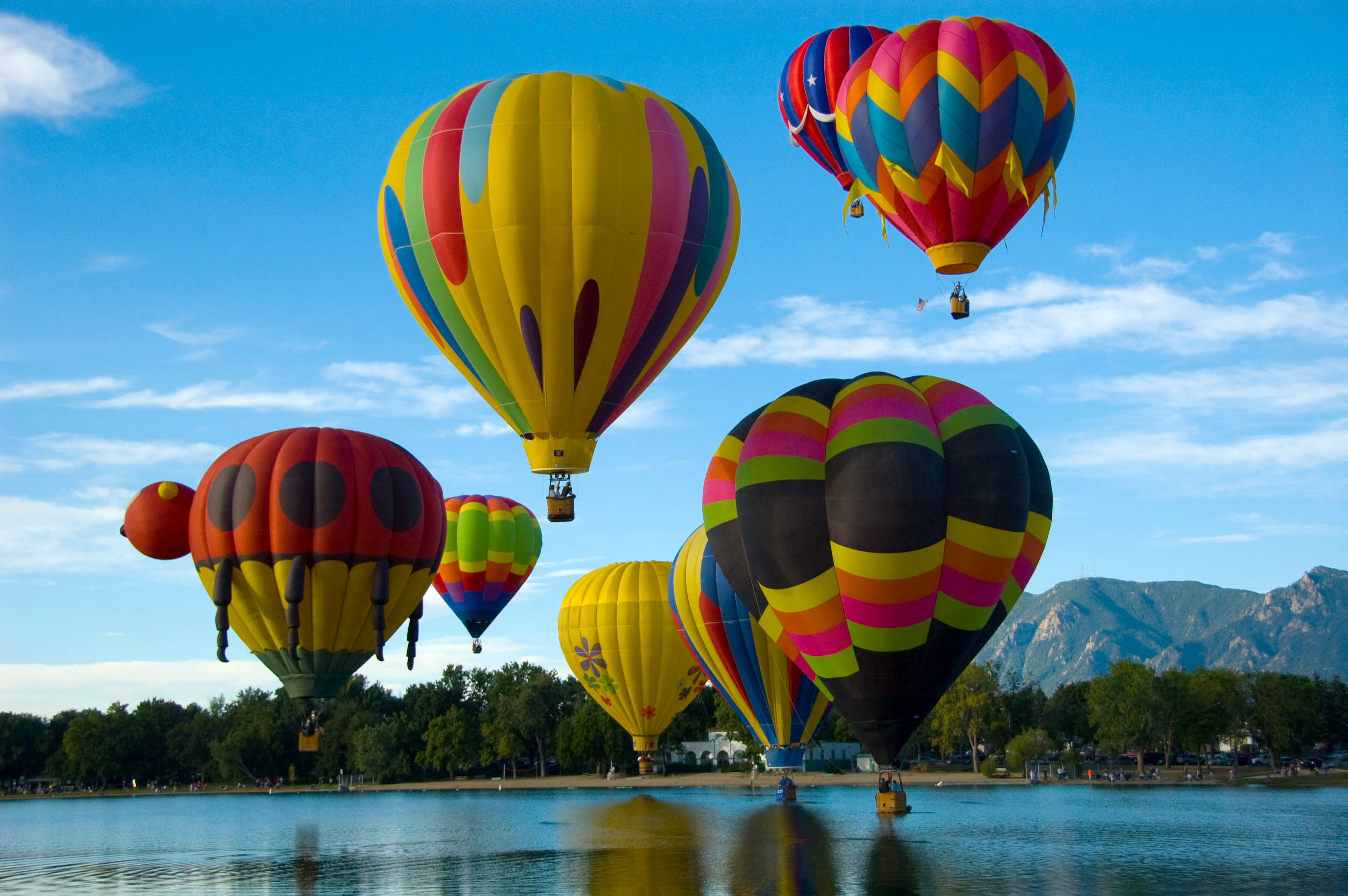
Colorado Springs, Colorado
Nikola Tesla chose this place to harness lightning. From 1899 to 1901, the inventor operated his experimental station on Knob Hill, generating millions of volts beneath skies that still crackle with some of the most active lightning in the United States. That Tesla picked Colorado Springs was no accident -- the city sits at over 6,000 feet elevation near the base of Pikes Peak, where the Front Range meets the Great Plains and electrical storms roll in with operatic fury. But the story of Colorado Springs stretches far beyond one inventor's laboratory, encompassing gold rushes and Cold War bunkers, English immigrants and Olympic athletes, ancient red rock formations and the enduring presence of America's military.
From Fountain Colony to Little London
The Ute, Arapaho, and Cheyenne peoples were the first to inhabit this land where Fountain Creek cuts through the eastern edge of the Southern Rockies. The Pikes Peak Gold Rush of 1859 brought the first wave of settlers, and Colorado City -- briefly the capital of Colorado Territory -- sprang up at the confluence of Fountain and Camp Creeks. In 1871, the Colorado Springs Company laid out a new town downstream and called it Fountain Colony, soon renamed Colorado Springs. So many English immigrants arrived in those early years that locals called it "Little London." The town incorporated in 1886, and by 1898 its grid was defined by Cascade Avenue running north-south and Washington and Pikes Peak Avenues running east-west, a framework the city still follows today.
The Mountain Fortress
World War II transformed Colorado Springs from a resort town into a military stronghold. Camp Carson, now the 135,000-acre Fort Carson, was established in 1941. Peterson Field followed in 1942. When the Cold War arrived, the city's geography proved strategically invaluable: Ent Air Force Base became Air Defense Command headquarters in 1950, and deep within the granite of Cheyenne Mountain, engineers carved out the hardened command center for NORAD -- North American Aerospace Defense Command. Today, nearly 45,000 active-duty troops and over 100,000 veterans call the area home. Defense contractors including Northrop Grumman, Boeing, Lockheed Martin, and General Dynamics maintain significant operations here. The U.S. Air Force Academy, built on land donated by the city itself, trains the next generation of officers against a backdrop of mountain peaks.
Olympic City USA
When the former Ent Air Force Base was converted into a U.S. Olympic training center in 1977, Colorado Springs gained a new identity. The city now hosts the United States Olympic and Paralympic Training Center, the headquarters of the U.S. Olympic and Paralympic Committee, and the U.S. Anti-Doping Agency. Over 50 national sports organizations are headquartered here. The city has hosted the U.S. Figure Skating Championships six times and the World Figure Skating Championships five times, and the Broadmoor Skating Club remains one of the sport's premier training grounds. Every June, the Pikes Peak International Hill Climb -- known as "The Race to the Clouds" -- sends automobiles and motorcycles hurtling up the mountain's highway, a road not fully paved until 2011.
Red Rocks and Open Sky
Garden of the Gods, a National Natural Landmark on the city's western edge, anchors Colorado Springs in deep geologic time. Its towering red and orange sandstone formations, thrust upward along the Front Range fault millions of years ago, stand in dramatic contrast against the snow-capped bulk of Pikes Peak behind them. The park is free and open to all. Beyond it, the city manages 136 neighborhood parks, trails stretching from Palmer Lake to Fountain, and 48 open-space areas. Monument Valley Park preserves Tahama Spring, the original spring that gave the city its name. The landscape shifts from ponderosa pine and Douglas fir in the foothills to Gambel oak and prickly pear cactus on the plains -- a botanical crossroads where mountains meet prairie.
A City of Contradictions
Colorado Springs defies easy characterization. It has been called the "Evangelical Vatican" for hosting 81 religious organization headquarters, yet it also founded the Libertarian Party in the 1970s. In 2023, independent candidate Yemi Mobolade became the first non-Republican mayor in the city's history. The city banned recreational marijuana sales even as the rest of Colorado embraced legalization, yet its 131 medical marijuana centers do brisk business. North Korean propagandists once targeted it for a missile strike -- and pointed at Louisiana on the map. A Japanese torii gate stands downtown on Nevada Avenue, a gift from sister city Fujiyoshida since 1962. With 243 sunny days per year, a population approaching 479,000, and 23 million annual visitors drawn by more than 55 attractions, Colorado Springs continues to grow where the plains meet the peaks.
From the Air
Colorado Springs sits at 38.83N, 104.82W at approximately 6,035 feet elevation. Colorado Springs Airport (KCOS) is the primary airport with three runways. The U.S. Air Force Academy and Peterson Space Force Base are prominent landmarks visible from the air. Pikes Peak (14,115 feet) rises dramatically to the west. Garden of the Gods' red rock formations are visible on the city's western edge. Fort Carson sprawls south of the city. Expect mountain wave turbulence and rapid weather changes along the Front Range.