Comoros
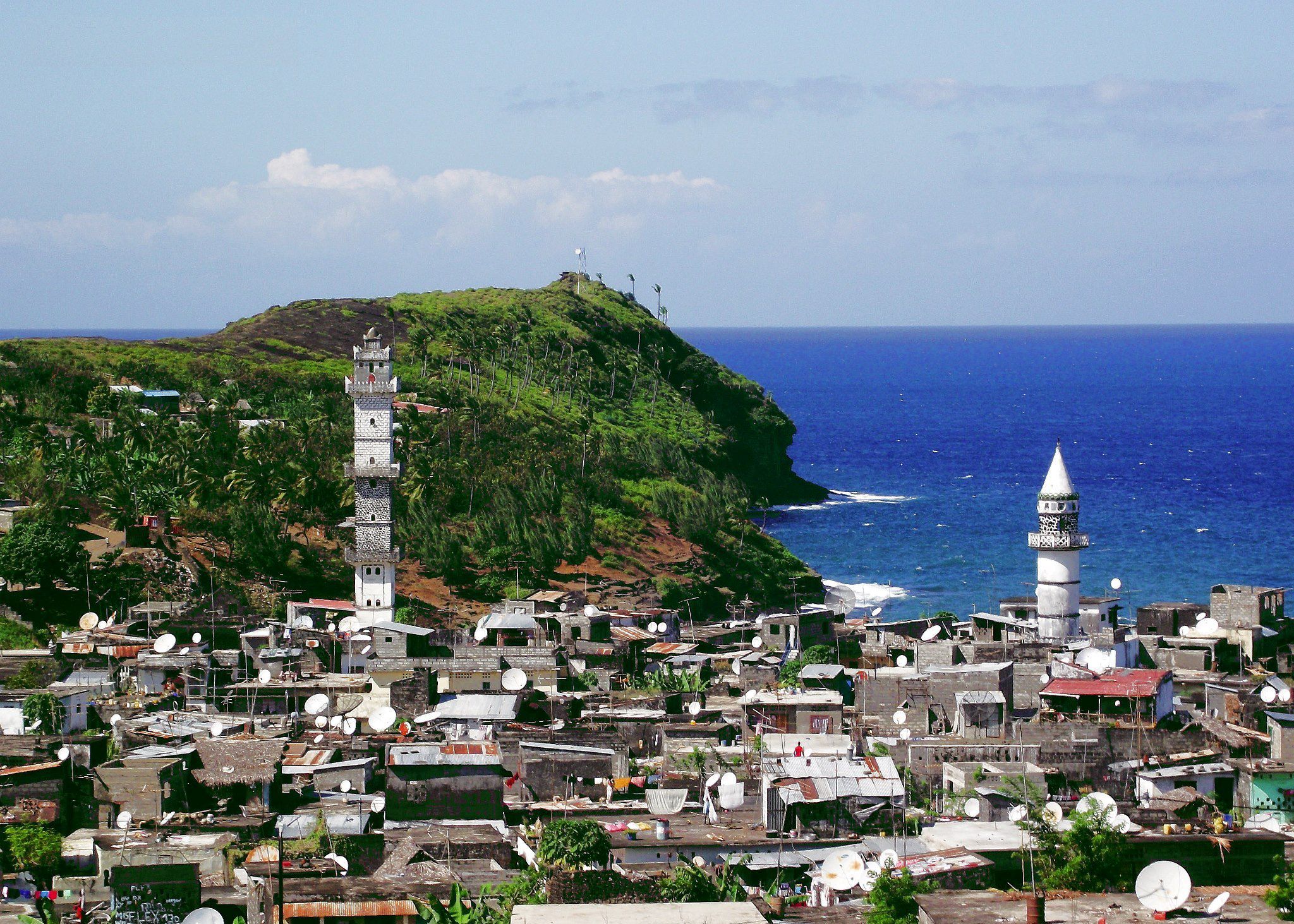
The name comes from qamar, Arabic for moon. Omani sailors in 933 CE called these islands in the Mozambique Channel "The Perfume Islands," singing of waves breaking along pearl-sand beaches and breezes scented with ylang-ylang. A thousand years later, the scent still carries. The Comoros -- three volcanic islands suspended between the African coast and Madagascar -- remains one of the least visited nations on Earth, receiving fewer than a few thousand tourists per year. What those visitors find is a place where Swahili, Arab, Malagasy, and French influences have layered over centuries into something entirely its own.
Sultanates, Colonies, and Twenty Coups
Swahili settlers reached the Comoros during the first millennium as part of the great Bantu expansion. By the 11th century, trade with Madagascar and the Middle East had established thriving port towns. Portuguese explorers arrived in 1505, challenging the Bajas -- Bantu Muslim chiefs -- and their lesser counterparts, the Fanis. France began colonizing in 1841 and held full control by 1908. When independence came in 1975, three islands voted to leave; Mayotte voted to stay French and remains under Paris's administration to this day, a source of enduring political tension. The three independent islands have since experienced more than 20 coups or attempted coups. In 1997, Anjouan and Moheli declared independence from the union itself. A confederal arrangement, the 2000 Fomboni Accord, eventually pulled the archipelago back together, granting each island its own president beneath a federal structure.
Islands of Fire and Perfume
Grande Comore, the largest island, is dominated by Mount Karthala, an active volcano rising 2,361 meters and famous for its massive crater. The eight-hour trek to the summit passes through dense tropical forest before opening onto a moonscape of lava fields and sulfurous vents. Below, the coastline alternates between black volcanic rock and white sand beaches -- Maloudja beach at Mitsamiouli is considered the most beautiful. Off the northeast village of Ndroude, a small peripheral island called Choua cha Ndroude can be reached on foot at low tide, its volcanic rocks scorching underfoot in the tropical sun. In the village of Iconi, the 16th-century Palace of Kaviridjeo stands in ruins, once home to the Sultan of Bambao, whose last descendant united the island's sultanates before signing it over to France.
Where the Sea Provides Everything
Comorian life follows the rhythm of the fishing boats. Each morning, men sail out from harbor towns in small craft; each evening, they return with the day's catch -- snapper, grouper, occasionally swordfish. The Volo Volo market in the capital, Moroni, is where that catch arrives, is butchered, and ends up in restaurant kitchens serving whatever the ocean offered that day. Street vendors sell mabawa -- grilled chicken wings coated in mustard and garlic marinade, served with breadfruit and a fiery pepper sauce called putu whose recipe varies from cook to cook. Madaba, pounded cassava leaves boiled with spices and rice, takes hours to prepare and is rarely found in restaurants; it appears in homes, a dish that requires patience and generosity. The economy runs on vanilla, cloves, and ylang-ylang exports, but remittances from the Comorian diaspora -- more Comorians live abroad than at home, especially in Marseille -- account for a quarter of GDP.
The World's Quietest Tourism
Moheli, the smallest island, receives fewer than 400 visitors per year. Its surrounding waters shelter the country's greatest biodiversity: green turtles, hawksbill turtles, Livingstone's fruit bats, and -- from mid-July through late October -- humpback whales transiting the Mozambique Channel. Villages have organized themselves to build community bungalows, with elected volunteer management teams reinvesting tourism income into scholarship grants and health centers. Getting to Moheli means either a short flight to Bandar Es Eslam Airport in the capital of Fomboni, or a rough speedboat crossing from Grande Comore's southern port of Chindini in a small fiberglass fishing boat. Buses stop running before midday. The single bar on the island is at Laka Lodge. The 2019 cyclone destroyed most community bungalows and turned a 15-minute coastal road into a three-hour detour around the island. Repairs continue slowly.
Breezes and Greetings
Comoros is 97 percent Muslim, the smallest nation in the Arab World by population, and its culture reflects that faith with a distinctly East African warmth. Each island speaks its own dialect of Shikomori, a Swahili-family language, and greetings follow a ritual cadence: Jeje? -- how are you? Ndjema -- good. Habari? -- you are well? Salaama -- at peace. The exchange can stretch through half a dozen variations, each one checking on health, problems, and family before moving to the business at hand. In Moroni's medina, narrow streets wind past the old mosque and through arched passageways inspired by Swahili architecture. The pace is unhurried. Alcohol exists but stays behind closed doors; restaurants serving foreigners are the exception. What Comoros lacks in infrastructure, it compensates with something increasingly rare: a place where tourism has not yet rewritten the culture it visits.
From the Air
Located at 12.30S, 43.70E in the northern Mozambique Channel between East Africa and Madagascar. The three main islands -- Grande Comore, Moheli, and Anjouan -- are visible as a volcanic archipelago from cruising altitude. Mount Karthala's crater on Grande Comore is a prominent landmark at 2,361 meters. Nearest major airport is Prince Said Ibrahim International Airport (FMCH) in Moroni on Grande Comore. Mayotte (French-administered, FMCZ) lies to the southeast. Approach from the west reveals the dramatic volcanic slopes descending into deep ocean channels.