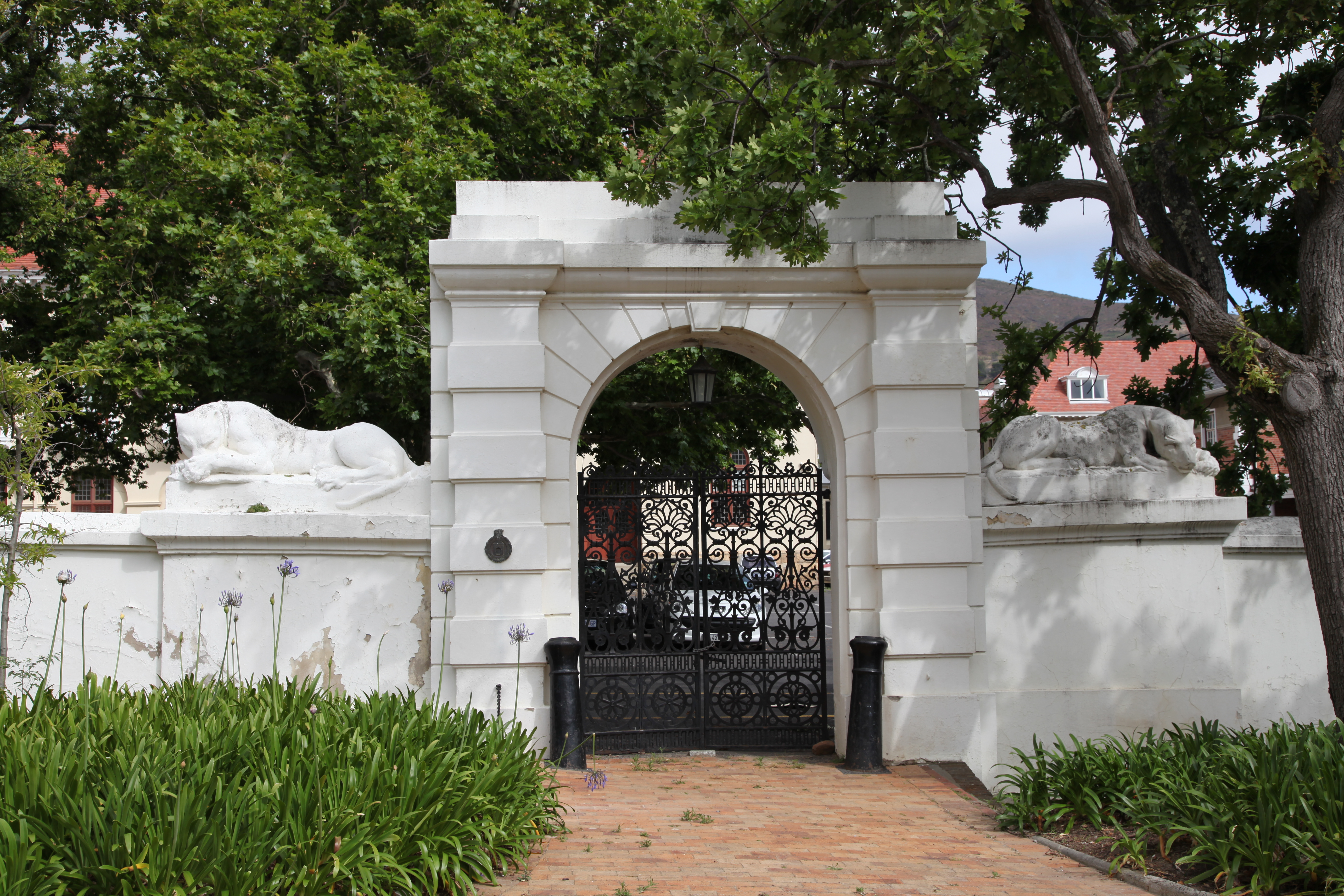
Company's Garden
On 29 April 1652, a master gardener named Hendrik Boom pushed a spade into the soil at the foot of Table Mountain and planted the first seeds of what would become South Africa's oldest garden. He was not making history; he was making dinner. The Dutch East India Company needed fresh vegetables to provision ships on the grueling six-month voyage between the Netherlands and the spice islands of Indonesia, and the Cape of Good Hope was the logical midpoint. Boom planted salad herbs, peas, beans, radishes, beet, spinach, and cabbage - practical crops for scurvy-ravaged sailors. Within a year, the garden was feeding the settlement year-round. Within a decade, nearly every garden plant of Europe and India was growing in its beds. The Company's Garden was never meant to become a city park. It was a survival strategy that outlived the empire that created it.
Trial, Error, and Turnips
The settlers kept meticulous records, noting every seed sown and every harvest gathered, building through trial and error a planting calendar adapted to the Cape's Mediterranean climate. They grew asparagus and turnips alongside the staples, caught fish, trapped wild game, and traded with the Khoisan people for cattle and sheep, exchanging copper and tobacco for livestock. By 1653 the garden was self-sustaining. By 1656, the settlement had outgrown it, and additional farmland was prepared at Rondebosch to the south. By 1658, potatoes and maize were the only major crops not yet introduced. The garden's success was its own undoing as a purely functional space - what began as a supply depot was becoming a settlement, and what began as a settlement was becoming a colony.
From Cabbages to Camellias
Before 1680, the Company's Garden was all business: rows of vegetables, no ornamental pretension. Then Governor Simon van der Stel redesigned the grounds, transforming the utilitarian plot into something beautiful. During the seventeenth century, writers of various nationalities claimed that visitors who had seen the most celebrated gardens of Europe and India agreed that nowhere else offered so great a variety of trees, shrubs, vegetables, and flowers in one place. The garden superintendent Hendrik Bernard Oldenland compiled a herbarium so comprehensive that after his sudden death it was shipped to the Netherlands, where it resurfaced in 1770 in the possession of Professor Burmann of Amsterdam. The garden had become a botanical institution, one of the earliest systematic collections of Cape flora.
What Survives
A pear tree planted around 1652 still stands in the garden - the oldest cultivated pear tree in South Africa, a living connection to the moment European agriculture first took root on this continent. A rose garden designed in 1929 blooms near a fish pond. The Delville Wood Memorial Garden commemorates the World War I battle in France where a predominantly South African force of more than 3,000 soldiers was reduced to 755 survivors. Squirrels descended from grey squirrels introduced by Cecil Rhodes scamper along paths shaded by botanically valuable trees. Egyptian geese and laughing doves share the lawns with office workers eating lunch. The garden sits surrounded by institutions that define the nation: the South African Parliament and Tuynhuys on one side, the National Library and St George's Cathedral on another, the Slave Lodge - now a museum - nearby.
The Seed of a City
The Company's Garden is a national heritage site, and the title is earned. Every major thread of South African history passes through or near this green rectangle in the heart of Cape Town. The Dutch East India Company planted it. Enslaved people tended it. British administrators walked its paths. Apartheid-era politicians debated in the Parliament that borders it. And today, Capetonians of every background rest on its benches beneath the flat silhouette of Table Mountain, which still feeds the garden's water supply through springs on its lower slopes, channeled via the Molteno Dam. The garden that was meant to grow cabbages for sailors grew a city instead.
From the Air
The Company's Garden (33.928S, 18.417E) is a rectangular green space in central Cape Town, adjacent to the South African Parliament buildings. It is visible from altitude as a distinct tree-covered park in the CBD, bordered by Government Avenue. Table Mountain (1,085m) rises directly to the south and west. Cape Town International (FACT/CPT) is approximately 18km to the east. The garden is surrounded by major civic buildings including Parliament, the National Library, and museums. Signal Hill and Lions Head are visible to the northwest.