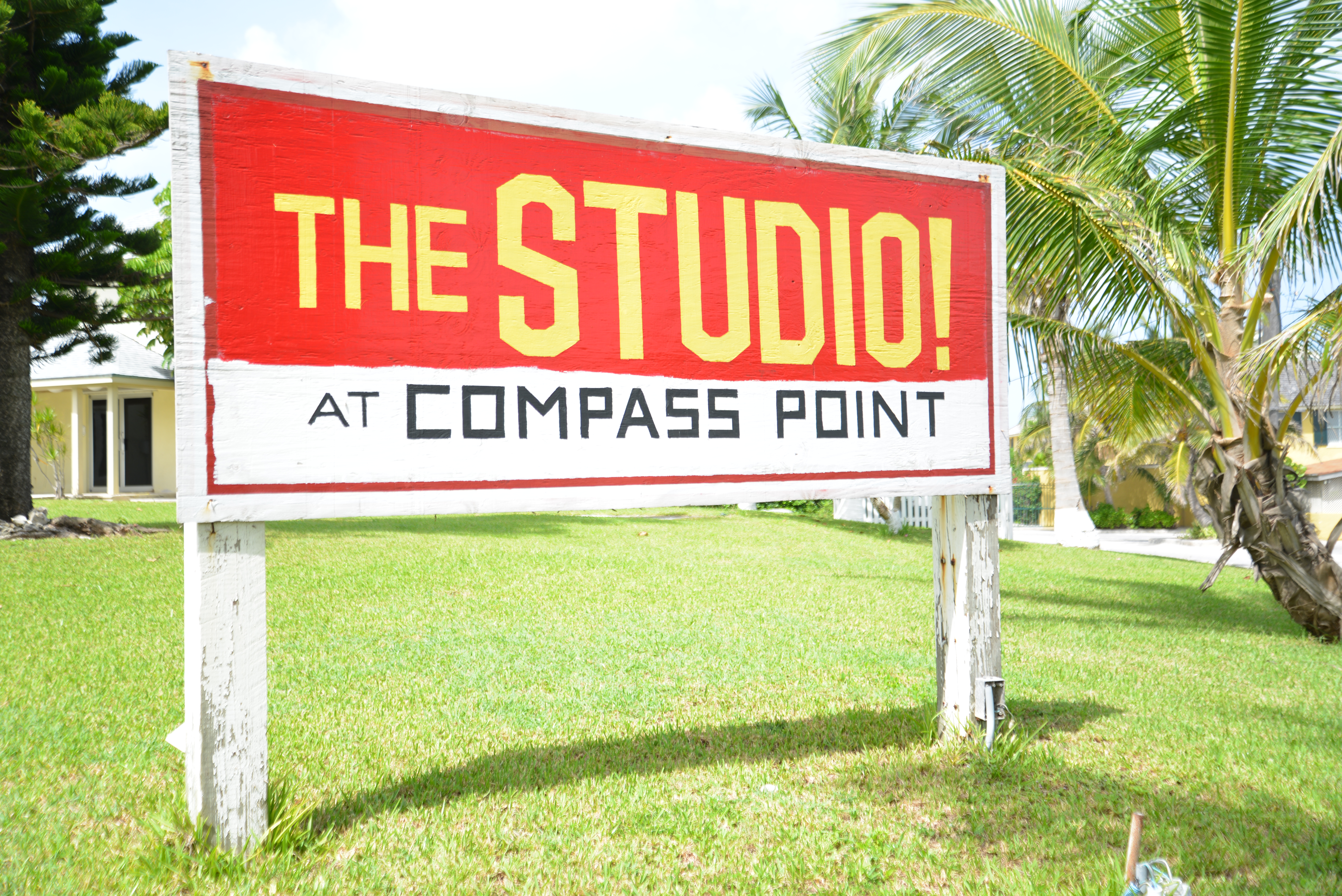
Compass Point Studios
Chris Blackwell knew exactly what he wanted. "A Jamaican rhythm section with an edgy mid-range and a brilliant synth player," the Island Records founder said. "And I got what I wanted, fortunately." What he got was the Compass Point Sound, a fusion born sixteen kilometers west of Nassau in a studio complex he built in 1977. Over the next decade, that studio on New Providence Island would become one of the most creatively fertile recording spaces in the world, attracting the Rolling Stones, AC/DC, David Bowie, Iron Maiden, and Talking Heads to a patch of Bahamian coastline where the rhythm section played reggae and the results sounded like nothing anyone had heard before.
The All Stars Assemble
In 1980, Blackwell gathered a group of musicians and told them to become a band. The core was Sly Dunbar on drums and Robbie Shakespeare on bass, the legendary Jamaican rhythm section already signed to Island Records. Around them, Blackwell assembled Mikey Chung on guitar, Uziah "Sticky" Thompson on percussion, and British guitarist Barry Reynolds, who had been a session player for Marianne Faithfull. The crucial ingredient was French-African keyboardist Wally Badarou, whose synthesizer work would give the Compass Point Sound its distinctive shimmer. Tyrone Downie, formerly of the Wailers, later joined on keyboards. With producer and engineer Alex Sadkin mixing, this group became the Compass Point All Stars, a house band whose influence would ripple through popular music for years.
Grace Jones and the Sound
The All Stars' first and most defining collaboration was with Grace Jones. Her trilogy of albums recorded at Compass Point, Warm Leatherette, Nightclubbing, and Living My Life, transformed her from a disco diva into one of the most compelling artists of the 1980s. The records fused reggae's heavy bottom end with European electronic textures and Jones's commanding, androgynous presence. "Pull Up to the Bumper" and "My Jamaican Guy" became signature tracks. Joe Cocker's Sheffield Steel emerged from the same sessions, proving the sound could bend to fit a raspy rock voice as readily as Jones's cool contralto. The studio was not just recording music; it was inventing a genre that had no name, somewhere between reggae, new wave, and something entirely its own.
A Musical Colony
Compass Point became more than a studio; it became a community. Robert Palmer lived there as a resident musician, contributing backing vocals alongside Jimmy Cliff to Joe Cocker sessions. Chris Frantz and Tina Weymouth of Talking Heads set up residence and launched Tom Tom Club, whose "Genius of Love" was engineered and mixed by Steven Stanley at the facility. Through the 1980s, the Compass Point name attached itself to an expanding constellation of projects: productions by Bill Laswell, remixes by Larry Levan and Francois Kevorkian, albums by the B-52's and Black Uhuru. The studio drew artists of wildly different genres to the same rooms, and something about the salt air and the rhythm section kept producing results that sounded coherent despite the diversity.
Decline and Reinvention
The magic depended on people, and people are fragile. In 1987, Alex Sadkin, the producer and engineer who had been essential to the Compass Point Sound, died in a car crash. Blackwell was drifting toward other business ventures. The studio entered a long decline through the early 1990s. A revival came in 1992 when Terry and Sherrie Manning took over management and rebuilt the two large recording rooms with modern equipment. A new wave of artists followed: Julio Iglesias, Diana Ross, Celine Dion, Sade, Mariah Carey, and Bjork all recorded there during the renovated era. The music was different, more polished and mainstream, but the Bahamian setting still held its allure.
The Last Track
In September 2010, Compass Point Studios closed for good. The official statement cited "socio-political based happenings which made it untenable to continue business in The Bahamas," a vague epitaph for a place that had produced some of the most innovative music of its era. Members of the original All Stars continued to collaborate remotely on scattered projects, including Grace Jones's Hurricane album, but the physical space where Blackwell's experiment had taken shape fell silent. What remains is the catalog: dozens of albums that carry the unmistakable stamp of that rhythm section, that synthesizer, that particular combination of Caribbean groove and studio ambition that could only have happened in exactly that place.
From the Air
Located at 25.06N, 77.48W on the northern coast of New Providence Island, roughly 16 kilometers west of downtown Nassau. Lynden Pindling International Airport (MYNN) is approximately 6 nautical miles to the east. The studio site sits along the coastal road west of the airport. Approach from the north at 2,000-3,000 feet for views along New Providence's northern shoreline. The colorful buildings of the Compass Point Beach Resort, adjacent to the former studio location, serve as a visual reference point from the air.