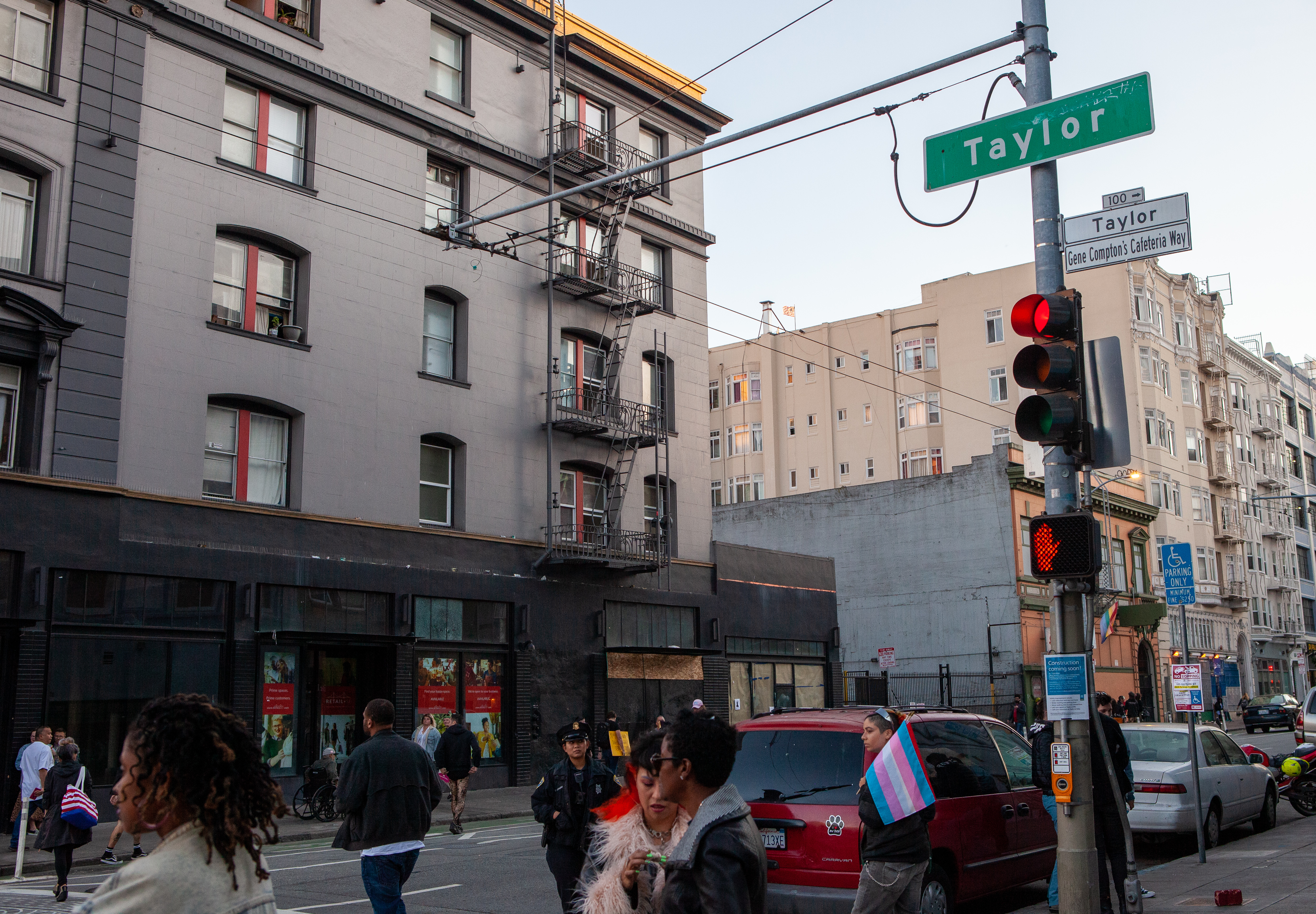
Compton's Cafeteria Riot
Three years before the Stonewall Inn, there was Compton's Cafeteria. In August 1966, in the Tenderloin district of San Francisco, transgender women and drag queens -- people who had endured constant police harassment, arrests for the crime of wearing clothing deemed inappropriate for their assigned sex, and violence from both officers and civilians -- fought back. When a police officer grabbed a trans woman to arrest her, she threw her coffee in his face. The room erupted. Tables overturned, dishes shattered against walls, and the plate-glass window of the cafeteria went out in a cascade of glass. It was one of the first LGBTQ-related uprisings in American history, and it happened in a 24-hour diner.
The Tenderloin Before the Riot
The 1960s Tenderloin was a neighborhood where San Francisco's most marginalized people converged. Transgender women, many of whom could not find employment elsewhere, worked the streets. Drag queens, gay men, and sex workers shared the same blocks with single-room-occupancy hotels and all-night cafeterias. Police sweeps were routine and often violent. Officers would arrest transgender women under anti-cross-dressing ordinances, and physical abuse during arrests was common. Compton's Cafeteria, a 24-hour Gene Compton's chain restaurant at Turk and Taylor Streets, served as an informal gathering spot for the neighborhood's transgender community -- one of the few places they could sit, eat, and exist in public.
The Night the Coffee Cup Flew
The precise date in August 1966 has been lost to history, but the sequence of events has been reconstructed from witnesses. Police entered Compton's Cafeteria to clear out the transgender patrons, as they had done many times before. When an officer grabbed a trans woman, she responded by throwing her cup of coffee at him. The act of defiance cascaded through the room. Patrons fought back, overturning tables and throwing sugar shakers, dishes, and anything within reach. The cafeteria's plate-glass window was smashed. The fighting spilled into the street, where a sidewalk newsstand was burned and cars were damaged. Police called for backup, but the crowd did not disperse easily.
Before Stonewall, There Was This
The Compton's Cafeteria riot preceded the Stonewall riots by three years, yet it remained largely unknown for decades. The uprising received minimal press coverage at the time, and the participants -- transgender women and drag queens, among the most marginalized members of an already marginalized community -- had neither the institutional support nor the media access to shape the narrative of what had happened. It was not until the 2005 documentary Screaming Queens: The Riot at Compton's Cafeteria, directed by Victor Silverman and Susan Stryker, that the event received wide public recognition.
The Beginning of Transgender Activism
The aftermath of the riot produced tangible results. In its wake, the Tenderloin saw the establishment of organizations serving transgender people, and the neighborhood's transgender community began organizing for their rights with a new sense of collective power. The riot marked the beginning of transgender activism in San Francisco, planting seeds that would grow through the following decades into a national movement. In 2006, the city installed a commemorative plaque at the corner of Turk and Taylor Streets. The cafeteria is long gone, replaced by other businesses, but the corner remains a landmark in the history of civil rights -- the place where people who had been told they did not exist stood up and demanded to be seen.
From the Air
Located at 37.7833°N, 122.4108°W at the corner of Turk and Taylor Streets in San Francisco's Tenderloin district. The cafeteria no longer exists, but the intersection is commemorated with a plaque. Best viewed at 1,500-2,500 feet AGL. Nearest airports: KSFO (11 nm south), KOAK (10 nm east). The Tenderloin is the dense grid between Market Street and Geary Boulevard, east of Van Ness Avenue.