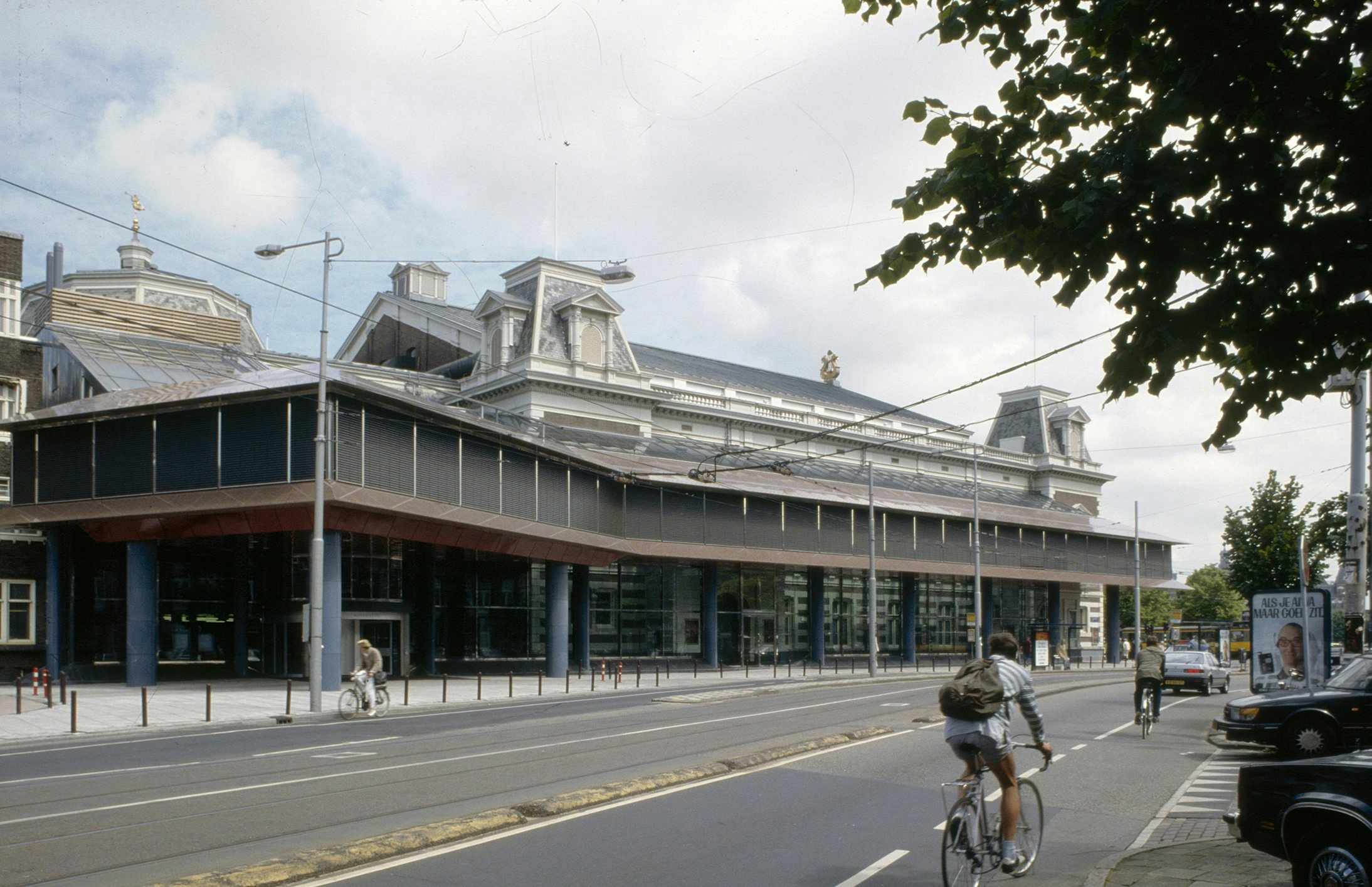
Royal Concertgebouw
There is a layer of dust in the Royal Concertgebouw's Main Hall that nobody is allowed to touch. It has settled into the ornate moldings and gilded surfaces over more than a century, and the caretakers leave it exactly where it is. Remove it, and you risk altering the acoustic perfection that makes this Amsterdam concert hall one of the finest on Earth - ranked alongside Carnegie Hall, Boston's Symphony Hall, and Vienna's Musikverein.
Built on Two Thousand Wooden Piles
When construction began in 1883, the site was a pasture outside Amsterdam, in what was then the municipality of Nieuwer-Amstel. The boggy Dutch soil required an extraordinary foundation: workers drove 2,186 wooden piles, each 12 to 13 meters long, into the earth before a single stone could be laid. Architect Adolf Leonard van Gendt drew inspiration from the Gewandhaus in Leipzig, which had opened just two years earlier. The Concertgebouw was completed in late 1886, but bureaucratic delays with the local municipality - filling in a canal, paving roads, installing streetlights - pushed the grand opening to April 11, 1888.
The Science of Sound
The Main Hall, known as the Grote Zaal, seats 1,974 and achieves what acousticians call a "long reverberation time" - 2.8 seconds when empty, 2.2 seconds with an audience. This makes it ideal for the lush orchestral works of Mahler and the late Romantic repertoire. The inaugural concert brought 120 musicians and a 500-voice chorus performing Wagner, Handel, Bach, and Beethoven. Just seven months later, on November 3, 1888, the resident Concertgebouw Orchestra gave its first performance. That ensemble would eventually receive the royal designation "Koninklijk" on its centenary in 1988.
Rock and Royalty
The hall's acoustics are technically unsuited for amplified music, but that didn't stop Led Zeppelin, Pink Floyd, and The Who from performing there in the 1960s. The building earned its own royal title in 2013, when Queen Beatrix bestowed "Koninklijk" on the venue for its 125th anniversary. Today, the Concertgebouw hosts some 900 events annually for more than 700,000 visitors, making it one of the most-attended concert venues in the world. The smaller Recital Hall, an oval-shaped space called the Kleine Zaal, offers a more intimate setting behind the main auditorium.
A Living Monument
The names of 46 composers are displayed on the balcony ledges and walls of the Main Hall - a permanent honor roll of musical history. The building stands as a Rijksmonument, a protected national heritage site, in the Amsterdam-Zuid district. From the air, the neoclassical structure with its gilded lyre on the roof marks a cultural landmark that has shaped European classical music for well over a century. Inside, that untouchable dust continues to do its invisible work, helping sound waves travel in ways that modern architects still struggle to replicate.
From the Air
Located at 52.3563N, 4.8791E in Amsterdam's Museum Quarter. The neoclassical building with its distinctive gilded lyre is visible from lower altitudes. Nearest airport: Amsterdam Schiphol (EHAM), approximately 10 km southwest. Best viewed when approaching from the south, where the building's facade and surrounding Museumplein park provide clear visual reference.