Lexington and Concord: Where the Shot Heard Round the World Was Fired
Nobody knows who fired first. On the morning of April 19, 1775, approximately seventy militiamen assembled on Lexington Green to face 700 British regulars marching to seize colonial weapons stored in Concord. The British commander ordered the colonists to disperse; as they began to comply, a shot rang out. Who fired it became immediately contested and remains unknown. But the volley that followed killed eight militiamen and wounded ten. The British marched on to Concord, found few weapons, and at the North Bridge faced organized resistance: 'the shot heard round the world,' in Emerson's phrase. The running battle back to Boston left nearly 300 British casualties. The war that would create a nation had begun.
The Night
Paul Revere rode from Boston on the night of April 18, warning that British troops were crossing the Charles River. William Dawes took a different route; Samuel Prescott joined them. Revere was captured before reaching Concord, but the warning spread: the regulars were coming to seize the ammunition and powder stored at Concord, and possibly to arrest Samuel Adams and John Hancock at Lexington. Militiamen across the countryside prepared to assemble. The system worked exactly as designed - the warning network, the response protocol, the readiness to confront. By dawn, armed colonists waited at Lexington Green.
The Green
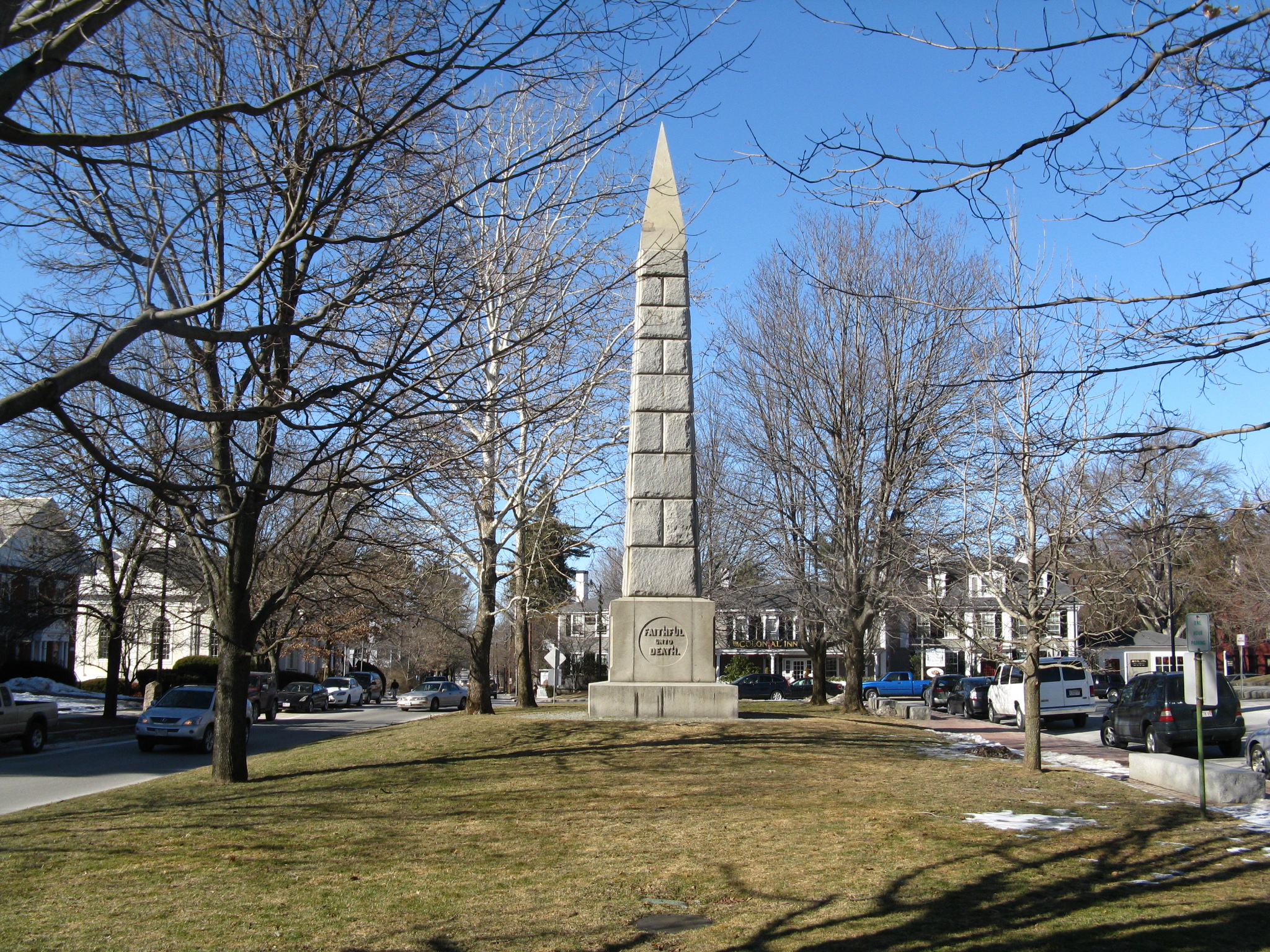
Captain John Parker commanded the Lexington militia - seventy-seven men, some of them old, some of them boys. The British column outnumbered them ten to one. Parker told his men: 'Stand your ground. Don't fire unless fired upon. But if they mean to have a war, let it begin here.' When Major John Pitcairn ordered the militia to disperse, Parker complied - or began to. Someone fired. The British regulars responded with volleys and bayonets. Within minutes, eight militiamen lay dead, ten wounded. The British reformed and marched toward Concord. The bodies on the green became the Revolution's first martyrs.
The Bridge
At Concord, the British found little of the arms they sought - the colonists had moved most of them. At the North Bridge, approximately 400 militiamen from Concord and surrounding towns faced a smaller British detachment. When the British fired warning shots that killed two colonists, Major John Buttrick ordered: 'Fire, fellow soldiers, for God's sake, fire!' The militia fired, and British regulars fell. The retreat began. Ralph Waldo Emerson, whose grandfather watched from nearby, would later write: 'Here once the embattled farmers stood / And fired the shot heard round the world.' The first organized colonial resistance had succeeded.
The Battle Road
The British retreat became a running battle. From Concord to Boston, colonists fired from behind walls, trees, and buildings. The disciplined regulars, trained for European-style warfare, faced guerrilla tactics for which they had no answer. Only reinforcements at Lexington prevented complete disaster. By the time the British reached Charleston, they had suffered nearly 300 casualties. The colonists had proven they could fight; more importantly, they had proven they would fight. The news spread through the colonies within days. There was no turning back. The political dispute had become a war.
Visiting Lexington and Concord
Minute Man National Historical Park preserves the Battle Road between Lexington and Concord, accessible from Boston via Route 2. The Minute Man Visitor Center provides orientation and a multimedia presentation. Lexington Green, in the town center, is separate from the park; the Hancock-Clarke House where Adams and Hancock stayed and the Munroe Tavern are nearby. The North Bridge in Concord, site of the famous shot, is accessible by a short walk from the parking area. The Battle Road Trail allows hiking along the route of the British retreat. Reenactments occur on Patriots' Day (third Monday in April). The experience connects specific ground to world-changing events - the green where men died for a principle, the bridge where they fired back.
From the Air
Located at 42.46°N, 71.35°W in the towns of Lexington and Concord, Massachusetts, northwest of Boston. From altitude, the colonial-era Battle Road is partially visible as a historic route connecting the two towns, now preserved as Minute Man National Historical Park. Lexington Green appears as a triangular common in the town center. Concord's North Bridge crosses the Concord River, the site visible as a break in the riverside woods. The suburban development that now fills the towns obscures the colonial landscape, but the preserved sites remain green amid the density. What appears from altitude as prosperous Boston suburbs includes the ground where American independence was fought for - where farmers faced an empire and proved they would die rather than submit.