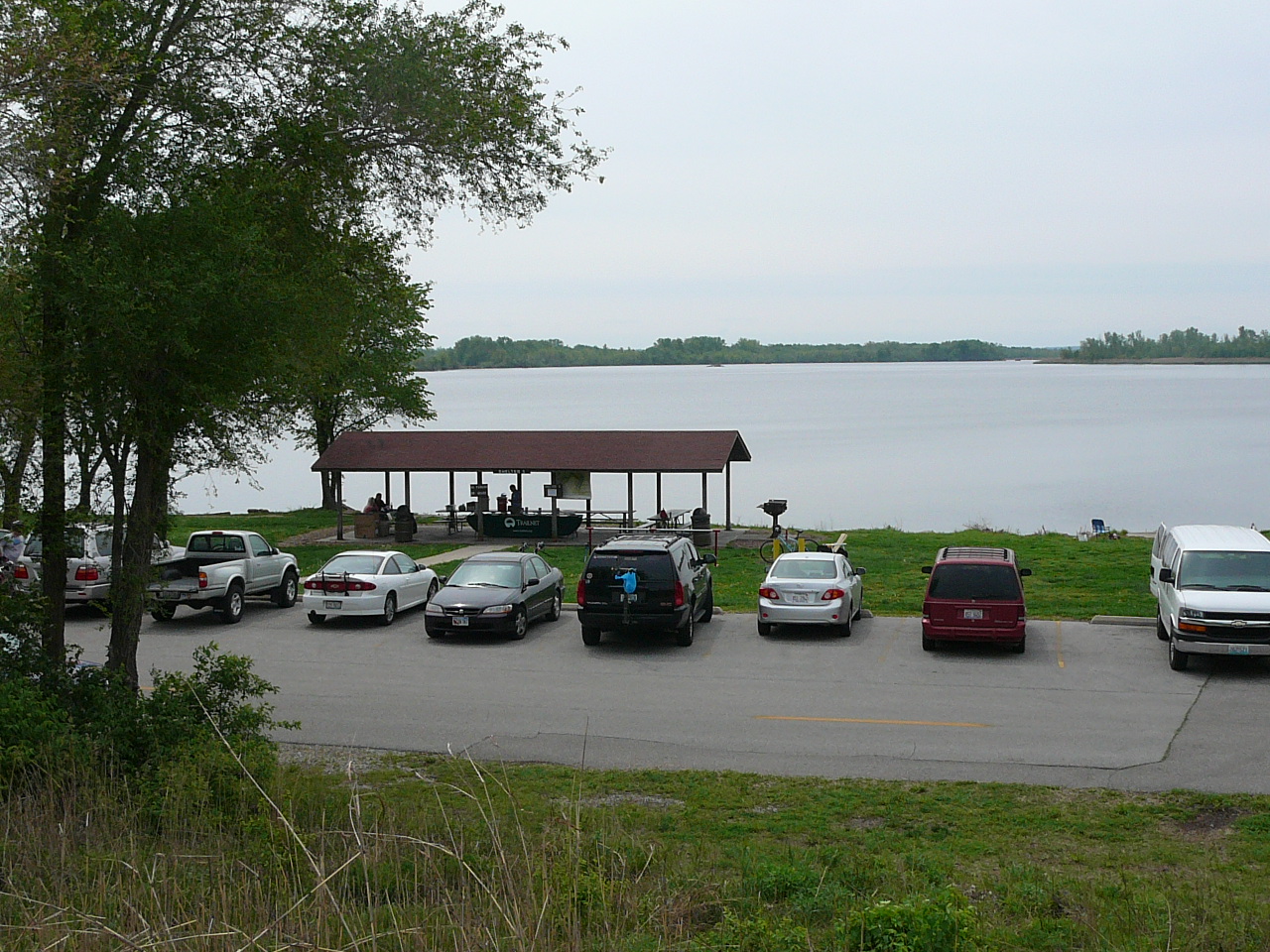
The Confluence: Where the Missouri Surrenders to the Mississippi
Twenty miles north of St. Louis, the continent rearranges itself. The Missouri River - 2,341 miles from its source in Montana, draining a sixth of the continental United States - surrenders its name to the Mississippi. The confluence is visible from space: the Missouri's brown sediment pouring into the Mississippi's greener water, two colors running parallel for miles before finally mixing. Lewis and Clark passed this point heading upstream in 1804, beginning the expedition that would map the Missouri to its source. The confluence was the gateway to the West, the place where eastward-flowing commerce met westward-flowing ambition. Today it's a state park, a place to stand and watch two rivers become one, and to contemplate the forces that shaped a nation.
The Rivers
The Missouri River is the longest river in North America - 2,341 miles from Three Forks, Montana, to this confluence. It drains 529,000 square miles, including parts of ten states and two Canadian provinces. The Mississippi River, shorter but arguably more famous, drains 1.2 million square miles - about 40% of the continental United States. At the confluence, the Missouri is actually the larger river by volume, carrying more water than the Mississippi above the junction. The Mississippi keeps the name because the Mississippi Valley was settled first, mapped first, named first. Geography doesn't care about names.
The View
The confluence is best seen from the air or from elevated viewpoints. From ground level at Confluence Point State Park, you stand on a sliver of land between the two rivers, watching water pass on either side. From the Missouri side, you see the Mississippi. From the Mississippi side, you see the Missouri. The colors differ - the Missouri carries more sediment, appearing brown; the Mississippi, cleaner upstream, appears greener. The two colors run parallel for several miles downstream before finally mixing. On satellite images, the junction is unmistakable: two different waters becoming one, visible from space as they've been visible from land for millennia.
The History
This confluence determined St. Louis's destiny. Founded in 1764 just downstream, St. Louis controlled both rivers - the Mississippi's commerce with New Orleans and the Missouri's access to the continental interior. Lewis and Clark departed from here in 1804, paddling upstream into the unknown. Fur traders, settlers, and eventually railroads followed. The Missouri was the highway west before there were highways, navigable (barely) to Fort Benton, Montana - the point beyond which only land routes continued. The Civil War was fought partly over control of these rivers; whoever held the confluence held the West.
The Park
Confluence Point State Park occupies the actual confluence, accessible via a winding road through the Missouri River floodplain. The park is frequently flooded - major floods in 1993 and 2019 submerged the entire area. When accessible, the park offers trails to the confluence point itself, a Lewis and Clark memorial, and views of both rivers. The park was created in 2004 to commemorate the Lewis and Clark bicentennial. The setting is appropriately humble: a small park at the edge of agricultural land, nothing grand, just two rivers meeting as they have for millions of years.
Visiting the Confluence
Confluence Point State Park is located in St. Charles County, Missouri, accessible via Route 94 and local roads. Check park conditions before visiting - flooding is common and closures are frequent. When open, the park offers hiking trails to the confluence viewpoint. The Lewis and Clark Boat House and Museum in St. Charles provides context. The confluence is also visible from the Chain of Rocks Bridge, a former Route 66 crossing now used for hiking and biking. St. Louis is 20 miles south with extensive services and attractions. The confluence is free, peaceful, and unremarkable until you remember what it means: the place where the rivers that drained half a continent become one, the point where West meets East, still flowing after everything we've done to it.
From the Air
Located at 38.82°N, 90.12°W in St. Charles County, Missouri. From altitude, the confluence is visible as two rivers of different colors meeting - the brown Missouri entering the greener Mississippi from the west. The rivers run parallel for several miles before mixing completely. St. Louis is visible to the south; the Missouri River extends west toward Kansas City. The Mississippi flows south toward Memphis and New Orleans. The floodplain around the confluence is agricultural, frequently flooded, and largely undeveloped. The Chain of Rocks Bridge is visible downstream. This is one of the most significant geographical points in North America - the junction of drainage systems that together cover 1.7 million square miles.