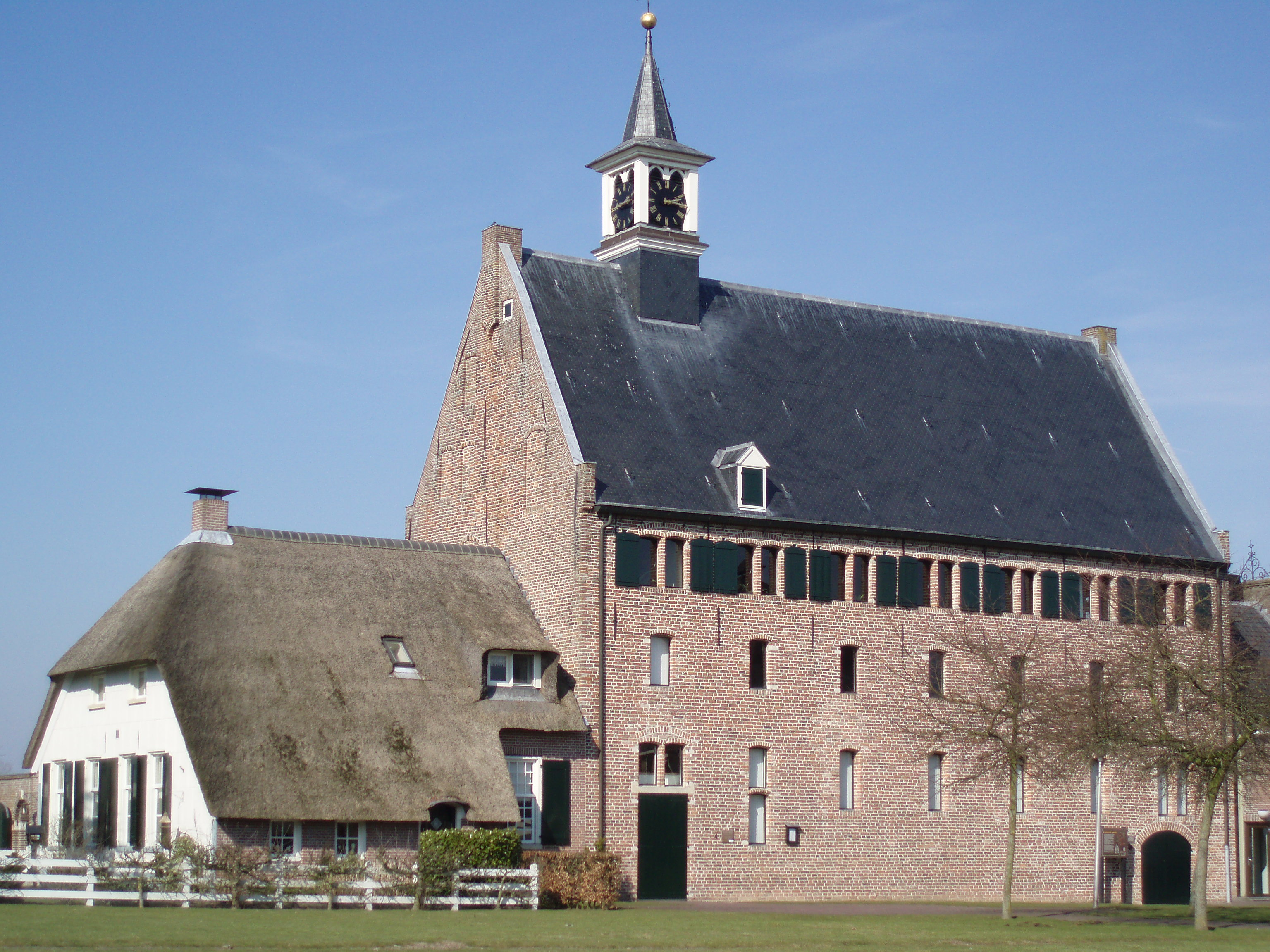
Congregation of Windesheim
In the spring of 1386, six men carrying nothing but their vows assembled a cluster of huts on the low ground east of the IJssel river. They had been chosen, the chronicles say, for their fitness. One of them was John, the elder brother of a young scribe who would later write a book called The Imitation of Christ - perhaps the most-copied devotional manual in Christian history. From those huts grew the Congregation of Windesheim, and from Windesheim spread a movement that would shape European spiritual life for a hundred years before the Reformation arrived to drown out almost everything it had built.
Why the Huts
The huts existed because the Brethren of the Common Life had a problem. Founded by the preacher Gerard Groote a few years earlier, the Brethren lived in shared houses, copied manuscripts for a living, and took no formal vows - a deliberately quiet rebuke to the wealthy mendicant orders of the day. The friars noticed, and attacked. On his deathbed in 1384, Groote advised his followers to do something prudent: adopt the rule of an approved Order, so the institutional Church could not so easily dismantle them. His successor sent six brothers to Eymsteyn monastery to learn the usages of the Augustinian canons regular. Two years later, on the IJssel floodplain, those same six men raised their huts. By 17 October 1387, the church was consecrated and they took their vows. Hospitality was their first declared work.
The Modern Devotion
What Windesheim carried out into the world was the Devotio Moderna - the Modern Devotion - a spirituality of inwardness, plain language, frequent communion, and disciplined personal practice. The movement insisted that holiness was not the property of the cloister alone; ordinary believers, working in ordinary trades, could pursue it through reading, prayer, and self-examination. Thomas a Kempis, who entered the related house of Mount Saint Agnes near Zwolle, distilled the entire program into a small book of devotional aphorisms. The Imitation of Christ became, after the Bible, the most widely circulated Christian text of the late medieval and early modern centuries. It is still in print. Most readers never know it grew out of a network of canons headquartered just down the river.
Forty-Three Monasteries
Under the second prior, Johann Vos, the network spread quickly: Marienborn near Arnhem and Nieuwlicht near Hoorn in 1392, papal approval from Boniface IX in 1395, eventually houses scattered across the Low Countries and into Germany. The chief reformer of the next generation was Johann Busch, who entered Windesheim in 1419 and spent the rest of his life on the road. The historian Grube counted forty-three monasteries in whose reform Busch had a share - twenty-seven Augustinian, eight Benedictine, five Cistercian, three Premonstratensian. In 1451 the great Cardinal Nicholas of Cusa, serving as papal legate, entrusted him with reforming the Augustinian houses of northern Germany. Some Protestant writers would later claim the Windesheimers as forerunners of their own Reformation, but the canons themselves remained obedient to Rome to the end.
What the Iconoclasts Left
In 1572, during the Dutch Revolt against Spain, the people of Zwolle came up the river and destroyed the altars in the Windesheim church. The priory was formally suppressed in 1581. There are practically no remains of the original buildings - a few foundations, a name on a map. The last prior, Marcellus Lentius, died in 1603 having never gained possession of his own monastery. The German houses survived longer, shifting toward pastoral work in newly Protestant towns, but the French Revolution finished what the Reformation had started. Frenswegen, the last house, closed in 1809. The final canon of the old congregation, Clemens Leeder, died in Hildesheim in 1865 - the last living thread of an order that had once reshaped European piety. In 1974 the order was refounded in Bavaria, at St. Michael's Priory in Paring, where a small community keeps the rule today.
From the Air
Located at 52.45 degrees north, 6.13 degrees east, on the east bank of the IJssel river about 5 kilometers south of Zwolle. Best viewed from 3,000 feet on a clear day; the village of Windesheim is small and quiet, but the IJssel itself is a striking navigational landmark, curving north toward the IJsselmeer. Nearest airports: Lelystad (EHLE) about 50 km west, Twente (EHTW) about 60 km east. The Schiphol (EHAM) Class A airspace begins well west of here.