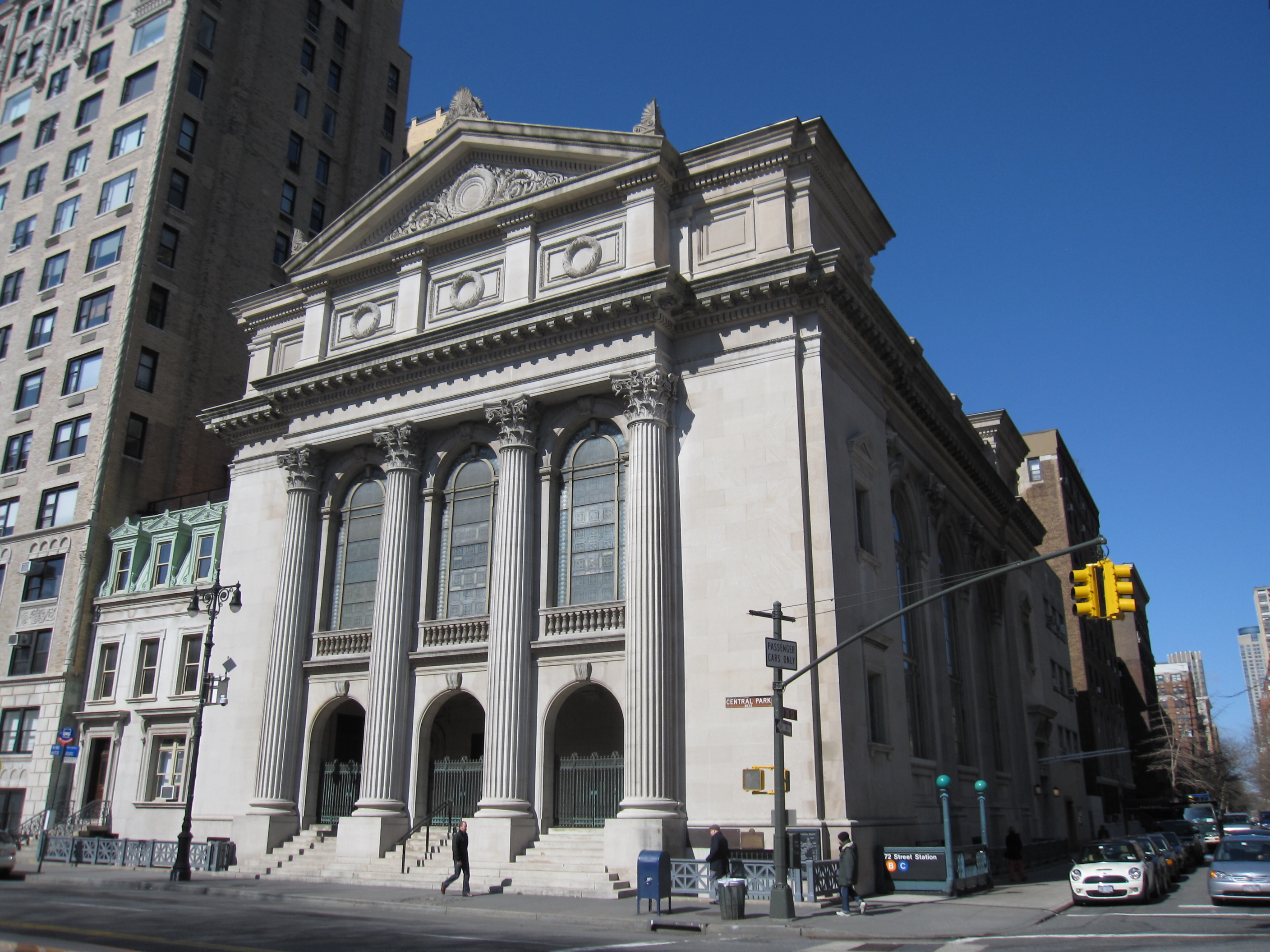
Congregation Shearith Israel
Twenty-three people stepped off a ship in New Amsterdam in September 1654, and American Judaism began. They were Sephardic Jews -- Spanish and Portuguese families who had fled the Inquisition for the relative safety of Dutch Brazil, only to be uprooted again when Portugal reconquered that colony. They arrived in Peter Stuyvesant's settlement with little more than their faith, and Stuyvesant wanted them gone. He petitioned the Dutch West India Company to expel them. The company refused. The refugees stayed, and the congregation they founded -- Shearith Israel, "Remnant of Israel" -- has never stopped worshipping.
Seventy-Six Years Without Walls
Permission to remain did not mean permission to worship publicly. For decades, the congregation gathered in rented rooms -- first on Beaver Street, then on Mill Street in Lower Manhattan. It was not until 1730, seventy-six years after those first refugees arrived, that Shearith Israel built its own synagogue on Mill Street, in what is now the Financial District. That building reportedly had access to a natural spring used as a mikveh for ritual baths. Before walls, before a building of their own, the congregation's first act of permanence was arranging for a cemetery in 1656 -- a sobering reminder that establishing a place to bury the dead felt more urgent than establishing a place to pray.
Five Buildings, One Congregation
Shearith Israel has occupied five synagogue buildings since 1730, each one tracking Manhattan's northward march. The Mill Street synagogue served until 1818, when it was rebuilt and expanded. In 1834, the congregation moved to 60 Crosby Street; in 1860, to 19th Street. The current Neoclassical building at 2 West 70th Street, where Central Park West meets the Upper West Side, has been home since 1897. It was extensively refurbished in 1921. Through the American Revolution, the congregation's hazzan Gershom Mendes Seixas -- an ardent patriot -- relocated the entire congregation to Philadelphia rather than worship under British occupation. They returned to New York after the war, one of the few institutions that could claim continuity across that rupture. Until 1825, Shearith Israel was the only Jewish congregation in all of New York City.
Seedbed of American Judaism
What makes Shearith Israel remarkable beyond its age is what it spawned. In the late 19th century, as Reform Judaism gained influence in America, the congregation's rabbi, Henry Pereira Mendes, pushed back. In 1886, Mendes cofounded the Jewish Theological Seminary, which held its first classes inside Shearith Israel. A decade later, in 1898, he helped establish the Orthodox Union as an alternative to the Reform movement's institutional umbrella. When Solomon Schechter took over JTS and steered it toward what became Conservative Judaism, Shearith Israel eventually broke with the seminary it had helped create. The congregation thus played a direct role in the formation of three of the largest Jewish religious organizations in the United States -- JTS, the Orthodox Union, and what became the United Synagogue of Conservative Judaism -- while remaining firmly Orthodox itself.
A Roll Call of American Life
The congregation's membership reads like a cross-section of American public life across centuries. Emma Lazarus, whose poem graces the Statue of Liberty, worshipped here. So did Benjamin N. Cardozo, who served as a Justice of the Supreme Court from 1932 until his death in 1938. Commodore Uriah P. Levy became the first Jewish flag officer in the United States Navy. Isaac Pinto prepared the first Jewish prayer book published in America, which was also the first English translation of the Siddur. Mordecai Manuel Noah -- playwright, sheriff, diplomat, and journalist -- was a member. Judith Kaye served as Chief Judge of New York from 1993 to 2008. The congregation that began with twenty-three refugees produced leaders who shaped American law, letters, military service, and diplomacy.
From the Air
Located at approximately 40.775N, 73.977W at 2 West 70th Street on the Upper West Side of Manhattan, directly at the corner of Central Park West. From altitude, look for the Neoclassical building at the southwest corner of Central Park. The green expanse of Central Park provides an excellent visual reference. Nearby airports: KJFK (John F. Kennedy International), KLGA (LaGuardia), KEWR (Newark Liberty). Best viewed at 2,000-4,000 ft AGL.