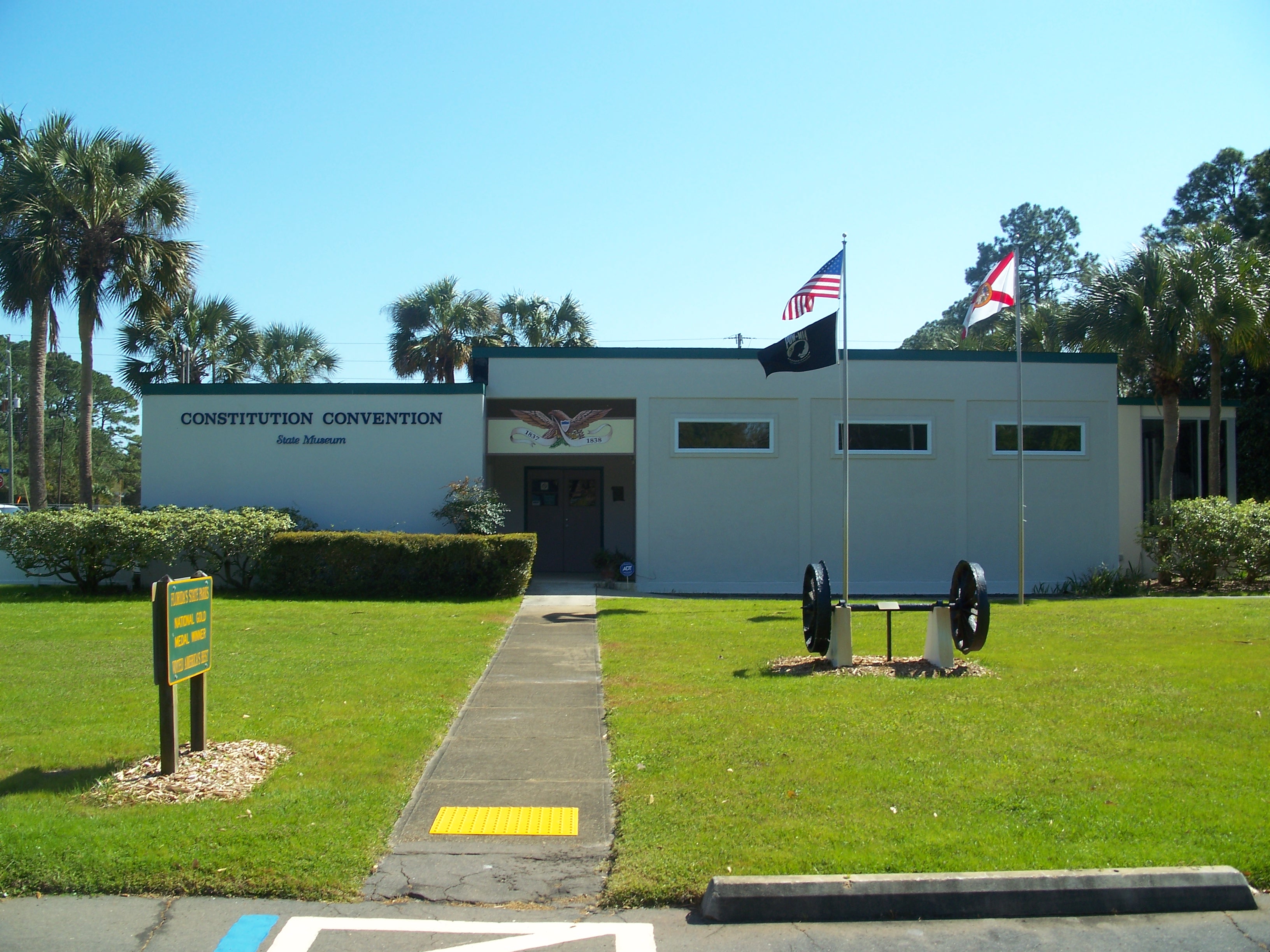
Constitution Convention Museum State Park
The town of St. Joseph no longer exists. Founded in 1835 on the shores of the Gulf of Mexico, it swelled into one of the wealthiest communities in territorial Florida, hosted the convention that drafted the state's first constitution, and then disappeared entirely by 1844 - erased by yellow fever, hurricanes, and fire. Today, just outside Port St. Joe on US Route 98 in northwestern Florida, a state park museum stands where that vanished town once thrived, preserving the story of the 56 delegates who gathered here to argue, debate, and ultimately forge a path to statehood.
A Boomtown's Bold Gambit
St. Joseph was barely three years old when it pulled off an audacious political coup. In 1838, the question of whether the Florida Territory should seek statehood divided the region sharply. The wealthier planters of Middle Florida pushed hard for admission to the Union, while settlers in East and West Florida worried that a state government would be financially unsustainable. Tallahassee, the territorial capital, seemed the logical venue for a constitutional convention, but St. Joseph's promoters lobbied aggressively and won the honor. The town had ambitions that matched its waterfront real estate - it was positioning itself as a rival to Apalachicola, the established cotton port just across the bay.
Forty Days That Made a State
From December 3, 1838, through January 11, 1839, a group of territorial delegates assembled in St. Joseph to draft Florida's first constitution. The debates were fierce. Questions of slavery, banking regulation, and the boundaries of governmental power consumed weeks of argument in the convention hall. Territorial Governors Robert Reid and William P. Duval, Senator David Levy Yulee - who would become Florida's first U.S. Senator - and attorney Thomas Baltzell were among the figures who shaped the document. The constitution they produced would undergo four more conventions in other locations before Florida finally joined the Union in 1845, but St. Joseph holds the distinction of being the birthplace of Florida's statehood.
The Ghost of St. Joseph
The town that hosted Florida's founding moment barely outlived it. Yellow fever swept through St. Joseph in successive waves, killing hundreds. A devastating hurricane struck in 1841, and a fire consumed much of what remained. By 1844, the town was abandoned - its wharves rotted, its streets empty, its grand ambitions scattered like Gulf Coast sand. The speed of St. Joseph's rise and fall is almost without parallel in American frontier history: a thriving port city of several thousand people, gone in less than a decade. The modern town of Port St. Joe, established nearby, carries only an echo of the original name.
Voices in the Convention Hall
The museum at the heart of this state park brings that lost world back to life. Inside, a reproduction of the original convention hall features life-sized, audio-animated figures of the key delegates. Visitors can hear facsimiles of Reid, Duval, Levy, and Baltzell debating the finer points of Florida's constitutional framework. Beyond the convention hall display, the museum offers glimpses of daily life in 1830s St. Joseph - a town of merchants, cotton brokers, and territorial politicians who believed they were building something permanent. The exhibits serve as a reminder that the most consequential moments in history sometimes happen in the most impermanent of places.
From the Air
Located at 29.79N, 85.30W on Florida's Gulf Coast panhandle, just outside Port St. Joe. The park sits along US Route 98 near St. Joseph Bay. Nearest airports include Northwest Florida Beaches International (KECP) approximately 30nm northwest, and Apalachicola Regional (KAAF) about 20nm east. From the air, look for St. Joseph Bay's distinctive crescent shape and the thin barrier peninsula. The park is on the mainland side near the bay's southern shore. Best viewed at 2,000-3,000 feet AGL for context of the bay and surrounding coastal geography.