Convoy PQ 13
On 24 March 1942, four days out of Reykjavik and somewhere north of the Arctic Circle, a storm struck Convoy PQ 13 and tore it apart. Nineteen merchant ships -- British, American, Polish, Panamanian, and Honduran -- loaded with war supplies for the Soviet Union were scattered across a vast expanse of the Norwegian Sea. When the weather cleared, the ships found themselves alone or in small groups, strung out and vulnerable, with German reconnaissance aircraft already searching for them. What followed was a running battle involving Luftwaffe bombers, Kriegsmarine destroyers, and U-boats that would cost the convoy five freighters and an escort vessel before the survivors reached Murmansk.
Churchill's Arctic Promise
The Arctic convoys were born from a political commitment as much as a military calculation. After Operation Barbarossa brought the Soviet Union into the war in June 1941, Winston Churchill pledged to send a convoy to the Soviet Arctic ports every ten days. Ships from both sides of the Atlantic would assemble at Hvalfjordur, Iceland -- a motley collection of British, Allied, and neutral merchant vessels loaded with tanks, aircraft, ammunition, and raw materials for the Soviet war effort. The system borrowed the convoy structure perfected in the Atlantic: a retired naval officer serving as commodore, assisted by a signals party of four men using lamps, semaphore flags, and coded books carried in bags weighted to be dumped overboard if capture threatened. The merchant ships sailed in formations of long rows and short columns, zigzagging through some of the most dangerous waters on earth.
A War of Codes
Both sides were reading the other's mail. At Bletchley Park, British codebreakers had cracked the German Enigma machine settings used by surface ships and U-boats in Arctic waters, providing advance warning of operations against the convoys. The Luftwaffe's wireless transmissions were also being intercepted by Y-stations and naval Headache personnel embedded on warships. But the Germans had their own intelligence advantage. The Beobachtungsdienst -- the Kriegsmarine's signals intelligence service -- had broken several Admiralty codes by 1939. By February 1942, B-Dienst had cracked Naval Cypher No. 3 and was reading up to 80 percent of the traffic, giving German forces detailed knowledge of convoy routes and the locations that Allied commanders believed were safe from U-boats.
Scattered by the Storm
PQ 13 sailed from Loch Ewe, Scotland, on 10 March 1942, reaching Reykjavik on 16 March. After swapping out ships and picking up its ocean escort -- two destroyers, two trawlers, and three whalers being transferred to the Soviet Navy -- the convoy departed Reykjavik on 20 March under Commodore D. A. Casey aboard the River Afton. The voyage was uneventful until the storm hit on 24 March. For four days the gale battered the convoy, scattering its ships over an enormous distance. As the weather subsided, the vessels coalesced into two groups of eight and four, with four others proceeding alone. They were defenseless against what came next.
Attacked from Every Direction
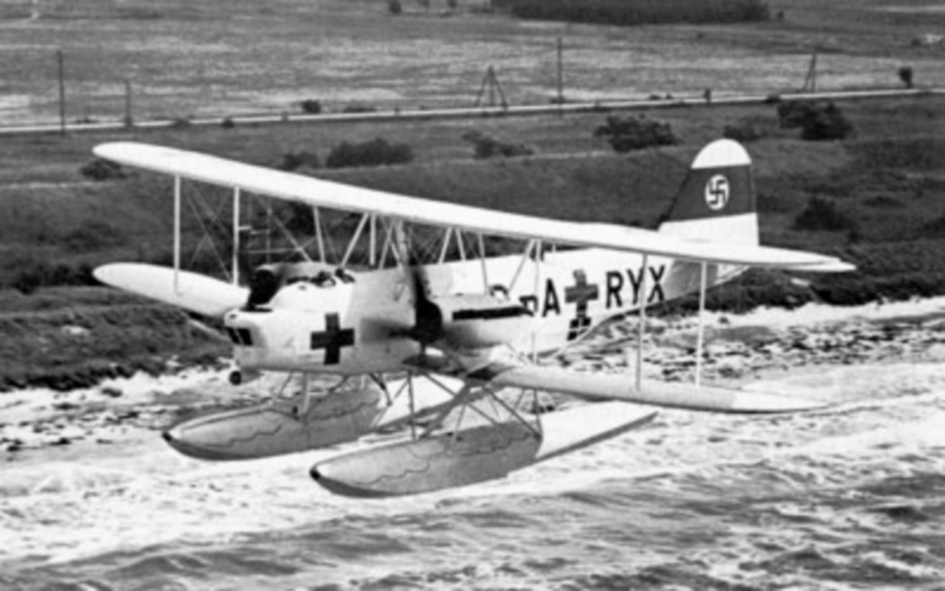
German aircraft found the scattered ships on 28 March and struck immediately, sinking the Raceland and Empire Ranger. That same day, three Narvik-class destroyers sortied from Kirkenes under Kapitan zur See Ponitz and intercepted the freighter Bateau during the night, sending her to the bottom. In the early hours of 29 March, the German destroyers encountered the British cruiser Trinidad and destroyer Fury. Trinidad badly damaged Z26, which sank after further attacks by Oribi, Eclipse, and the Soviet destroyer Sokrushitelny. But Trinidad paid a bizarre price: one of her own torpedoes circled back after its gyroscope froze in the Arctic cold and struck her. Limping badly, Trinidad made Kola Inlet by midday on 30 March. Meanwhile, U-boats found the stragglers. Induna and Effingham were torpedoed and sunk. By 1 April, the last ships straggled into Murmansk. Five freighters and one escort vessel had been lost. Fourteen merchant ships -- more than two-thirds of the convoy -- had arrived safely, their cargoes delivered to a Soviet Union fighting for its survival.
The Cost of the Arctic Run
The freighter Tobruk was credited with shooting down one German bomber and probably a second during the final approach to Murmansk, a small defiance amid the larger calculus of attrition. PQ 13 was neither the most famous nor the most devastating of the Arctic convoys -- that distinction belongs to PQ 17, scattered by admiralty orders four months later with catastrophic losses. But PQ 13 established a pattern that would repeat throughout 1942: storms scattering convoys into vulnerable fragments, coordinated German attacks by air, surface, and subsurface forces, and the grim arithmetic of ships lost weighed against supplies delivered. The waters north of Norway's North Cape, where the convoy route passed closest to German air bases and naval stations, remained among the most dangerous shipping lanes of the entire war.
From the Air
The convoy route passed through waters approximately centered at 72.67N, 20.33E, between northern Norway's North Cape and Bear Island. This is open ocean with no landmarks visible from altitude. The nearest land-based reference is the North Cape coast of Norway to the south. Nearest airports: Hammerfest (ENHF), Banak/Lakselv (ENNA), and Kirkenes (ENEV) along the Norwegian Arctic coast. The Barents Sea and Norwegian Sea dominate the view from altitude in this area.