Cooperstown, New York
The myth came first, then the money. In 1907, a commission declared that Abner Doubleday had invented baseball in Cooperstown in 1839 -- a claim based on the shaky testimony of a single man and contradicted by virtually every piece of available evidence. Doubleday, a Civil War officer who never mentioned baseball in his papers, almost certainly had nothing to do with the game's origins. But the story stuck, and in 1939, Stephen Carlton Clark -- heir to the Singer Sewing Machine fortune -- opened the National Baseball Hall of Fame and Museum in this village of fewer than two thousand souls at the foot of Otsego Lake. Clark needed tourists. The Great Depression and Prohibition had devastated the local economy, which once thrived on hops farming and summer visitors. Baseball provided the draw. Today, roughly 260,000 people visit the Hall of Fame each year, walking the same Main Street that James Fenimore Cooper described in his novels nearly two centuries ago. Cooperstown survives on its myths, but the place behind them is worth the trip on its own.
Cooper's Glimmerglass
Before it was baseball's village, Cooperstown belonged to the Coopers. William Cooper, a land speculator and judge, purchased the patent for the area in 1785 and founded the settlement in 1786 at the southern outlet of Otsego Lake, where the Susquehanna River begins its long journey to the Chesapeake Bay. His son James Fenimore Cooper grew up here, and the landscape of lake and forest became the backdrop for The Leatherstocking Tales -- five novels including The Last of the Mohicans that defined the American frontier in the popular imagination. Cooper called Otsego Lake "Glimmerglass" for the way light played on its still surface, and the name endures in the Glimmerglass Festival, an internationally noted opera company that has performed near the village since 1975. The Alice Busch Opera Theater, built in 1987 on farmland north of town, was the first opera-specific hall constructed in the United States since 1966. Literature and music -- not baseball -- were Cooperstown's first claims to cultural distinction.
The Clark Dynasty
The Clark family's influence on Cooperstown is difficult to overstate. Their fortune originated with a half-ownership of the patent for the Singer Sewing Machine, and since the mid-nineteenth century they have shaped the village with the quiet authority of feudal patrons. Clark properties include the Otesaga Resort Hotel, the Cooper Inn, and Clark Estates. The family were founding partners of the Baseball Hall of Fame and the Mary Imogene Bassett Hospital. They own more than ten thousand acres of largely undeveloped land in and around greater Cooperstown, and their Clark Foundation continues to fund scholarships, nonprofits, and village services. Jane Forbes Clark, the primary family heir today, has purchased strategic parcels to preserve the approaches to the village from commercial development. The relationship between town and family is symbiotic: the Clarks maintain Cooperstown's character, and Cooperstown's character sustains the Clarks' philanthropic legacy. It is one of the last American villages where a single family's stewardship remains visibly, tangibly intact.
The Shrine on Main Street
The National Baseball Hall of Fame and Museum opened on June 12, 1939, timed to coincide with the supposed centennial of Doubleday's fictional invention. It has drawn more than 17 million visitors in total. Every summer, the Hall of Fame Induction Ceremony brings new members into baseball's pantheon at a gathering held at the Clark Sports Center, an 88,000-square-foot recreational facility established in 1986. The ceremony transforms the village -- hotels fill for fifty miles in every direction, and Main Street becomes a corridor of autograph seekers, memorabilia vendors, and families making the pilgrimage that American baseball culture treats as something close to sacred. The Doubleday myth has been thoroughly debunked by historians, but it no longer matters. Cooperstown earned its association with baseball through decades of devotion, through the quality of the museum's collection, and through the annual ritual of induction that gives the sport a physical home it might otherwise lack.
Brick, Stone, and Memory
Cooperstown's architecture tells the story of its successive eras. Original residences tied to the founding Cooper family -- Edgewater and Heathcote -- still stand, though Otsego Hall, James Fenimore Cooper's own residence, was lost. The Clark family's properties range from Fernleigh, a Second Empire stone mansion designed by New Jersey architect James Van Dyke and built in 1869, to West Hill, a 1928 Georgian manor. Fynmere, a grand stone manor erected by Cooper heirs on the eastern edge of town and designed by noted architect Charles A. Platt, was razed in 1979 -- a rare loss in a village that generally preserves with fierce determination. The landscape architecture carries equal weight: Ellen Biddle Shipman laid out the grounds of Heathcote, and Bryant Fleming designed gardens for the Clark properties. Walking Cooperstown's streets is walking through layers of American architectural ambition, from Federal austerity through Victorian elaboration to the studied restraint of early twentieth-century country estates.
A Village at the Head of the River
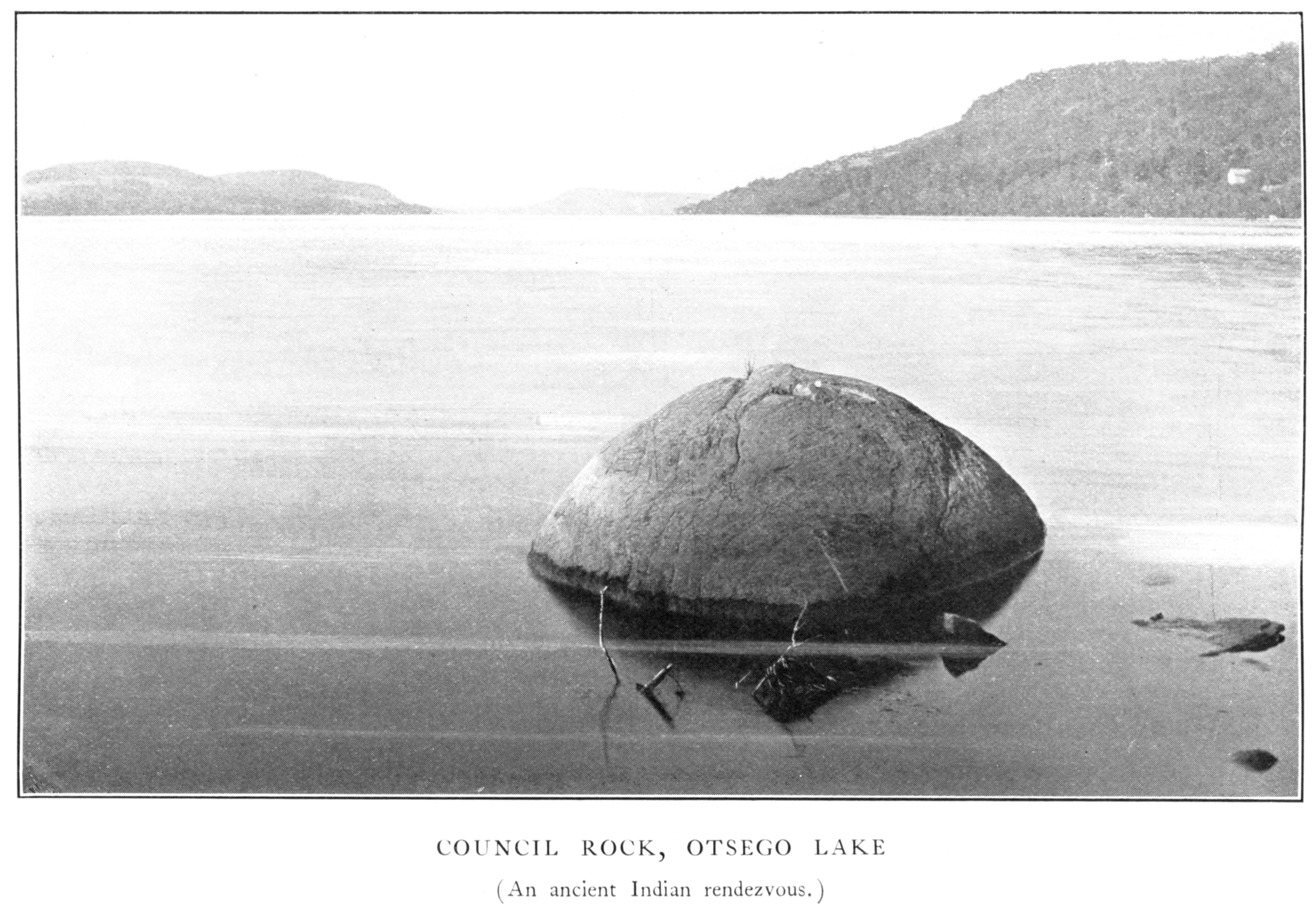
Strip away the baseball pilgrims and the opera patrons, and Cooperstown is still a village of remarkable physical beauty. Otsego Lake stretches nine miles northward, its surface reflecting the forested hills that Cooper transformed into literary landscape. The Susquehanna River -- the longest river on the American East Coast -- begins here at the lake's outlet, starting as a modest stream before growing into the waterway that drains much of Pennsylvania and empties into the Chesapeake Bay 444 miles to the south. At 1,227 feet elevation, the village occupies a transitional zone between the Mohawk Valley to the north and the Catskill foothills to the south. The population hovers near 1,800 year-round residents, though summer swells the number considerably. It remains the county seat of Otsego County -- a name derived from a Mohawk or Oneida word meaning "place of the rock." The rock endures. So does the village built beside it.
From the Air
Cooperstown is located at approximately 42.70N, 74.93W at the southern tip of Otsego Lake in Otsego County, central New York, at an elevation of 1,227 feet. Otsego Lake (9 miles long, oriented north-south) is the dominant visual landmark. The Susquehanna River originates at the lake's southern outlet. Cooperstown-Westville Airport (K23) is a small public-use airport 4 nm southeast of the village center. Oneonta Municipal Airport is approximately 20 miles south. Larger commercial airports include Albany International (KALB) 72 miles east, Syracuse Hancock International (KSYR) 95 miles west, and Greater Binghamton Airport (KBGM) 87 miles southwest. The village's Main Street and Baseball Hall of Fame are visible along the lake's southern shore. Best viewed at 3,000-5,000 feet AGL. Terrain is hilly with elevations ranging 1,000-2,000 feet in the surrounding area.