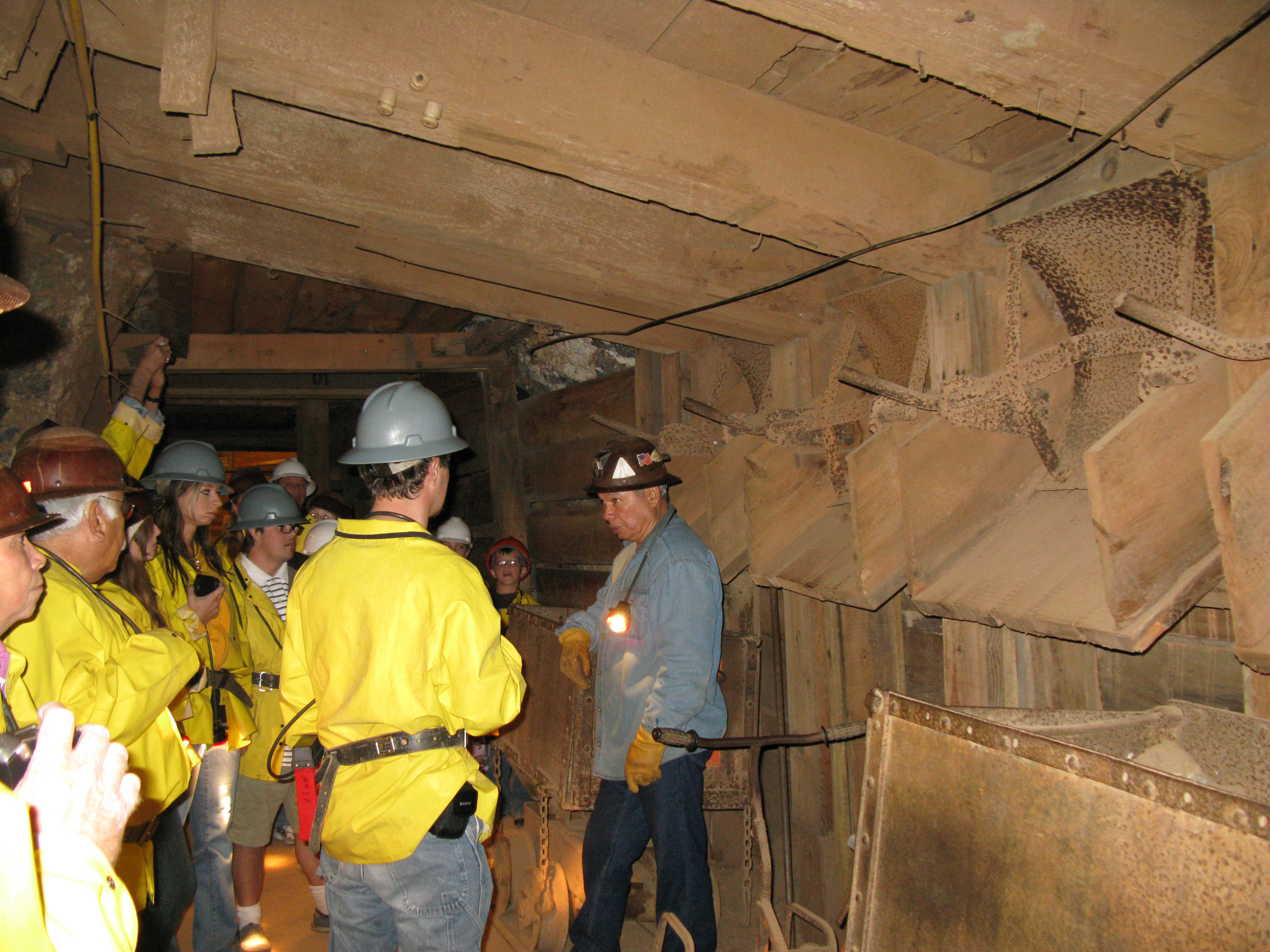
Copper Queen Mine
George Warren was supposed to file a mining claim. Instead, he stopped at a saloon, got drunk, and gambled away everything the cavalry scouts had given him. It was 1877 in the Mule Mountains of southeast Arizona, and Warren's betrayal would set in motion one of the greatest copper bonanzas in American history. The ore body he would later claim for himself ran an astonishing 23% copper - more than double what most mines of that era needed to turn a profit - and the town that grew around it, Bisbee, would become Arizona's most productive copper district.
A Scout's Discovery
The real discoverer of the Copper Queen was Jack Dunn, a cavalry scout tracking Apache warriors near Fort Bowie in 1877. Sent to find better water for his patrol, Dunn stumbled upon a spring beneath a massive limestone cliff called Castle Rock. On his way back, he spotted an outcrop of lead carbonate in a gorge that would later be named Tombstone Canyon. Dunn told his commanding officer Lieutenant John Rucker about the find, and they planned to file a claim together. But the Apache pursuit resumed, and the soldiers needed someone to register their discovery. They chose poorly: a 42-year-old drifter named George Warren, whom they grubstaked with provisions and a map. Warren never kept his promise. After drinking and gambling away the grubstake, he recruited new backers from Fort Huachuca and Tombstone, filing claims in his own name across what became the Warren Mining District.
Fortunes Made Underground
The surface pockets of silver-bearing lead carbonate were exhausted within years, but what lay beneath changed everything. Engineers discovered the ore body ran 23% copper with silver and gold as byproducts - extraordinarily rich in an era when 8-10% copper was considered profitable. By the early 20th century, the Copper Queen ranked as Arizona's most productive copper mine and was widely considered the best-run operation in the country. James Douglas, a Pennsylvania metallurgist who invented new copper smelting methods, was offered either a flat fee or 10% interest for evaluating the property. He chose the percentage - a decision that made him a fortune. When the giant Phelps Dodge company merged with the Copper Queen in 1885, forming the Copper Queen Consolidated Mining Company, a corporate dynasty was born that would shape Arizona's economy for a century.
Mules in the Darkness
Before mechanized engines arrived, mules did the brutal work of hauling ore cars from the depths. These animals lived underground around the clock, sleeping in subterranean stables carved from rock. They pulled loaded cars weighing hundreds of pounds through narrow tunnels lit only by miners' lamps. After four years of working in total darkness, the mules' eyesight deteriorated so badly they could no longer tolerate daylight. Mine operators developed a careful rehabilitation process: blinders were placed over the mules' eyes with small holes poked in the material, and the holes were gradually widened over weeks as the animals' vision slowly readjusted to the sun. The process was a small mercy in a brutal industry.
The Bisbee Deportation
The Copper Queen's wealth came at tremendous human cost. Phelps Dodge operators demanded unpaid labor, subjected miners to humiliating strip searches, and followed dangerous practices like blasting while workers were still in the tunnels. Discrimination against non-white miners was widespread. In 1917, when the Industrial Workers of the World organized a strike, the company's response was shocking even by the standards of the era. Private police illegally arrested more than 1,300 miners, loaded them onto railroad cattle cars, and expelled them from Bisbee into the New Mexico desert. The Bisbee Deportation became one of the most notorious labor violations in American history, a stain on the legacy of Arizona's copper boom.
From Pit to Heritage
By the 1950s, the richest underground ore was exhausted, and Phelps Dodge shifted to open-pit mining to extract lower-grade deposits. By the mid-1960s, copper content had fallen to just 4%, and the mine ceased production entirely in 1975. But Bisbee refused to become a ghost town. Local volunteers and the mayor proposed converting part of the underground workings into a heritage tourism site. Phelps Dodge agreed, and paid and volunteer workers renovated the tunnels for public access. More than one million visitors have descended into the Copper Queen since 1976, riding the same rail cars that once carried ore to the surface. The company's former headquarters now houses a mining museum, interpreting an era when copper was king and fortunes rose from the Arizona earth.
From the Air
Located at 31.44°N, 109.91°W in Cochise County, Arizona. The Lavender Pit open-pit mine is visible from altitude as a massive terraced excavation. Bisbee itself sits in a narrow canyon in the Mule Mountains. Nearest airports: Bisbee Douglas International Airport (KDUG) approximately 8nm southeast. Best viewed at 3,000-5,000 feet AGL for pit detail, or higher for the town's dramatic mountain setting. The Mexican border lies just a few miles south.