Copperbelt
Long before any European prospector arrived, the people living along the Kafue River wore copper bracelets. They had been mining and smelting the metal for generations, trading their handiwork with the Portuguese on the west coast and Arab merchants to the east. When American scout Frederick Russell Burnham traveled through this region in 1895, he recognized what the indigenous miners already knew: the earth here held extraordinary wealth. His report to the British South Africa Company compared the deposits favorably to the copper mines of Montana and Arizona. He was not exaggerating.
A Billion Years in the Making
The Copperbelt exists because of the Katanga Supergroup, a Neoproterozoic sequence of geological formations laid down roughly 880 million years ago. These ancient sedimentary rocks, rich in chalcopyrite, bornite, and chalcocite, formed in metamorphosed calcareous shales and arkoses of the Lower Roan Formation. The supergroup nonconformably overlies the 883-million-year-old Nchanga Granite, and its particularly rich outcrops extend across the border between Zambia's Copperbelt Province and the Democratic Republic of Congo's Haut-Katanga and Lualaba provinces. Together, these deposits constitute the world's second-largest copper reserves, rivaling those of Chile. The geology does not respect political boundaries, and neither has the mining that exploits it.
Lambaland Before the Concessions
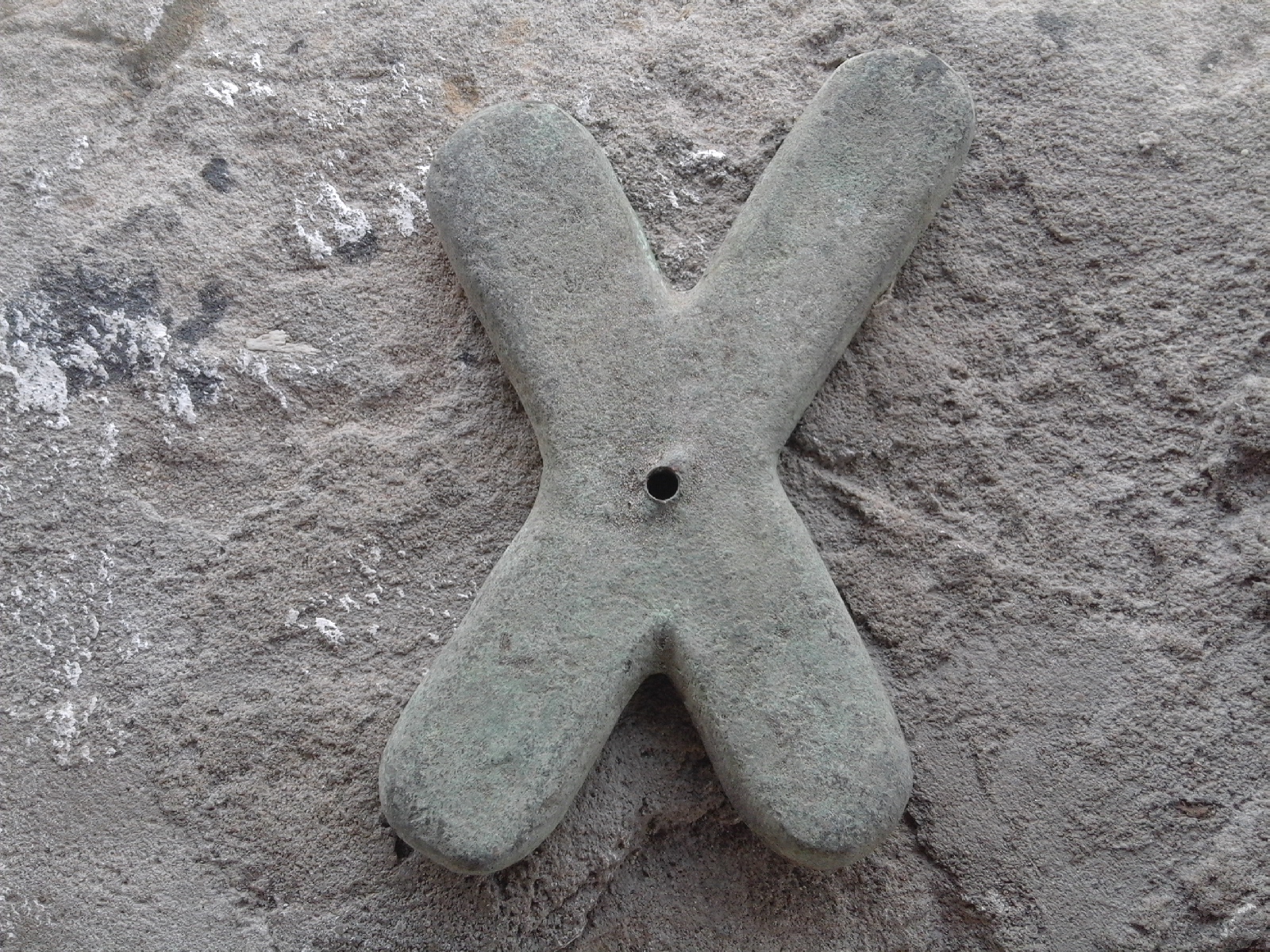
From the time of the Bantu expansion, both the Congolese Katanga and Zambian Copperbelt regions were known as Ilamba or Lambaland, after the Lamba people who settled there. The Lamba arrived from the Luba and Lunda kingdoms, first establishing themselves at Lake Kashiba before spreading in every direction. They were skilled metalworkers who produced the distinctive cross-shaped copper ingots that served as currency across Central Africa. These Katanga Crosses, no longer produced, remain powerful symbols: traditional families still use surviving examples in dowry payments alongside modern money. The Lamba understood the value of what lay beneath their feet centuries before colonial powers arrived to claim it.
Burnham's Report and the Rush That Followed
Frederick Russell Burnham's 1895 expedition for the Northern Territories Exploration Company identified what he called 'probably one of the greatest copper fields on the continent.' He noted the natives' old mining dumps along the Kafue River and observed that the indigenous inhabitants, 'being miners and workers of copper and iron, and being permanently located in the ground, would give the very element needed in developing these fields.' Through Cecil Rhodes and his British South Africa Company, mineral concession rights were obtained from local chiefs. The company retained these rights until Zambian independence in 1964. Well-financed mining operations followed, and by the 1950s the Copperbelt was the largest copper-producing area in the world, with the Roan Antelope, Nkana, Nchanga, Mufulira, and Rokana mines all running at full capacity. The British South Africa Company built towns along the river and a railroad to transport copper through Mozambique to the coast.
Two Nations, One Belt
The Copperbelt spans an international border. On the Zambian side, the province includes the mining towns of Ndola, Kitwe, Chingola, Luanshya, and Mufulira. President Kenneth Kaunda renamed Zambia's 'Western Province' to 'Copperbelt Province' in 1969, five years after independence. Across the border in the Democratic Republic of Congo, the mining centers of Lubumbashi, Kolwezi, and Likasi anchor the Haut-Katanga and Lualaba provinces. Dozens of mines operate on both sides: Kipushi, Kamoto, and Kambove in the Congo; Kansanshi, Lumwana, and Konkola in Zambia. The political histories diverge sharply -- Zambia's relatively stable post-independence trajectory versus Congo's cycle of dictatorship, war, and contested governance -- but the copper connects them. Both nations depend on it, and the global economy's hunger for the metal only intensifies as electrification and renewable energy drive demand.
Copper's Enduring Pull
From the air, the Copperbelt reveals itself in the red and ochre gashes of open-pit mines carved into green bush. The scale is difficult to comprehend at ground level but unmistakable from altitude. These mines produce more than 3 percent of the world's copper and half its cobalt, most of it from Katanga. The infrastructure that supports this extraction -- rail lines linking Lubumbashi to Ndola, roads connecting dozens of mining towns, smelters and processing plants visible by their plumes -- defines the landscape as thoroughly as the geology beneath it. Burnham wrote in 1895 that 'the increasing use of copper bids fair to make it one of the most valuable products a country can have.' A century and a quarter later, with copper essential to everything from electric vehicles to data centers, his prediction has proven modest.
From the Air
Centered at approximately 12.38S, 27.95E, the Copperbelt region straddles the Zambia-DRC border. From cruising altitude, look for the distinctive red-brown scars of open-pit copper mines amid green bush. Key airports: Simon Mwansa Kapwepwe International Airport (FLND, Ndola), Southdowns Airport (Kalulushi), Kasompe Airport (Chingola), and Lubumbashi International Airport (FZQA) on the Congolese side. Elevation ranges from 1,200 to 1,400 meters across the mining region. The railway network connecting mining towns is visible from altitude.