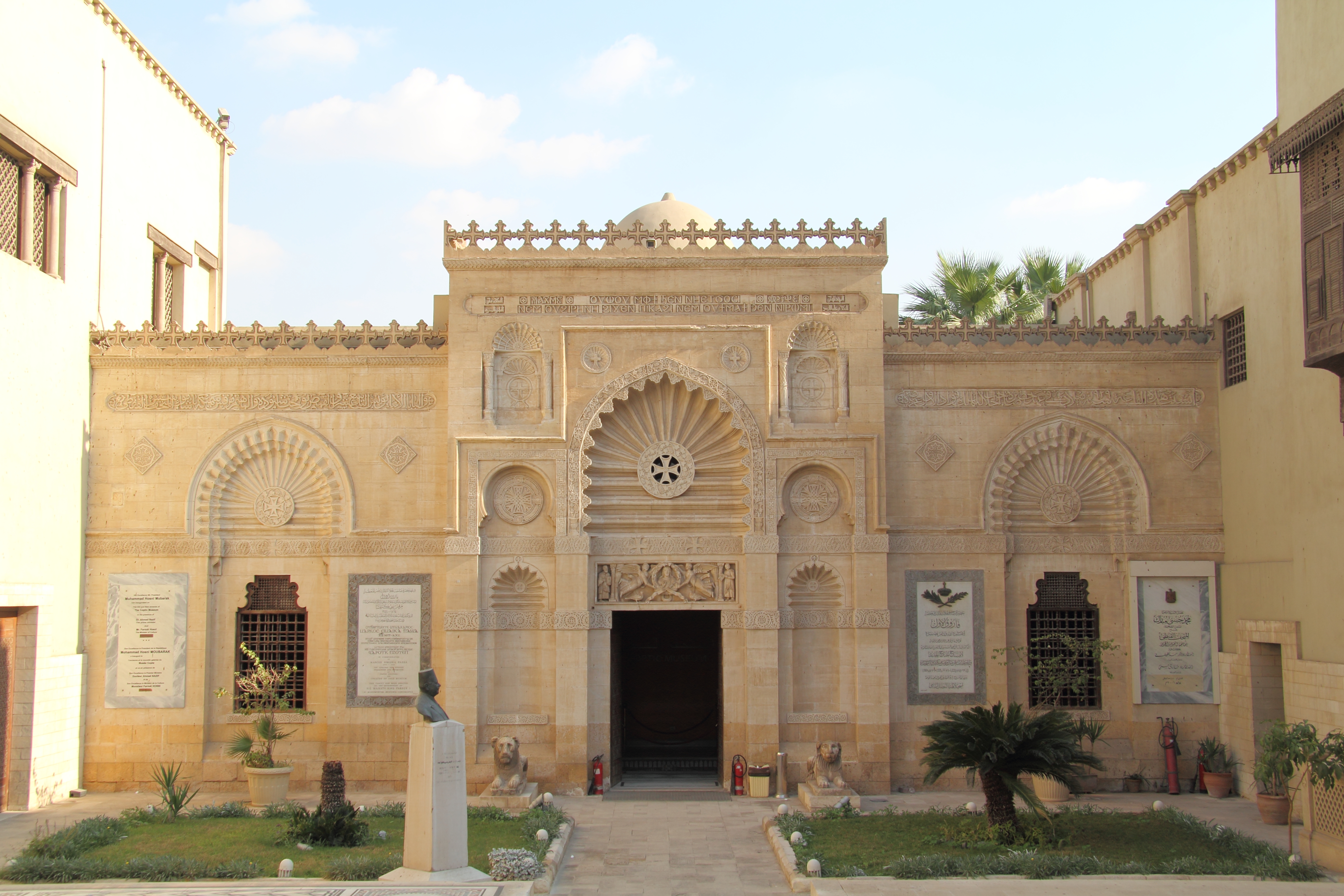
Coptic Museum
Most visitors to Cairo chase pharaohs. They queue for Tutankhamun's gold, crane their necks at the pyramids, and leave without ever entering the walled enclave of Coptic Cairo, where a quieter, stranger chapter of Egyptian history waits behind mashrabiya screens and mosaic floors. The Coptic Museum, founded in 1908 by Marcus Simaika Pasha, holds 16,000 artifacts that trace an often-overlooked era: the centuries when Egypt transitioned from pharaonic religion through Greco-Roman polytheism to Christianity, and eventually to Islam. It is the single largest collection of Coptic art anywhere on earth, and it sits in the shadow of churches whose foundations reach back to the fifth century.
A Collector's Crusade
Marcus Simaika Pasha was not an archaeologist by training, but a Coptic civil servant with a conviction that his community's heritage was disappearing. In 1908, he secured approval and a gift of silver antiquities from Patriarch Cyril V, raised funds through public subscription, and built the museum on 8,000 square meters of land donated by the Coptic Orthodox Church. It opened on 14 March 1910. The Coptic community rallied behind him, donating vestments, frescoes, and icons. By 1931, the Egyptian state recognized its importance and absorbed it under the Department of Antiquities. Eight years later, the entire Christian antiquities collection from the Egyptian Museum was transferred here, housed in a New Wing completed in 1944. Simaika's successors, including Dr. Pahor Labib, the first to hold the formal title of Director, continued expanding the holdings through the twentieth century.
Where Civilizations Overlap
Walk through the museum's twelve chronologically arranged sections and you witness something remarkable: cultures bleeding into one another. A Coptic textile carries unmistakable pharaonic motifs. A carved wooden panel echoes Greek geometric patterns. A fragment of metalwork shows Byzantine influence, while another betrays the ornamental vocabulary of the Ottoman Empire. The collection spans stonework, woodwork, metalwork, textiles, and manuscripts, each medium revealing how Coptic artisans absorbed and reinterpreted the traditions that surrounded them. The museum's own facade makes the point architecturally: it was designed to resemble the twelfth-century Al-Aqmar Mosque, an Islamic building honoring a Christian collection housed on Pharaonic soil. Even the mashrabiya screens and mosaic paving inside blur the lines between religious traditions.
The Nag Hammadi Secrets
Behind a door open only to specialist researchers lies the museum's most intellectually explosive holding: 1,200 manuscripts from the Nag Hammadi library. Discovered in 1945 by an Egyptian farmer digging for fertilizer near the town of Nag Hammadi in Upper Egypt, these Coptic-language codices contain Gnostic gospels, philosophical treatises, and early Christian texts that never made it into the biblical canon. Among them is the Gospel of Thomas, a collection of 114 sayings attributed to Jesus. The texts revolutionized scholarly understanding of early Christianity, revealing a far more diverse and contentious movement than the unified church history suggested. Their presence in the Coptic Museum is fitting: they are artifacts of a period when belief itself was in flux, and Egypt was the crucible.
Survival Through Tremors
The museum has endured more than scholarly neglect. Its Old Wing was closed in 1966 due to structural damage, and the entire building underwent renovation between 1983 and 1984. Between 1986 and 1988, engineers reinforced the foundations, a precaution that proved prescient when the 1992 Cairo earthquake struck. The museum survived. Further renovations in 2005 and 2006 modernized the display spaces, but the setting remains intimate. Gardens and courtyards surround the museum buildings, and the compound is ringed by six ancient Coptic churches, including the Hanging Church of the Virgin Mary, suspended above a Roman-era gatehouse, and the Church of St. Sergius, where tradition holds that the Holy Family sheltered during their flight into Egypt. The museum is not merely a building; it is the center of an entire sacred precinct.
A Bridge Across Eras
Egypt's historical narrative tends to jump from pharaohs to Islam, as if a thousand years of Christian culture happened in parentheses. The Coptic Museum exists to fill that gap. Its approximately 15,000 displayed objects illustrate how artistic traditions flowed continuously across religious boundaries: pharaonic iconography informed Greco-Roman decoration, which fed Coptic symbolism, which in turn influenced Islamic ornament. Coptic crosses appear alongside ankhs. Greek inscriptions neighbor hieratic script. The museum makes visible what the textbooks often compress into a sentence or two. For the millions of Coptic Christians who still live in Egypt today, it is also something more personal: proof that their story is woven into the country's deepest history, not a footnote to it.
From the Air
Located at 30.006N, 31.231E in the Coptic Cairo quarter, south of central Cairo along the east bank of the Nile. The walled compound is visible near the Mar Girgis metro station. Nearest major airport is Cairo International (HECA), approximately 20 km northeast. Recommended viewing altitude: 2,000-3,000 ft AGL for context of the old quarter within the modern city. The Babylon Fortress walls and adjacent churches help identify the site from the air.