Cora Hartshorn Arboretum and Bird Sanctuary
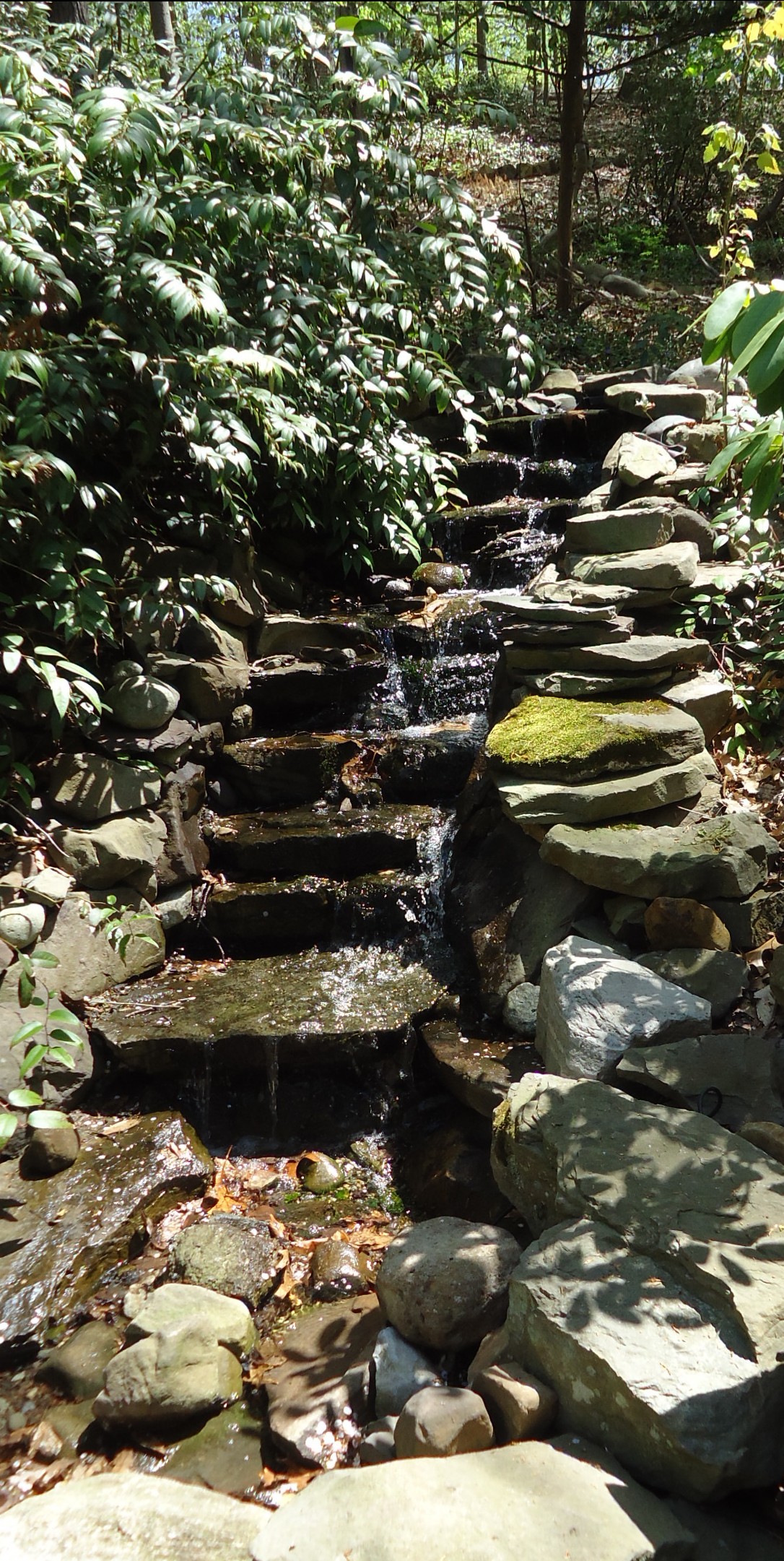
Some of the tulip trees in this patch of woodland were already a century old when the Declaration of Independence was signed. At 275 years and counting, they are among the oldest living things in Essex County, New Jersey -- towering survivors in a 16.5-acre sanctuary that exists because a father gave his daughter a piece of undeveloped forest and she spent the rest of her life shaping it into something the public could walk through for free. The Cora Hartshorn Arboretum and Bird Sanctuary, tucked into the Short Hills section of Millburn, is one of those rare green spaces that feels genuinely wild despite being surrounded by some of the most expensive real estate in the northeastern United States.
A Father's Gift, A Daughter's Vision
In 1923, Stewart Hartshorn gifted 16.5 acres of undeveloped woodland to his daughter Cora. The land was thick with oaks, tulip trees, dogwood, and beech -- a remnant of the forests that once blanketed northern New Jersey. Cora did not develop the property in any conventional sense. Instead, she designed a system of roads and walking paths that wound through the trees, opening the woodland to exploration while leaving its essential character intact. By 1938, she had laid out three miles of trails. The arboretum became her life's work, a place where the act of preservation was itself a form of creation. When Cora died in 1958, she willed the entire property to the Township of Millburn, ensuring that what her father had given her would belong to everyone.
The Stone House
At the heart of the arboretum sits a building that looks as though it grew from the ground. The Stone House was built in 1933 for Cora, using stones quarried from Stewart Hartshorn's own property in nearby Springfield. Every rock in its walls is local, giving the structure an organic connection to the landscape it serves. Around 1970, an addition expanded the building for office space, but a 2007 renovation replaced that expansion with something more ambitious: a reception area, bird observatory, additional offices, a basement, and an upstairs meeting room. The Stone House now functions as both nature center and living classroom. Inside its walls, visitors encounter Eastern rat snakes, corn snakes, Eastern box turtles, painted turtles, an Eastern king snake, domestic rabbits, a leopard gecko, and a Chilean rose-haired tarantula -- residents that serve as ambassadors for the wildlife that inhabits the surrounding woods.
A Census of Living Things
For a space smaller than many suburban housing developments, the arboretum holds a startling density of life. Forty-five species of trees shade the trails, including those ancient tulip trees whose canopy rises high above the forest floor. Beneath them, over 150 species of wildflowers bloom across the seasons, and rare ferns cling to moist hollows and stream banks. The bird sanctuary designation is well earned: more than 100 species have been recorded here, drawn by the mix of mature forest, understory, and edge habitat that the arboretum provides. In a region where development has fragmented wildlife corridors into ever-smaller islands, these 16.5 acres represent critical habitat -- a refuge that sustains populations of plants, birds, and small animals that have few other places to go.
Open From Dawn to Dusk
The trails remain free and open to the public every day from dawn to dusk, exactly as Cora intended. This open-access philosophy sets the arboretum apart from many nature preserves that charge admission or restrict hours. Membership dues support education programs and woodland maintenance, but the woods themselves belong to anyone willing to walk them. The Cora Hartshorn Arboretum offers hikes, camping trips, and classes for children and adults -- programming that transforms a quiet woodland into an active educational institution. On any given morning, you might find a class of elementary students crouched beside a log, watching a painted turtle, or a birder with binoculars trained on the canopy overhead, adding to a species list that Cora Hartshorn began building a century ago.
From the Air
Located at 40.73°N, 74.33°W in the Short Hills section of Millburn, Essex County, New Jersey. The arboretum appears as a dense green patch amid suburban development along Forest Drive South. Newark Liberty International Airport (KEWR) is approximately 10 miles to the east. Teterboro Airport (KTEB) is roughly 15 miles to the northeast. Best viewed at 1,500-2,000 feet AGL, where the contrast between the arboretum's mature tree canopy and the surrounding residential development is most striking. The South Mountain Reservation is visible to the north.