Coral Bay
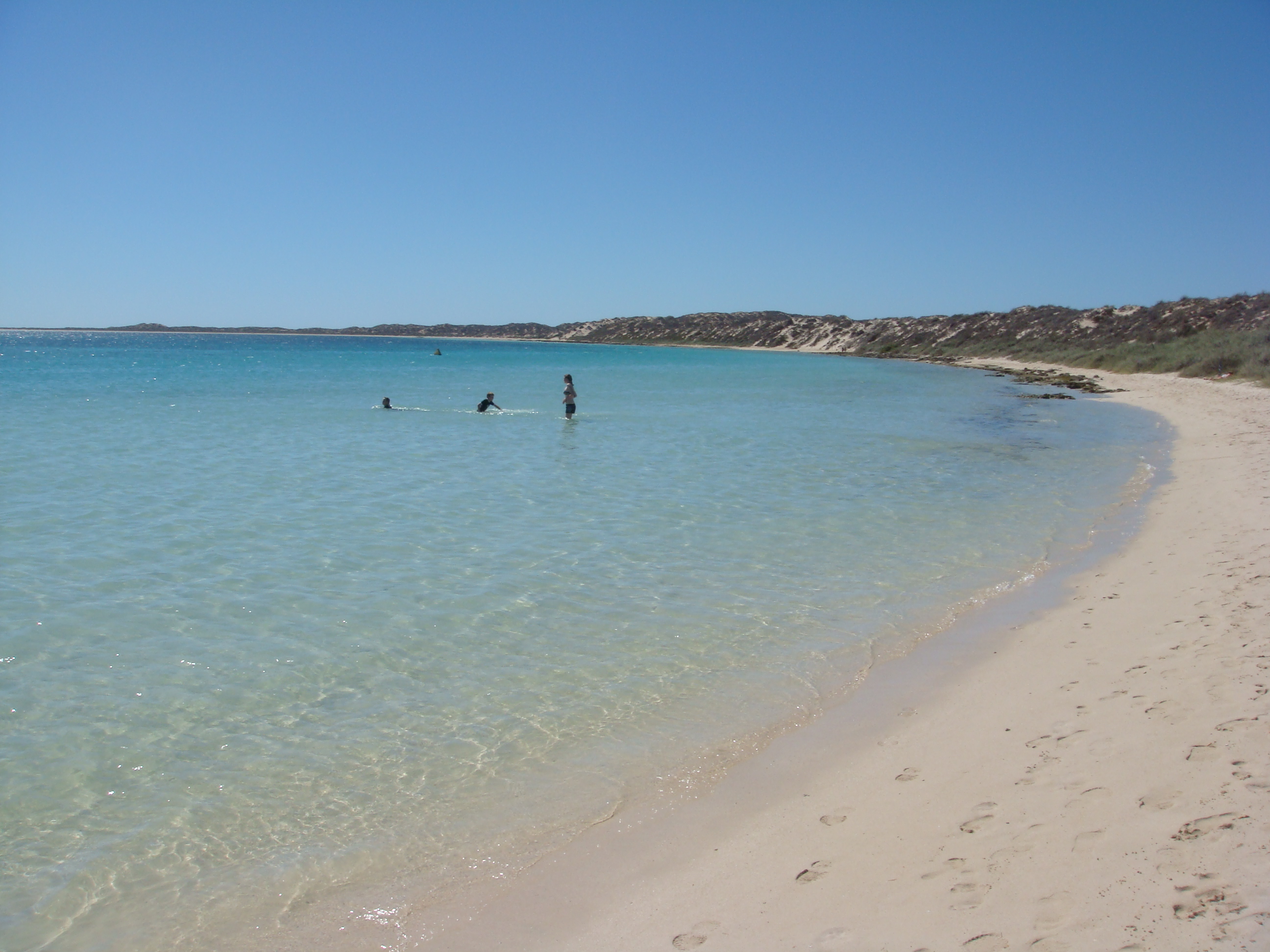
Two hundred and seven people live in Coral Bay, give or take. The town, if it can be called that, consists of four accommodation options, a shopping arcade arranged around a courtyard, and a stretch of white sand on Bill's Bay where the water turns from pale green to luminous turquoise within wading distance. What draws visitors here is what lies just beneath that surface: Ningaloo Reef, a 260-kilometre fringing reef that runs along the Gascoyne coast of Western Australia and comes closer to shore here than almost anywhere else along its length -- sometimes within a single kilometre.
The Reef at Your Feet
Ningaloo is one of the longest fringing reefs on Earth, and at Coral Bay its crest creates a protected lagoon shallow enough to walk into and deep enough to lose yourself in. The reef's proximity to land is what makes the place extraordinary -- no boat required to reach coral and fish, just a pair of fins and a mask. Manta rays are the headline attraction, and Coral Bay is one of the few places on Earth where you can reliably swim with them on guided tours. The rays cruise through the shallow waters between the reef and shore, their wingspans stretching over three metres, filtering plankton with an unhurried grace that makes every other creature in the water look frantic by comparison. Whale sharks visit between March and July, and humpback whales pass through on their annual migration.
A Reef Under Pressure
Coral Bay's story is not entirely one of paradise preserved. By mid-2022, most of the famous coral gardens that once thrived just off the main beach were dead -- victims of marine heatwaves that have intensified with rising ocean temperatures. Bleached skeletons replaced the once-vivid colonies that snorkelers could reach within minutes of stepping into the water. The loss has not erased Ningaloo's broader health. Farther from shore, accessible by tour boat or a longer swim, thriving coral communities persist. Outside the immediate bay, the reef remains one of the most intact in the world, supporting over 500 species of fish and 200 species of hard coral. But the damage to the near-shore gardens has altered the experience of Coral Bay itself, turning what was once an effortless encounter with living reef into something that requires more planning and more distance.
Quiet by Design
Unlike Exmouth, the larger town 120 kilometres to the north that serves as the other major gateway to Ningaloo, Coral Bay has cultivated a deliberate calm. A noise curfew keeps nights quiet. Serious rowdiness or drunkenness gets the offender asked to leave. Free camping is strictly prohibited. There are exactly four places to stay, and at popular times they fill quickly. The settlement's smallness is the point: there is nowhere to go except the beach, nowhere to drive except back the way you came, and nothing to distract from the water. From the Ningaloo Reef Resort at the road's end to the shopping arcade at the edge of town is a ten-minute walk. Most people make the trip in flip-flops, towels over their shoulders, sand between their toes.
The Thalandji Coast
The Thalandji are the Aboriginal people of this coastal country. European settlement arrived in 1884 at Maud's Landing, three kilometres north of the current town -- little more than a jetty and a shed for shipping supplies in and wool and sheep out. Farming was difficult in the hot, arid scrubland behind the coast, and the area remained isolated for decades. Coral Bay as a holiday destination is a relatively recent development, its growth constrained by geography, limited water supply, and the deliberate decisions of a community that has chosen visitor experience over visitor volume. The nearest commercial airport is Learmonth, 120 kilometres north, and shuttle transfers must be booked in advance.
The Water Decides
What Coral Bay offers cannot be built, bought, or replicated: a reef that begins where the land ends, in water warm enough to swim year-round. The Indian Ocean here runs between 22 and 28 degrees Celsius depending on the season, and the visibility on a calm day can exceed 20 metres. Glass-bottom boats and snorkel tours run daily, and for those with scuba certifications, the outer reef drops into deeper water where grey reef sharks patrol the edges. But the simplest version of Coral Bay requires nothing more than walking into the lagoon. The fish are there before the water reaches your waist. Whether the corals closest to shore will recover is a question that the ocean, not the town, will answer.
From the Air
Coral Bay is located at approximately 23.14S, 113.78E on the Gascoyne coast of Western Australia, about 1,100 km north of Perth. From altitude, the Ningaloo Reef is spectacularly visible as a pale turquoise ribbon running parallel to the coastline, with the darker blue of deep water beyond. Bill's Bay and the tiny settlement are clearly identifiable. Learmonth Airport (ICAO: YPLM) is the nearest commercial airfield, 120 km to the north near Exmouth. Coral Bay has a small unsealed airstrip. The coastline is dramatic from 5,000-15,000 ft, where the reef structure and lagoon colors are most vivid.