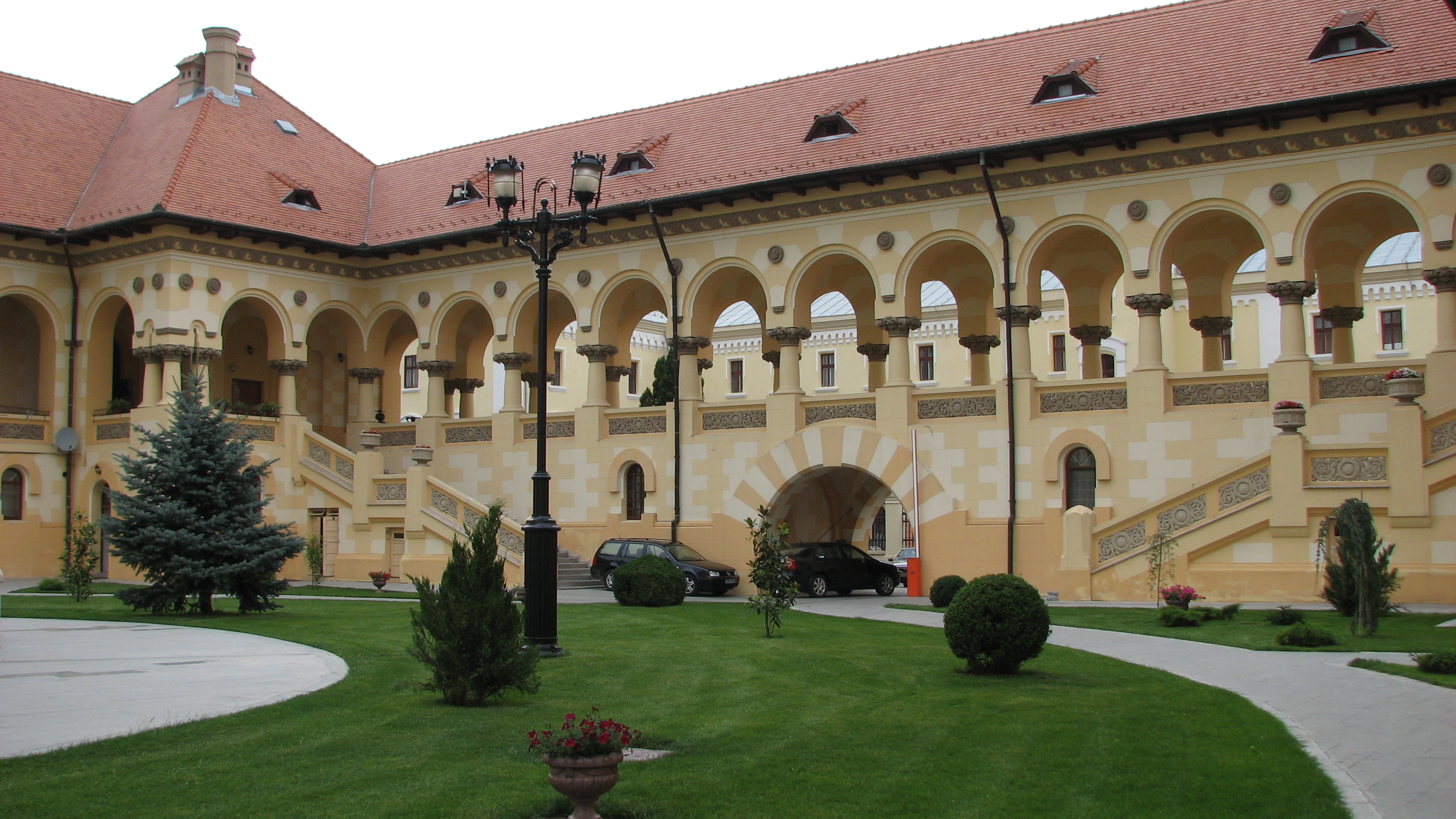
Coronation Cathedral, Alba Iulia
King Ferdinand was a Catholic. The cathedral was Orthodox. So on October 15, 1922, the coronation of Romania's first monarchs of Greater Romania took place not inside the gleaming new church but outside, in its courtyard, under open sky. It was a fittingly improvised solution for a nation that had only just stitched itself together. The Coronation Cathedral in Alba Iulia had been built in barely a year -- 1921 to 1922 -- specifically for this ceremony, and the ceremony itself had been staged in this particular city for a reason that mattered deeply: Alba Iulia was where the Union of Transylvania with Romania had been declared on December 1, 1918. The cathedral was not merely a church. It was a statement of national identity cast in stone.
A Church Built on Another Church's Bones
The Coronation Cathedral stands in the western part of the Alba Iulia Citadel, on ground that has carried religious weight for centuries. In 1597, the Wallachian prince Michael the Brave built a stone church here, when the city was still called Balgrad. That church survived until the Habsburgs rebuilt the citadel in 1713-1714 and demolished it, recycling its stones into a new church near where the railway station stands today. A wooden memorial church in the southeastern corner of the citadel still marks the old site. The Coronation Cathedral was conceived as a spiritual continuation of that lost metropolitan seat -- a thread connecting Romania's Orthodox identity across centuries of foreign rule and architectural erasure. The architects placed it on the site of a former gatehouse near the Roman Plateau, layering modern ambition atop ancient foundations.
The Day Two Crowns Became One
Ferdinand and Queen Marie were crowned as monarchs of Greater Romania four years after the union that made that title possible. The choice of Alba Iulia was deliberate: by holding the coronation where the union had been proclaimed, the new kingdom was giving its birth certificate a religious seal. Ferdinand's refusal to be crowned inside an Orthodox church was handled with pragmatic grace -- the ceremony moved to the courtyard, where faith and politics could coexist under the same sky without forcing either to bend. Busts of the king and queen were placed on the grounds in 2008, a belated memorial. During Romania's communist era, authorities renamed the building Catedrala Reintregirii Neamului -- the Cathedral of the Unity of the People -- stripping away the monarchical associations. After the 1989 revolution toppled the Ceausescu regime, the old name quietly returned. The cathedral had outlasted two political systems.
Walls That Remember
Inside the cathedral, historical figures watch from the walls. Paintings of Michael the Brave and his wife Lady Stanca appear in the narthex, honoring the prince who first built a church on this ground and briefly unified Wallachia, Moldavia, and Transylvania in 1600. These are not generic icons but portraits of specific people from specific moments in Romanian history, making the interior feel less like a place of worship and more like a national gallery dressed in gold leaf. The building sits on a rectangular lot anchored by four corner pavilions, linked by galleries of open double arcades supported by columns -- a layout that echoes the cloister walks of Romanian monasteries. The cathedral became the seat of the Archdiocese of Alba Iulia in 1998, having served as a diocese since 1975. It was renovated in 1993 to mark the seventy-fifth anniversary of the 1918 Union.
A Fortress of Faith Inside a Fortress of War
The Alba Iulia Citadel that surrounds the cathedral is itself a monument to contested history. Originally a Roman stronghold, it was rebuilt by the Habsburgs into a massive star-shaped Vauban fortress in the early eighteenth century. Walking through its geometric bastions to reach the cathedral, you pass through layers of empire -- Roman, Hungarian, Habsburg, Ottoman influence -- before arriving at a building that represents Romania's assertion of its own identity after centuries under foreign power. The cathedral's modest scale belies its outsized significance. It is not the largest or most ornate church in Romania, but it may be the most symbolically charged: the place where a fragmented people declared, through architecture and ceremony, that they were one nation.
From the Air
Located at 46.068N, 23.570E within the star-shaped Alba Iulia Citadel. Best viewed from 2,000-3,000 feet AGL, where the Vauban fortress layout is clearly visible with the cathedral at its center. The citadel's geometric bastions are distinctive from the air. Nearest airport: Sibiu International (LRSB), approximately 45 nm north. Alba Iulia is in the Transylvanian plateau between the Carpathian ranges.