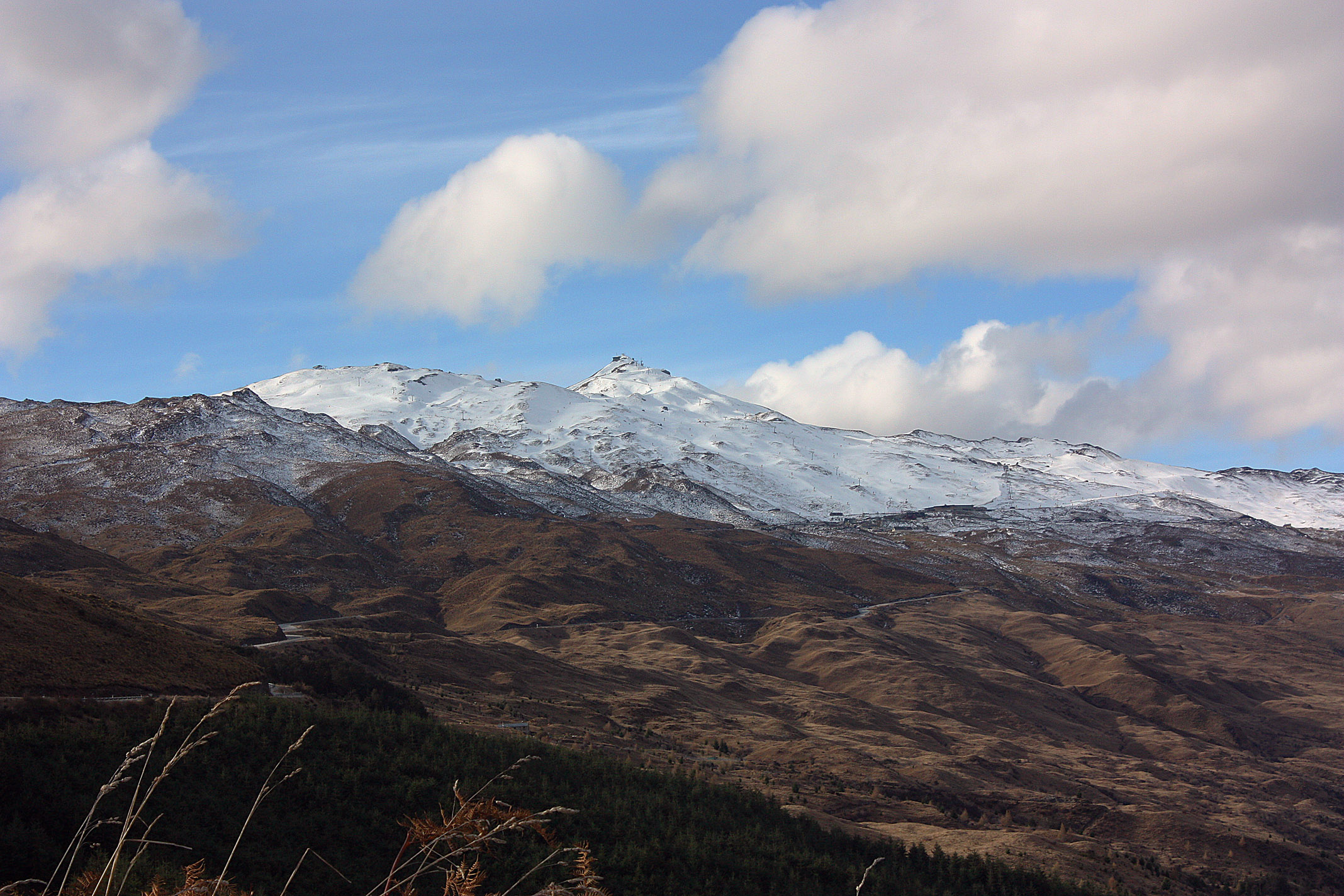
Coronet Peak
Bill Hamilton is famous for inventing the jet boat, but before he revolutionized watercraft, he built a rope tow. In 1947, aviation pioneer Harry Wigley of Mount Cook Airlines looked at the southern slopes of a 1,649-metre peak seven kilometres west of Arrowtown and saw reliable snow, proximity to Queenstown, and a view across Lake Wakatipu that would sell itself. He commissioned Hamilton - then an engineer with a knack for making things work in remote places - to design and install a rope tow that would haul skiers up the mountain. It was a 1,000-metre-long contraption, rudimentary by any standard, and it transformed a high-country sheep run into New Zealand's first commercial skifield.
Pioneer Spirit on a Rope
Those early seasons at Coronet Peak bore little resemblance to modern skiing. The single rope tow served ungroomed terrain under natural snowfall, and skiers accessed the mountain on rough roads that required a certain commitment to the cause. There were no base lodges to speak of, no snowmaking equipment, no groomed runs - just the mountain, the snow, and whatever gear you brought with you. But the snow was reliable, the terrain was varied, and the location was unbeatable. Demand grew steadily through the 1950s, and by 1962, Coronet Peak had installed New Zealand's first fixed-grip chairlift. Two years later came the country's first double chairlift, in 1964. A triple chairlift followed in 1973, opening new terrain on the upper mountain. Night skiing arrived in the 1980s, turning the peak into one of the few places in the country where you could ski under floodlights on winter evenings. Each addition answered a need rather than anticipated a trend, giving the mountain a layered, organic quality that purpose-built resorts rarely achieve.
The View That Competes
Coronet Peak's terrain spans everything from gentle beginner slopes on the Big Easy to the expert Back Bowls and the steep Exchange Drop, with intermediate favorites like M1, Greengates, and Shirtfront offering well-developed piste skiing that draws comparisons to European alpine resorts. But what sets this mountain apart from dozens of equally competent ski areas around the world is the panorama from the top. To the south, Lake Wakatipu stretches out in its distinctive lightning-bolt shape, the water shifting between deep blue and dark grey depending on the light. Beyond it, The Remarkables range stands like a wall. Closer in, the smaller Lake Hayes catches the sun. On a clear day, the view alone justifies the lift ticket. The mountain's proximity to Queenstown - just 25 minutes by road - makes it the default choice for visitors who want to ski in the morning and eat dinner in town, a combination that has driven its popularity for decades.
Changing Hands, Growing Up
Coronet Peak's corporate history mirrors the consolidation that has reshaped ski industries worldwide. The Mount Cook Group, connected to the same airline business that Harry Wigley had built, operated the mountain for decades alongside The Remarkables across the valley. In 2002, the group sold both fields to a consortium of Queenstown businesspeople who formed NZSki Ltd and subsequently acquired Mount Hutt in Canterbury, creating a three-resort portfolio. The investment that followed was substantial. For the 2008 season, NZSki poured over 30 million dollars into a new base building and 141 snow cannons - an acknowledgment that natural snowfall alone could no longer guarantee the consistent conditions that modern skiers expect. New snowmaking equipment and piste groomers arrived in 2009, along with a dedicated children's lift. In 2010, the old Meadows double chairlift gave way to a detachable quad with safety bars and child-friendly restraints. The mountain that started with a single rope tow now moves 9,000 people per hour across a system of high-speed six-seater chairlifts, a gondola, and magic carpet lifts in the beginner area.
After Dark on the Mountain
Coronet Peak is one of the few ski areas in New Zealand that offers night skiing, and the experience is unlike daytime runs in ways that go beyond visibility. On Wednesday, Friday, and Saturday nights from July through mid-September, floodlights illuminate the slopes and the mountain takes on a different character - the snow glows under artificial light, the surrounding valleys disappear into darkness, and the lights of Queenstown become a distant constellation below. First Tracks sessions, running from 8 to 9 in the morning, offer the opposite extreme: an hour of nearly empty slopes before the main lifts open to the public, when the groomed corduroy is still pristine and the mountain belongs to the handful of skiers willing to set an early alarm. Between the predawn quiet and the late-night floodlit runs, Coronet Peak extends the skiing day well beyond what the sun alone would permit. The season runs from early June to late September or early October, making it one of the longer Southern Hemisphere ski seasons available.
From the Air
Coronet Peak is located at 44.93S, 168.74E, a 1,649-metre peak on the southern slopes of the mountains between Queenstown and Arrowtown. From the air, the ski area is identifiable by its cleared runs, base facilities, and the access road winding up from the Queenstown-Arrowtown highway. Lake Wakatipu is visible to the south and Lake Hayes to the southeast. Queenstown Airport (NZQN) is approximately 12 km to the south. The Remarkables ski area is visible across the valley to the southeast. Terrain rises to 1,649 metres at the summit. Mountain weather conditions apply - expect turbulence and rapidly changing visibility. Nearby Skippers Canyon is visible to the north. Best viewed at 5,000-7,000 feet AGL.