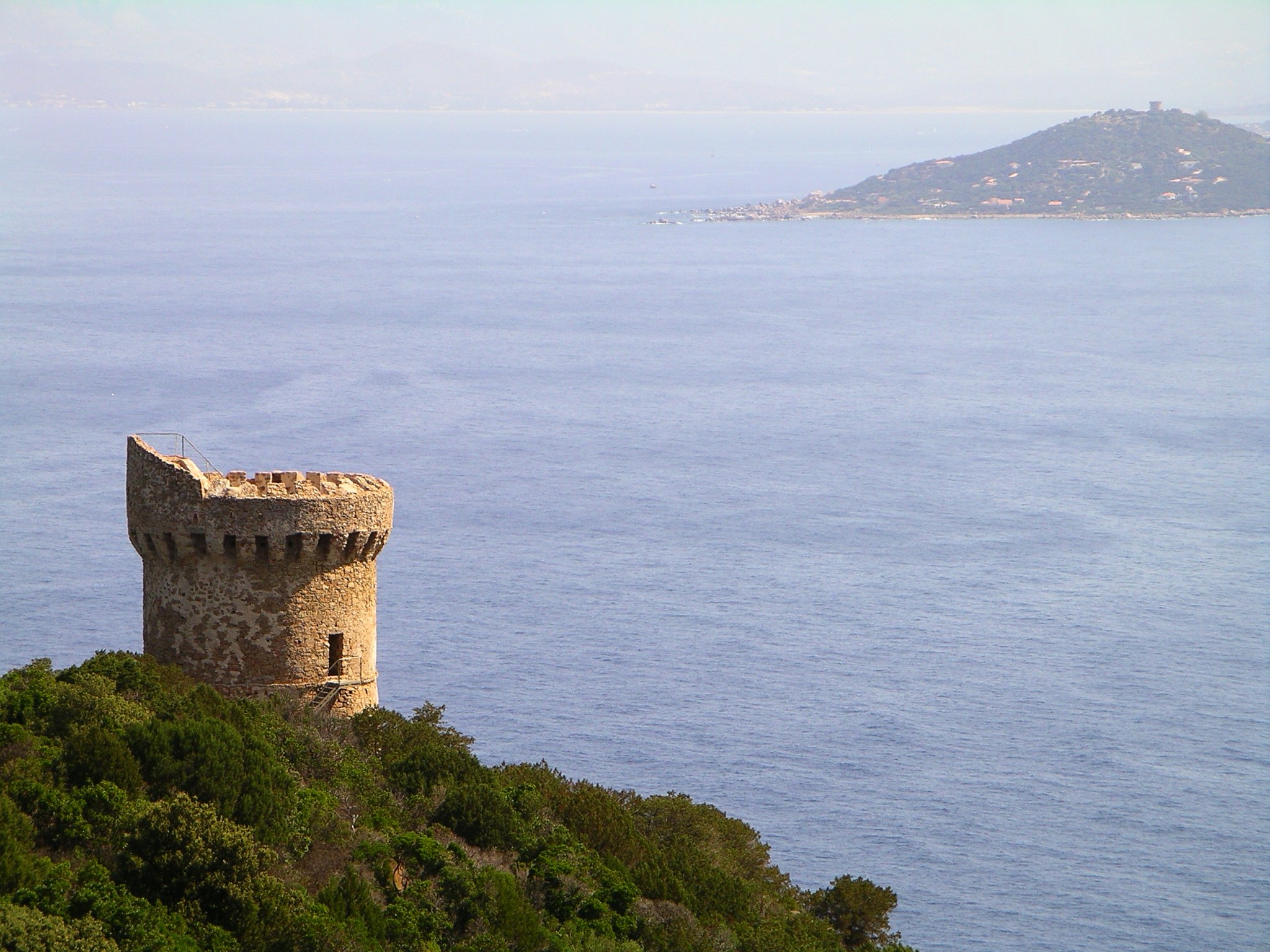
Corsican Republic
In 1755, twenty-one years before Thomas Jefferson drafted the Declaration of Independence, a 30-year-old Corsican general named Pasquale Paoli proclaimed a republic on his Mediterranean island and wrote a constitution in Italian that included principles the rest of Europe would not embrace for generations. Among them: a form of female suffrage. The Corsican Republic lasted only fourteen years before France crushed it, but its influence rippled outward -- to the philosophers of the Enlightenment, to the rebels of the American Revolution, and into the modern separatist movements that still invoke Paoli's name.
The General Who Built a Nation
Paoli drove the Genoese from nearly all of Corsica through a combination of guerrilla tactics and political skill, confining them to a handful of coastal towns. Then he turned from warfare to governance. He established a capital at Corte, in the mountainous interior, and founded a university there in 1765 -- using Italian as the language of instruction, since Corsicans regarded their own tongue as an Italian dialect. He created a judicial system, organized an army, and in 1761 minted Corsican coins at Murato stamped with the Moor's Head, the island's traditional symbol. His constitution established a legislature of over 300 members, the Consulta Generale, which met annually to enact laws and set policy. The government was structured with checks on power that would look familiar to students of later democratic experiments, including an executive council and an independent judiciary.
Philosophers and Admirers
Paoli's experiment attracted the attention of Europe's greatest thinkers. Jean-Jacques Rousseau praised the Corsican constitution and considered writing one for the island himself. Voltaire followed events on Corsica with interest. In 1768, the Scottish writer James Boswell published An Account of Corsica after visiting the island and meeting Paoli personally. The book made Paoli famous across Europe and turned the Corsican cause into a fashionable liberal cause. Even the Bey of Tunis extended diplomatic recognition to the fledgling republic. Paoli's vision of a self-governing Mediterranean state, grounded in Enlightenment principles and Italian cultural identity, captured imaginations far beyond the island's granite shores.
A Republic Extinguished
The Republic of Genoa, unable to retake the island on its own, sold its claim to Corsica to France in 1768. The following year, French forces invaded. Paoli fought but was defeated at the Battle of Ponte Novu in 1769, and fled into exile in England. France revoked the constitution's provisions, including female suffrage. The fall of Corsica provoked outrage in Britain -- Corsica's principal ally -- and contributed to the collapse of the Grafton Ministry. The irony was not lost on observers: just a few years later, a boy born in Ajaccio the very year of the French conquest would grow up to conquer much of Europe. His name was Napoleon Bonaparte, and he was born a subject of the republic Paoli had built.
The Echo Across the Atlantic
The Corsican Republic's influence on the American Revolution was direct and acknowledged. In New York, a militia that counted Alexander Hamilton among its members originally named itself 'The Corsicans,' explicitly modeling their aspirations on Paoli's republic. Exiled Corsicans fought on the British side during the American Revolutionary War, serving with distinction at the Great Siege of Gibraltar in 1782. Paoli himself attempted to revive Corsican self-governance through the Anglo-Corsican Kingdom of 1794-1796, but French forces regained control. Today, Corsican separatist movements still invoke the republic's memory. The Moor's Head flag still flies on the island, and in Corte -- where Paoli founded his university and governed his republic -- the dream of Corsican independence has never entirely faded.
From the Air
Located at 42.15N, 9.08E, centered on Corte in the mountainous interior of Corsica. The island is clearly visible from cruising altitude as the fourth-largest Mediterranean island. Corte sits in a dramatic valley surrounded by peaks. Nearest airports: Bastia-Poretta (LFKB), Ajaccio Napoleon Bonaparte (LFKJ), Calvi-Sainte Catherine (LFKC). The entire island encompasses the territory of the former republic.