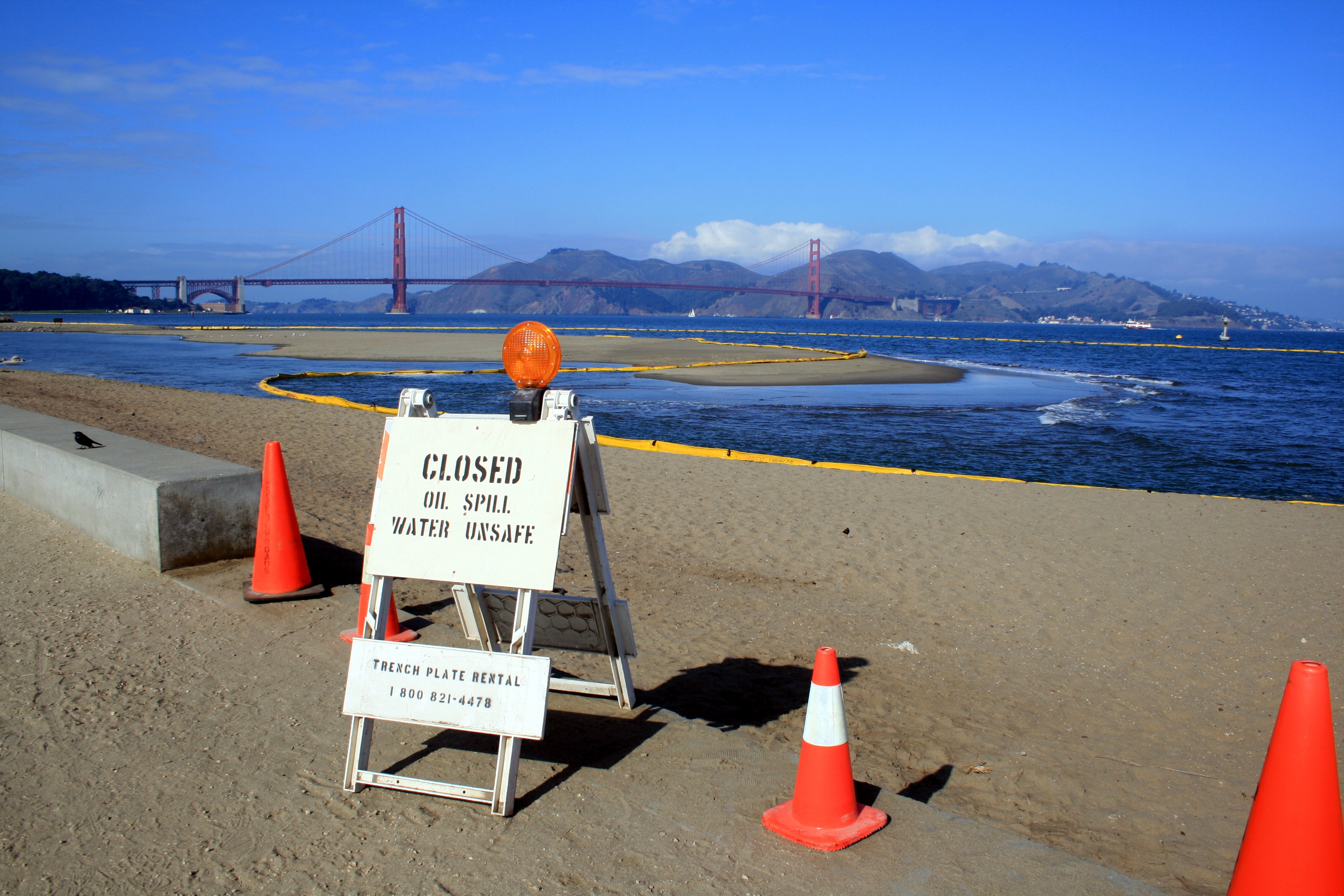
Cosco Busan Oil Spill
The Coast Guard warned him twice. The fog was so thick that maritime pilot John Cota could see barely 200 feet ahead of the container ship Cosco Busan as he guided it through San Francisco Bay on the morning of November 7, 2007. At 8:30 a.m., the 901-foot vessel struck the Delta Tower fender of the San Francisco-Oakland Bay Bridge, tearing a 100-foot gash in its own hull. Within minutes, 53,569 gallons of IFO-380 heavy fuel oil -- a substance so viscous it barely flows at room temperature -- began pouring into some of the most ecologically sensitive waters on the Pacific Coast.
A Pilot Impaired
The National Transportation Safety Board investigation revealed that Cota's judgment was compromised by prescription medications that degraded his cognitive performance. He had misread the ship's electronic navigation charts, failed to conduct a proper pre-departure exchange with Captain Mao Cai Sun, and navigated at unsafe speed through near-zero visibility. The Coast Guard's Vessel Traffic Service had radioed warnings that the ship was headed for the bridge structure, but Cota did not correct course. Captain Sun, for his part, failed to oversee Cota's piloting or intervene as the vessel drifted toward the span. Independent maritime investigators later pointed to flaws in the ship's human-machine interface design, noting that even experienced navigators could misinterpret the electronic chart displays under stress.
Black Tide Across the Bay
San Francisco Bay's powerful tidal currents spread the oil rapidly. Within days, the slick had contaminated more than 200 miles of coastline and 3,367 acres of shoreline habitat. Over fifty public beaches were closed, including Crissy Field, Baker Beach, China Beach, and Fort Point. The oil reached as far south as Pacifica and devastated Richmond's shoreline on the East Bay. Rodeo Beach and Albany Beach were the last segments signed off as cleaned, requiring months of additional monitoring. The spill killed an estimated 6,849 birds. Of the 2,519 collected, more than 1,800 were already dead. Only 295 birds were successfully rehabilitated and released. Herring that typically spawn in the bay during winter lost between 14 and 29 percent of their eggs that season. Fisheries across the bay were shut down, and the Dungeness crab season was postponed by weeks.
Reckoning and Accountability
Senator Barbara Boxer and San Francisco Mayor Gavin Newsom sharply criticized the Coast Guard, which initially reported the spill at between 100 and 140 gallons -- a fraction of the actual volume. The federal government sued the ship and pilot in November 2007. A grand jury indicted Fleet Management Ltd. of Hong Kong, the ship's operator, on six felony counts for falsifying documents and two misdemeanor counts of criminal negligence. Fleet ultimately paid $10 million in fines and restitution. Cota pleaded guilty to federal water pollution and migratory bird killing charges in March 2009 and was sentenced to ten months in federal prison. A comprehensive civil settlement finalized in September 2011 totaled $44.4 million, including $32.2 million for natural resource restoration projects. Total monetary damages exceeded $70 million for cleanup alone.
What the Bay Remembered
On December 21, 2007, the Cosco Busan -- quietly renamed Hanjin Venezia -- sailed out of San Francisco Bay bound for South Korea with a new crew. The bridge fender was repaired for $1.5 million, finished three weeks early and half a million under budget. The bureaucratic machinery worked efficiently. But the ecological recovery moved at its own pace. Over a million recreational use days were lost. Contaminants lingered in mussels at Rodeo Beach and the Berkeley pier. The spill exposed how a single impaired individual, operating complex machinery in poor conditions, could inflict damage that an entire region would spend years cleaning up. It also revealed the tension between volunteer energy and regulatory caution: for the first few days, would-be beach cleaners were turned away because they lacked the required 24-hour hazardous materials certification. Eventually, under public pressure, a four-hour crash course was offered -- valid only for this one spill.
From the Air
The Cosco Busan struck the Delta Tower of the Bay Bridge at approximately 37.8007N, 122.3749W, between San Francisco and Oakland. The Bay Bridge is one of the most prominent features visible from the air in the region. Best viewed from 2,000-4,000 feet AGL. Nearby airports: KOAK (Oakland International, 5nm SE), KSFO (San Francisco International, 10nm S). The area is within Oakland/San Francisco Class B airspace.