Costa Teguise
The developer's name tells you everything about how Costa Teguise came to exist: Rio Tinto Explosives. In the 1970s, when Lanzarote's tourism potential was just being recognized, creating a resort here meant blasting through some of the toughest volcanic bedrock in the Atlantic. What emerged from that explosive birth was a planned community on the island's eastern coast, seven kilometers from the capital Arrecife and fifteen from the airport. Today nearly 9,000 residents call this place home, though that number swells dramatically when sun-seeking visitors from Northern Europe arrive to escape their grey winters on the black-sand beaches and along the broad promenades that now stand where raw lava once ruled.
Manrique's Square
At the heart of Costa Teguise stands Pueblo Marinero, a square that embodies the aesthetic vision of Cesar Manrique, the artist-architect who did more than anyone to shape modern Lanzarote. Where other resorts might have surrendered to generic Mediterranean styling, Manrique insisted on authenticity - whitewashed walls, volcanic stone, and traditional Canarian architectural details that honor rather than imitate the island's heritage. The square pulses with life after dark, hosting markets, restaurants, and the concentrated nightlife of a resort that otherwise spreads lazily along the coast. The influence extends beyond this single plaza; Manrique's battle to limit building heights and preserve the volcanic landscape gave Lanzarote a character distinct from the tower-block resorts that blighted other Canary Islands.
Beaches and Breakwaters
The eastern coast of Lanzarote catches the morning light but misses the sunset, a geographical fact that shapes the rhythm of beach days here. Playa de las Cucharas stretches as the main resort beach, its golden sand interrupted midway by a breakwater that calms the Atlantic swells. Smaller Playa del Jablillo and Playa Bastian offer alternatives, all sandy but rocky at the waterline in the manner of volcanic island beaches. Beyond the designated swimming areas, sharp-edged lava cliffs make the coastline treacherous - beautiful to photograph but dangerous to explore. The clear waters draw divers year-round, with numerous dive centers offering everything from beginner courses to advanced exploration of the volcanic underwater landscape.
A Royal Retreat
High on the headland stands La Mareta, a mansion built for King Hussein of Jordan in the 1970s when Middle Eastern royalty discovered the discreet charms of the Canary Islands. Hussein himself never stayed here, and in 1989 he gifted the property to King Juan Carlos I of Spain. The closely guarded compound remains off-limits to visitors, but its presence speaks to the island's appeal to those seeking sun without scrutiny. The mansion takes its name from a mareta, a traditional Canarian water cistern, echoing the island's historical struggle to capture and store the scarce rainfall that sustains life on this volcanic outpost.
Island Crossroads
Costa Teguise serves as a convenient base for exploring Lanzarote's otherworldly landscapes. To the south lies Arrecife, the working capital with its castle and lagoon, while the main tourist rival, Puerto del Carmen, sprawls along the southern coast. Northward, the island reveals its volcanic heart: the Timanfaya National Park where the earth still radiates heat from eruptions in the 1730s, and the wine region of La Geria where vines grow in individual craters scooped from the volcanic ash. The island's small size - barely 60 kilometers long - means even the remotest corner lies within an hour's drive, yet many visitors never leave the resort strip, content with sun, sand, and the reliable supply of fish and chips that marks any British holiday destination.
From the Air
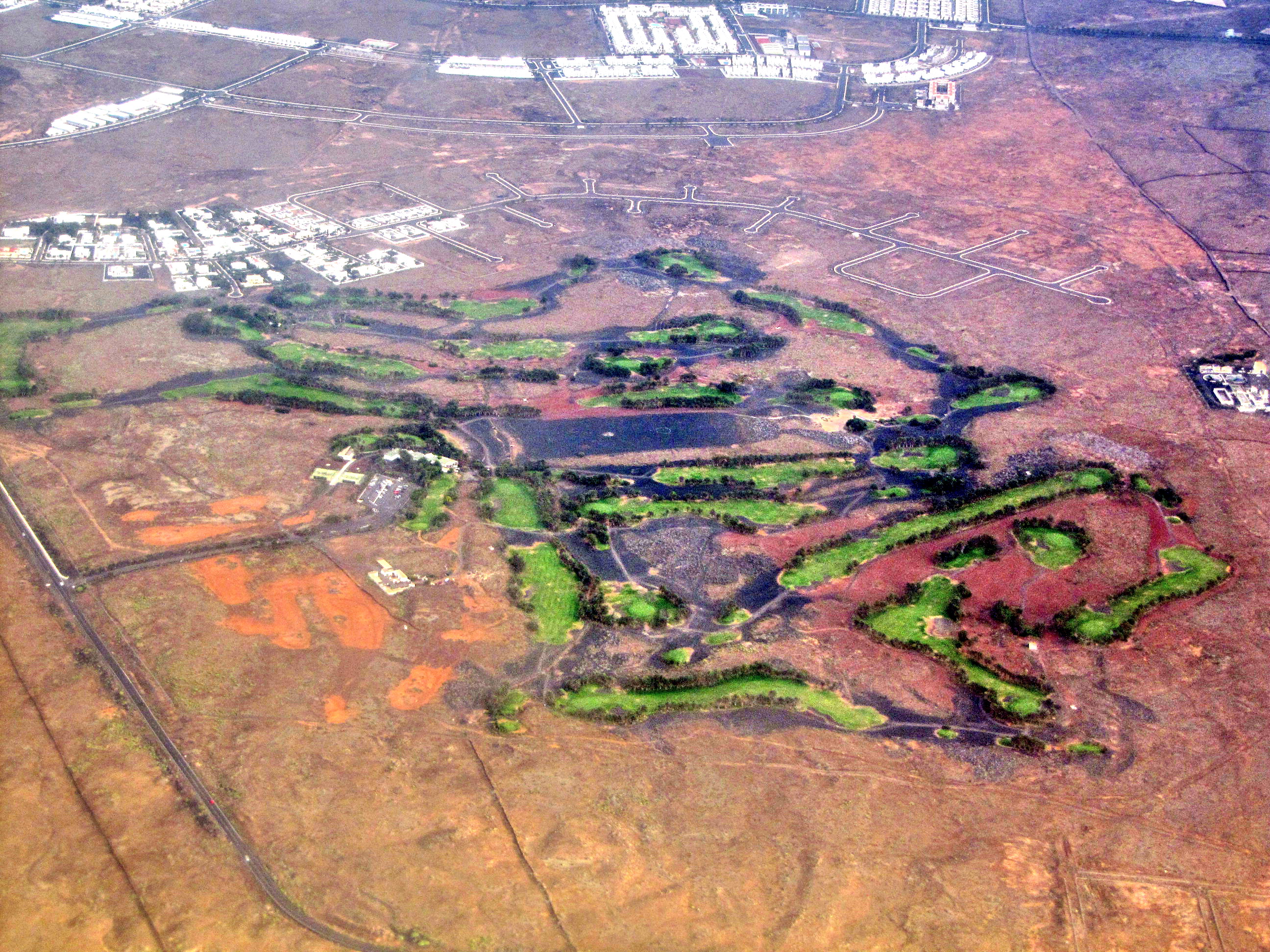
Located at 29.00N, 13.50W on the eastern coast of Lanzarote, Canary Islands. Lanzarote Airport (GCRR/ACE) lies 15 km southwest. The resort sits on volcanic terrain at sea level, with views across to the small islands of La Graciosa, Montana Clara, and Alegranza to the north. The African coast lies approximately 125 km to the east. From altitude, the stark contrast between the black lava fields and the resort's development is clearly visible.