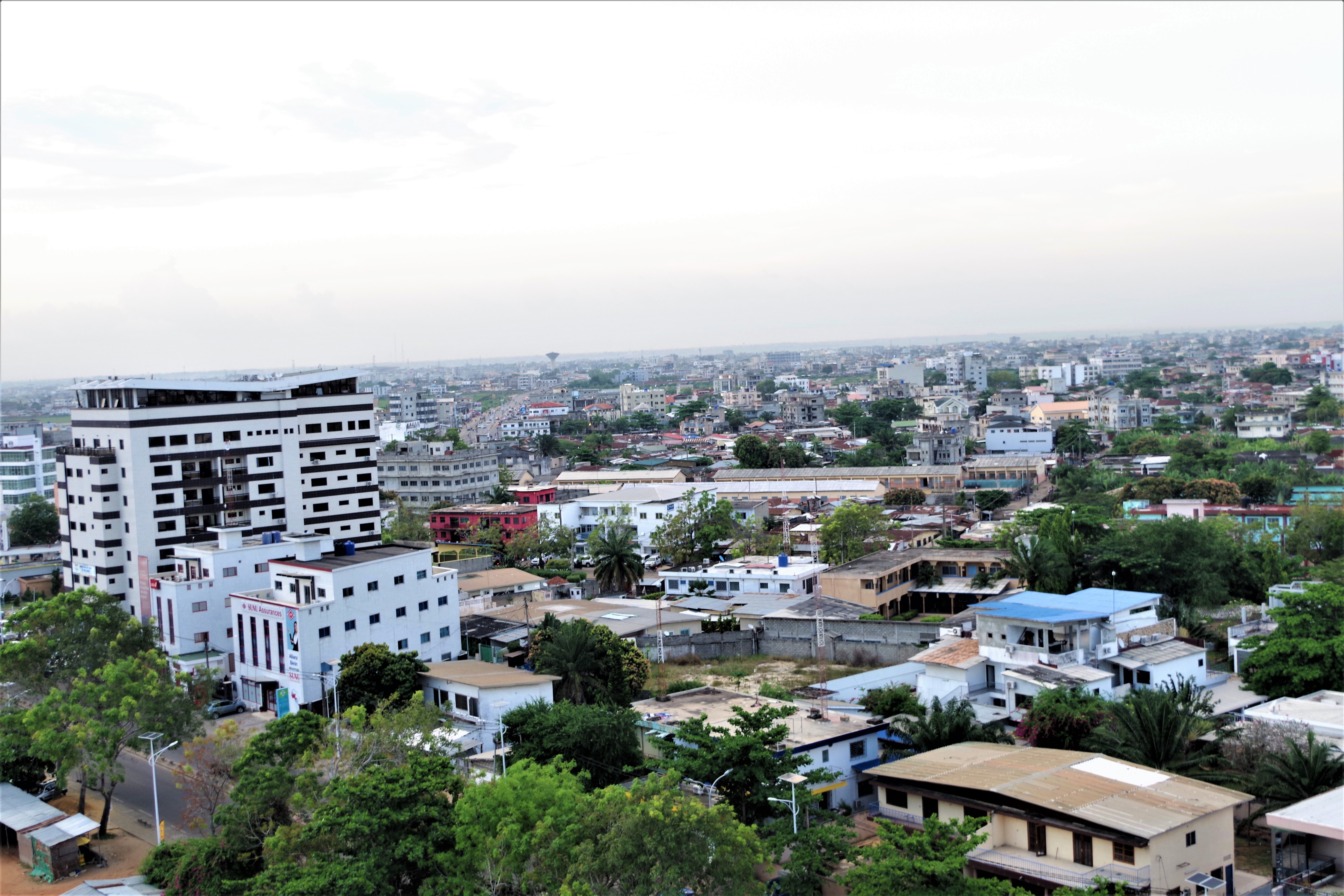
Cotonou
In Fon, the language spoken by much of southern Benin, the word Cotonou means "the mouth of the river of death." The name has outlasted every regime that tried to rename or redefine the place. What began as a fishing village during the Dahomey Kingdom era became a French trading post in the mid-19th century, then the largest city in an independent nation, and now the economic engine of a country whose official capital is technically somewhere else. Porto-Novo holds the constitutional title, but Cotonou holds everything that matters -- the port, the embassies, the government ministries, the Presidential Palace, and roughly a third of Benin's urban population packed onto a strip of land squeezed between the Atlantic and Lake Nokoue.
The Zemidjans Own the Streets
Nothing prepares you for the motorcycles. Cotonou runs on zemidjans -- moto-taxis locally called zems or kekenos -- and they are everywhere, weaving through traffic in numbers that make rush hour feel like a swarm. They are possibly more concentrated here than anywhere else in the world. For a hundred CFA francs, roughly the cost of a breath, a zemidjan driver will take you a kilometer through streets where the concept of a lane is more philosophical than practical. Helmets are essential, negotiation is constant, and the experience sits somewhere between transportation and extreme sport. In 2021, an app called Gozem brought ride-hailing to the chaos, allowing passengers to order a zem or taxi by phone and pay by credit card -- a layer of digital order laid over a fundamentally analog city.
Dantokpa and the Art of Commerce
The commercial heart of Cotonou beats at Dantokpa Market, one of the largest open-air markets in West Africa. From here, fixed-route taxis depart for destinations across the city and beyond, cramming two passengers in front and four in back as a matter of course. The market anchors a commercial district stretching south to Ganhi and west to Jonquet, where shopkeepers and street vendors sell everything imaginable. Street food is its own ecosystem: atta, the crispy bean flour fritters; doko, small fried donuts sometimes made with mashed banana; and igname frite, sliced fried yam served with fiery pepper sauce. Blue-awning cafes called Cafette Diallo serve Nescafe and local spaghetti for less than a dollar to a working-class crowd that keeps the city fed and moving.
A City on Borrowed Land
Cotonou occupies a precarious geography. The city sits on a narrow coastal strip with the Atlantic to the south and Lake Nokoue to the north, connected by the Lagune de Cotonou. Flooding is not a possibility here; it is a recurring fact of life. Sections of the population have been displaced by both coastal surges and lake overflow. Many of the narrow side streets -- called vons -- are bumpy in the dry season and submerged in the wet. The grid layout that French colonial planners imposed makes navigation straightforward, but the infrastructure beneath it struggles to keep up with a city that has grown far beyond anything those planners imagined. Garbage lines the lagoon banks, sanitation remains a persistent challenge, and the tension between a city growing at breakneck speed and the fragile land it occupies defines daily life.
Ganvie and the Lagoon
Across Lake Nokoue from Cotonou stands Ganvie, a town of over 30,000 people living in houses built on stilts above the water. Called the Venice of Africa, Ganvie was founded by the Tofinu people, who moved onto the lake to escape slave raids by the Kingdom of Dahomey -- a tactical choice rooted in the belief that Dahomey's warriors were forbidden from attacking on water. Boat tours depart from the Hotel du Lac in Cotonou or from Abomey-Calavi, gliding across a lake that serves simultaneously as highway, marketplace, and, less romantically, an overburdened sewer system. The lack of sanitation infrastructure means the lake absorbs everything the surrounding communities produce. Visitors are advised not to touch the water, a warning that says as much about Cotonou's environmental challenges as any government report.
After Dark, the Buvettes
Cotonou's nightlife is not flashy, but it is real. The city's social life centers on buvettes -- outdoor bars furnished with plastic tables, plastic chairs, an oversized speaker, and cold bottles of Beninoise beer. For the hardier drinker, there is Guinness or Awooyo. The beachside neighborhood of Fidjirossee draws locals to waterfront maquis on weekends, and the Zongo quarter -- the city's Muslim neighborhood centered around the main mosque -- pulses with street activity at almost every hour. The upmarket Haie Vive strip caters to the expat crowd, where NGO workers drive SUVs to the next bar a few doors down. Walking after dark is inadvisable in many areas, and the beach that offers pleasant ocean views by day becomes unsafe at night. Cotonou does not pretend to be a tourist city, but it rewards those who meet it on its own terms -- chaotic, genuine, and unforgettably alive.
From the Air
Located at 6.37N, 2.42E on the southern coast of Benin, squeezed between the Atlantic Ocean and Lake Nokoue. Cadjehoun Airport (DBBB) sits within the city. The narrow coastal strip geography is clearly visible from 5,000-8,000 ft, with the lagoon, lake, and ocean creating a distinctive water-bounded urban landscape. Porto-Novo lies approximately 30 km to the east. The stilt village of Ganvie is visible on the northern shore of Lake Nokoue.