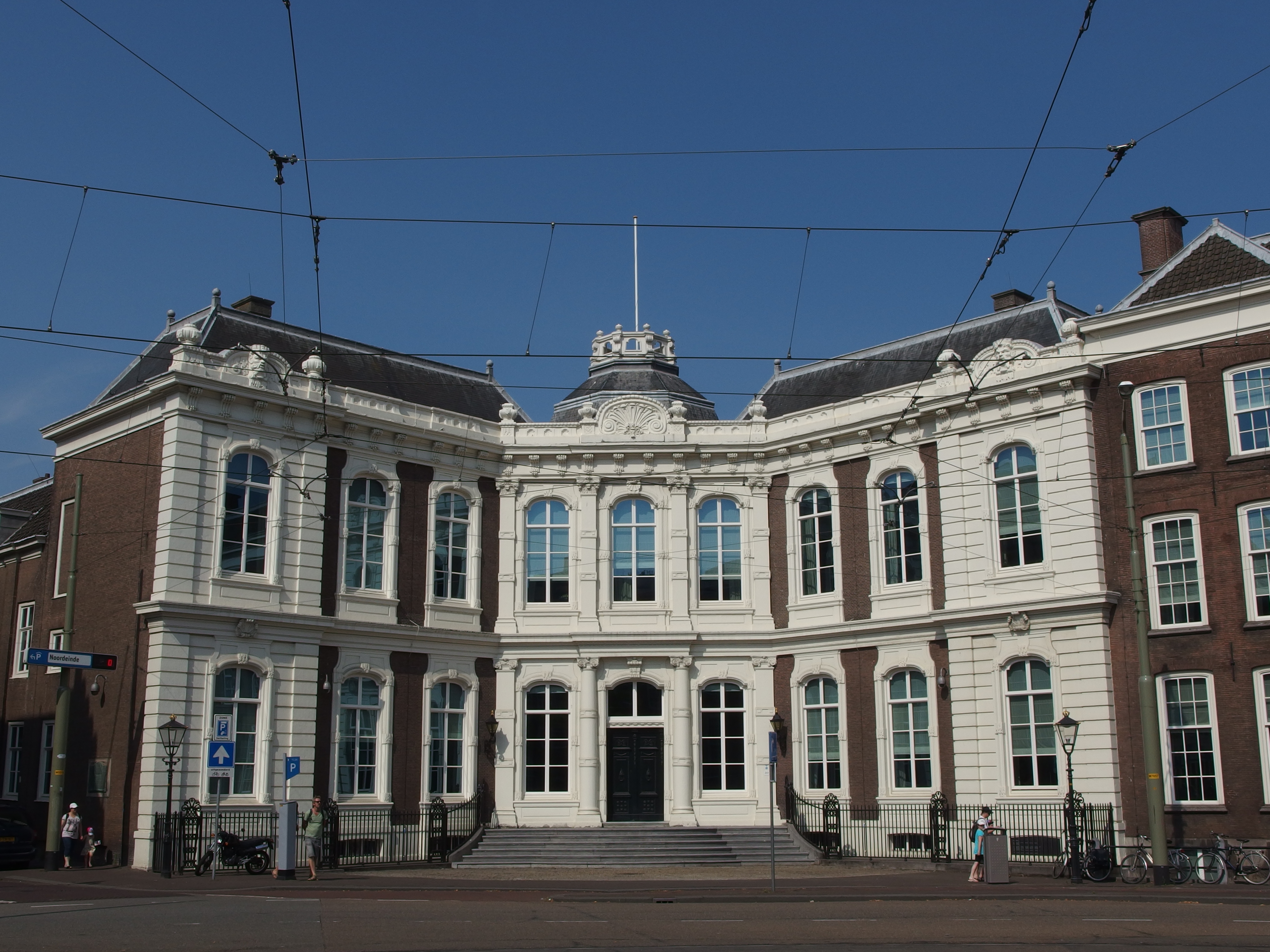
Council of State (Netherlands)
Why is the chair at the head of the table always empty? Walk into the meeting room of the Council of State on the Binnenhof in The Hague and you will see it: a chair set apart, elevated slightly, reserved for the King of the Netherlands. He is the council's official president. He almost never sits there. The vice-president runs the meetings instead, and in practice it is the vice-president who is the institution's most important figure. That arrangement has held in some form since 1814, but the council itself is far older. Charles V founded it on 1 October 1531, before the Dutch Republic existed, before the Netherlands as a country existed, before half the European states on the modern map had been imagined. Almost five centuries later, every new Dutch law still passes through its hands before reaching parliament.
A Habsburg invention
Charles V was Holy Roman Emperor, King of Spain, ruler of an empire spanning continents, and he needed help governing the Netherlands while he was elsewhere. On 1 October 1531 he set up three Collateral Councils to advise his sister Mary of Hungary, his regent in the Habsburg Netherlands. One handled finance, one handled secret affairs, and the third - the Council of State - dealt with what the founding instructions called the great and principal affairs and those which concern the state, conduct and government of the lands, security and defense of the said lands. The first members were the great nobles and a few of the senior clergy. It was, in essence, the inner cabinet of the Low Countries under the Habsburgs. Nobody at the time would have guessed that the institution would outlast the Habsburg dynasty, the Spanish empire, the Dutch Republic that replaced it, the Napoleonic kingdom that replaced that, and the entire pre-modern European order.
Caught in the Dutch Revolt
When Philip II succeeded his father and left for Spain in 1559, the Council became a battleground. On one side stood the Spanish-aligned faction led by Antoine Perrenot de Granvelle. On the other stood the Netherlandish grandees - William of Orange (later William the Silent) and the Counts of Horne and Egmont. The grandees felt sidelined and resigned in 1567, leaving a Spanish-dominated council just as the Dutch Revolt began. Horne and Egmont would be executed in Brussels the following year. The council itself fractured. In 1576, after the governor-general Luis de Requesens y Zuniga died, the council briefly held authority itself, then was arrested in a coup by the Brussels garrison. When the Pacification of Ghent followed soon after, the council split into two pieces. One half followed Don Juan to Namur and became the nucleus of the council that would govern the Spanish and later Austrian Netherlands. The other half stayed with the rebellious States-General. Philip II discharged its members in 1578. The Habsburg version of the council, in the rebellious north, was finished.
The Treaty of Nonsuch and the Earl of Leicester
After William of Orange was assassinated in 1584, the States-General went looking for a new protector. The Treaty of Nonsuch in 1585 gave that role temporarily to Elizabeth I of England. The treaty's Article XIV gave her the right to appoint two English members of a reconstituted Council of State, and the following articles handed the council, working with an English governor-general, sweeping authority over defense, finance, and even the appointment of provincial stadtholders. The Earl of Leicester arrived in the Netherlands to take up the governor-generalship. He found his powers quietly drained at every turn. The province of Holland appointed Maurice of Orange as stadtholder before Leicester could prevent it. The Land's Advocate of Holland, Johan van Oldenbarnevelt, methodically transferred executive duties from the council to the States-General to dilute English influence. When Leicester left at the end of 1587, the council's role had been hollowed out, and it never recovered the executive powers Elizabeth had imagined for it.
Two centuries of quiet usefulness, then collapse
By 1588 the council had settled into the shape it would hold throughout the Dutch Republic - twelve or so members appointed by the States-General on provincial nomination, plus the stadtholders ex officio. Its powers were limited: military policy, the army's finances, taxes for the Generality Lands. The naval matters went to the five Admiralties. In practice the council often kept its head down, especially during the Stadtholderless Periods. There were exceptions. Secretary Simon van Slingelandt tried in 1717 to push through constitutional reforms that would have expanded the council's executive role; he was politely thwarted. When the Batavian Revolution of 1795 swept the stadtholder away, it swept the old Council of State away as well. The institution would have to be reinvented. It was - twice, briefly, under the Batavian Republic and the Kingdom of Holland - before disappearing again when Napoleon annexed the Netherlands outright between 1810 and 1813.
The shape it kept
Restoration came in 1813, and the constitutions of 1814 and 1815 wrote the Council of State into the new Kingdom of the Netherlands. Every act of sovereignty by the new king would require the council's prior advice. This mattered, because King William I liked to rule by decree. The king presided over the council; the crown prince became a member as soon as he reached majority. After the Belgian Revolution in 1830, the Belgian members went home, and Belgium would not establish its own Council of State until 1946. The 1848 constitution and the 1861 law that followed gave the council a second role - resolving administrative disputes between branches of government - which slowly grew into something like an administrative court. The arrangement was acceptable until 1985, when the European Court of Human Rights ruled in Benthem v Netherlands that the council was not sufficiently independent to act as a judicial body. In 1994 the two functions were formally separated: an Advisory Division that still reviews every proposed law, and an Administrative Jurisdiction Division that hears appeals. The 2010 Council of State Act confirmed the split. The empty chair at the head of the table remains. So does the council, almost five centuries after Charles V created it - one of the oldest still-functioning state organisations on Earth.
From the Air
Council of State, The Hague, Netherlands. Coordinates: 52.08 degrees N, 4.31 degrees E. The council meets in the Binnenhof complex at the heart of The Hague, the same medieval courtyard that has housed Dutch government in some form since the thirteenth century. Recommended viewing altitude 1,500-2,500 feet to take in the Binnenhof, the Hofvijver pond reflecting the medieval Ridderzaal, and the surrounding government quarter. Nearest airport is Rotterdam The Hague (EHRD), 12 nautical miles south. Schiphol (EHAM) lies about 25 nautical miles northeast. Look for the Binnenhof's distinctive medieval ensemble - turrets, the Ridderzaal's twin spires, and the still pond in the center.