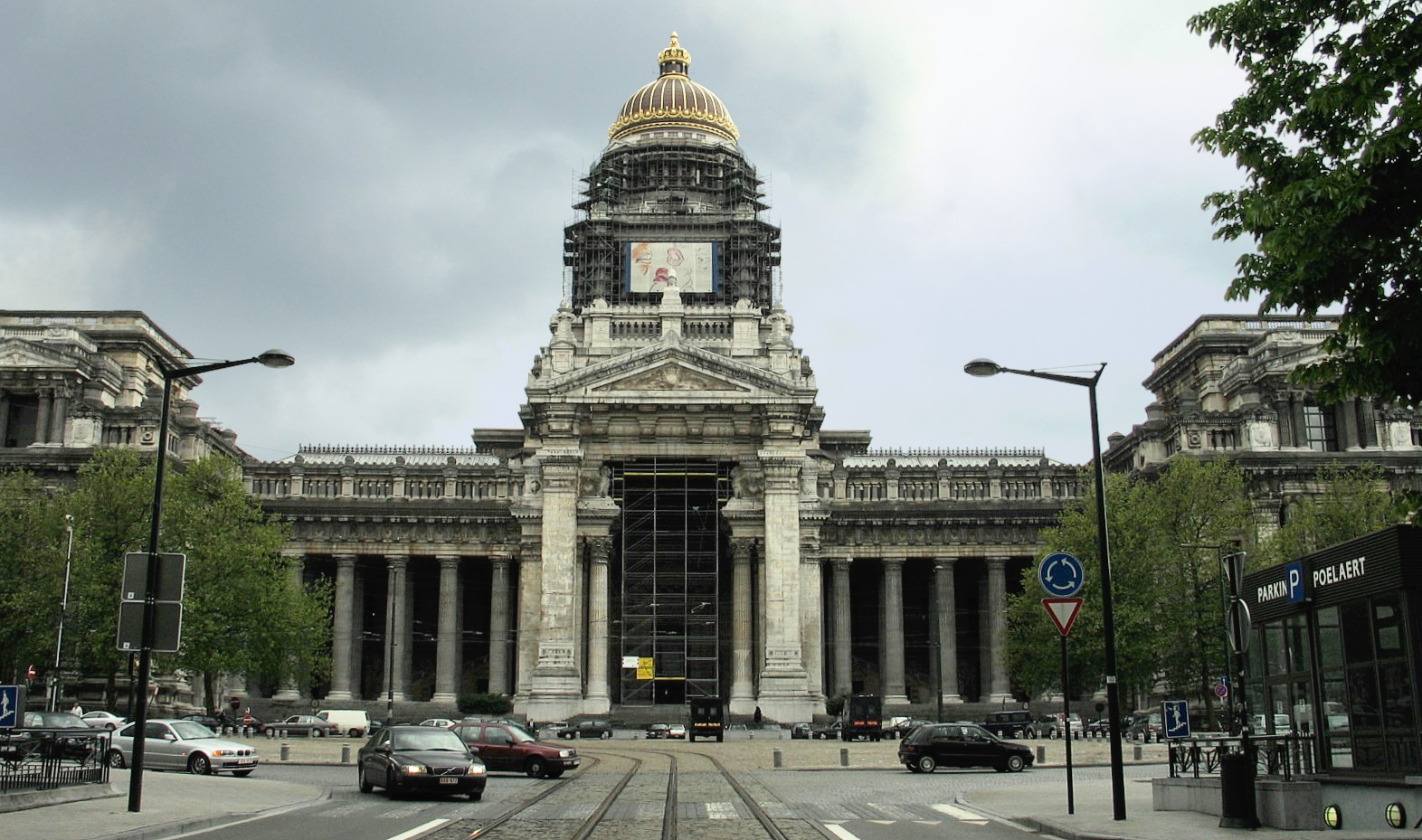
Court of Cassation (Belgium)
In 2003, a man was convicted in Antwerp of illegally possessing a firearm. The weapon had been discovered during a police search that the courts later judged unlawful. Under Belgian doctrine at the time, that should have ended the case — unlawfully obtained evidence had to be thrown out. But the Court of Cassation, the supreme court of the Belgian judiciary, ruled otherwise. The conviction stood. The police operation had been code-named Antigone, and the *Antigone ruling* of 14 October 2003 rewrote the Belgian law of evidence. The court did not change a statute. The court does not have that power. It changed how every lower judge in Belgium would read the statute that already existed. That is what the Court of Cassation does, and the *Antigone* case is a sharp example of how much weight a single ruling from a court that does not even create binding precedent can carry.
What Cassation Actually Means
The word *cassation* comes from the French verb *casser* — to break, to quash. A court of cassation does not retry cases; it quashes lower-court judgments when those judgments have misapplied or misinterpreted the law. The Belgian Court of Cassation, modeled on its French namesake, takes no view on what happened or who is telling the truth. The lower court's findings of fact are settled. Only the law is in play. The court has two options for each appeal: uphold the contested decision, or annul it — *cassation* — and send the case back to a different court of the same rank for a fresh trial. The court does not pick its cases. It must hear every petition correctly brought before it, which is why about 2,500 petitions arrived in 2019 alone. The court's job is to keep the law consistent across a country that hears cases in three languages.
Thirty Judges, Two Languages
The court has thirty judges, formally called *counsellors*, all with life tenure until the statutory retirement age of 70. They are split across three chambers, each with ten judges, and each chamber is further split into a Dutch-speaking section and a French-speaking one of five judges apiece. The linguistic balance is constitutional, not customary. If the First President — the chief justice — comes from the French-speaking half of the court, the deputy *President* must come from the Dutch-speaking half. The same balance applies to the prosecutor-general's office. To even be considered for the court, a candidate needs fifteen years in legal practice, ten of those as a judge or prosecutor. The High Council of Justice nominates; the federal government formally appoints. The German-speaking community gets language facilities for its cases but does not get its own section of the court.
One Ruling, No Dissents
When the Court of Cassation issues a judgment, it speaks with one voice. There are no dissenting opinions. There are no concurring opinions. The deliberations of the judges are secret, and the Court has held that breaching that secrecy can be prosecuted under article 458 of the Belgian Penal Code, which covers violations of professional confidentiality. The individual views of the judges on any particular case never enter the public record. This is unusual among supreme courts. American and British high courts often produce multiple opinions, sometimes more memorable than the majority itself. Belgian cassation produces one *arrest*, the official term for its judgments, written in the institutional voice of the entire bench. The trade-off is clarity for transparency: lower courts get one clean answer, and Belgian law gets a single line of evolution to follow.
Precedent That Isn't Precedent
By Article 6 of the Belgian Judicial Code, no Belgian court — including the Court of Cassation — may issue a ruling that amounts to a generally binding rule. That is the legislature's job. So the Court of Cassation does not formally make law, and lower courts are not formally required to follow its rulings. In practice the rulings carry enormous weight. A lower court that contradicts a Cassation precedent invites an appeal that the Court of Cassation is likely to grant, annulling the lower judgment. The most persuasive form of unofficial precedent is *jurisprudence constante* — a settled line of decisions in which the court has applied the same principle in case after case. The court aims to follow its own precedents but reserves the right to depart from them when society and circumstance require it. After a 2017 reform, a court hearing a case on remand from cassation is now formally bound to apply the Court's interpretation of the points of law in question. Before 2017, even that was only persuasive.
Inside the Palace of Justice
The Court of Cassation meets inside the Palace of Justice in Brussels — *Justitiepaleis*, *Palais de Justice* — designed by Joseph Poelaert and completed in 1883. The building is colossal, intentionally so. Its dome, roughly 100 meters above the city, was designed to dwarf St. Peter's in Rome by sheer footprint, and at the time of completion the Palace covered more ground than any other building in Europe. The architecture is eclectic verging on overwhelming, mixing Greco-Roman and Assyrian influences into a single mass of stone visible from across Brussels. The choice of site, the working-class Marollen neighborhood, required wholesale demolitions that left bitter feelings still remembered in local dialect, where *architekt* (architect) became a curse. The scaffolding that has wrapped the dome for decades is a Brussels joke. Beneath all of that, in chambers that quietly issue arrests on points of law, thirty judges keep Belgian justice pointed in a single direction.
From the Air
The Court of Cassation sits inside the Palace of Justice in Brussels at roughly 50.837°N, 4.352°E, atop the Galgenberg hill in the Marollen quarter. From altitude the building is one of the most recognizable structures in central Brussels — a massive eclectic palace topped by a tall dome (often partly scaffolded) that dominates the skyline south of the historic center. Brussels Airport (EBBR) lies about 12 km northeast. The hilltop position gives the dome high visibility across the lower town and over toward the Grand-Place to the north. Best photography conditions come in clear continental high-pressure weather rather than typical maritime overcast.