Coyote Hills Regional Park
The shell mounds at Coyote Hills are over 2,000 years old. The Ohlone people lived on these low hills at the edge of San Francisco Bay for millennia, gathering shellfish, hunting waterfowl, and building the midden deposits that archaeologists have studied for decades. Today, the nearly 978-acre park is managed by the East Bay Regional Park District, and the mounds coexist with hiking trails, marshes, and some of the best birdwatching on the bay.
Ohlone Heritage
Coyote Hills contains some of the most significant Ohlone archaeological sites in the Bay Area. The shell mounds -- accumulations of discarded shells, bones, and cultural material built up over centuries of continuous habitation -- provide a physical record of indigenous life before European contact. The park includes interpretive exhibits that document Ohlone culture and the ecological knowledge that allowed communities to thrive in the bayshore environment for thousands of years.
Bayshore Marshes
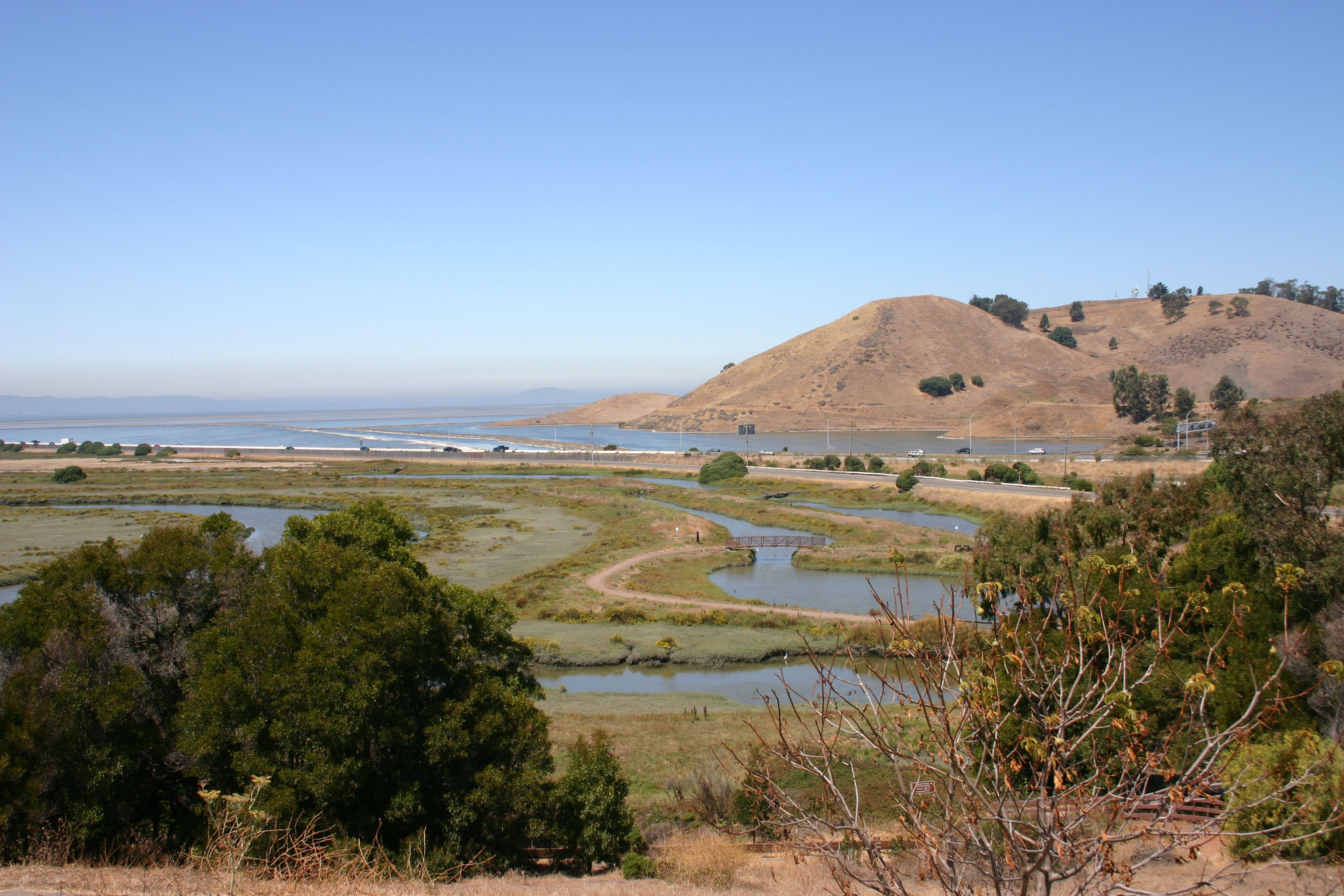
The park encompasses a stretch of bayshore marsh habitat that supports diverse wildlife. The freshwater and salt marshes attract migrating shorebirds, resident raptors, and waterfowl in enormous numbers. The Bayview Trail and the Alameda Creek Trail connect the hills to the water's edge, passing through grasslands that bloom with wildflowers in spring. From the hilltops, views extend across the bay to the San Mateo Bridge and the Peninsula.
Hills Above the Bay
The 'coyote hills' themselves are low, rounded rises that stand above the surrounding flatlands and marshes. From the air, they appear as green bumps at the bay's eastern edge, distinct from the salt ponds and development that surround them. The park's position makes it a critical link in the chain of protected lands along the bay shoreline -- a refuge for both wildlife and the humans who come to watch them.
From the Air
Coyote Hills Regional Park is at 37.554°N, 122.080°W along the East Bay shore. The low hills and adjacent marshlands are visible from altitude. The San Mateo Bridge is nearby. Nearest airports: Hayward Executive (KHWD) 7 nm north, Palo Alto (KPAO) 6 nm south.