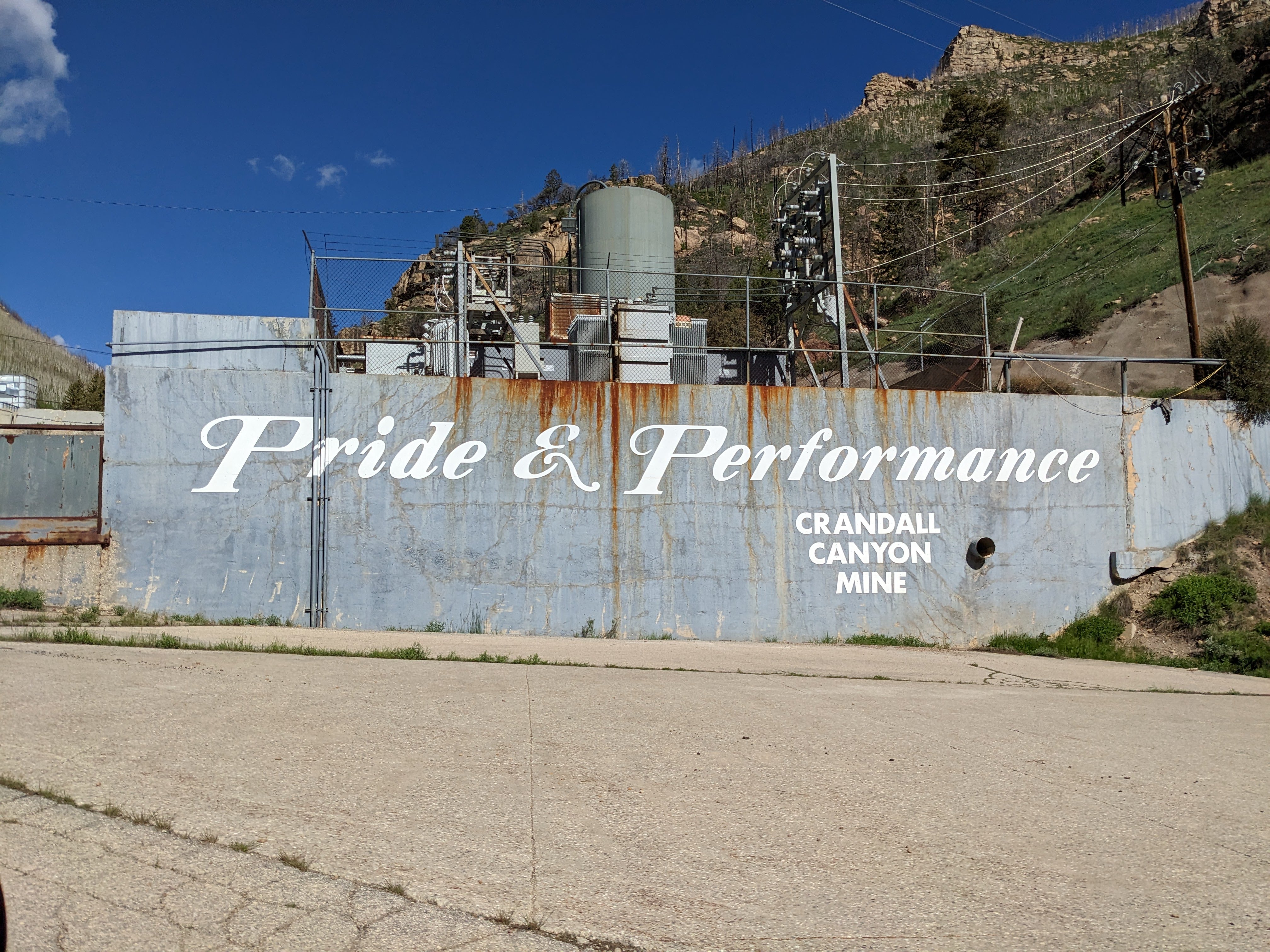
Crandall Canyon Mine
Bob Murray called it an "evil mountain." In August 2007, the owner of the Crandall Canyon Mine would stand before television cameras and blame an earthquake for the collapse that trapped six miners deep beneath the Wasatch Plateau. He was lying. Federal investigators later proved the seismic event registered on instruments across Utah and Nevada was no natural earthquake at all. It was the mountain itself giving way, triggered by years of aggressive mining practices that had literally hollowed out the coal pillars holding the earth in place.
The Warning Signs
The trouble started months before anyone was trapped. On March 10, 2007, a "rock burst" tore through the north barrier pillar, an explosion of pressure that sent coal and rock flying into the excavated tunnels. No one was hurt, but the event should have been a clear warning. Federal law required reporting such incidents to the Mine Safety and Health Administration. Instead, the company stayed quiet and pivoted to the adjacent south barrier pillar, chasing the low-ash coal they needed to fulfill contracts. Meeting minutes from March 21, later released by investigators, showed that Murray knew about the collapse despite his public denials. The mine had been cited for safety violations in 2006, including lacking required escape routes.
Trapped in the Dark
At 2:48 a.m. on August 6, 2007, the mine collapsed with enough force to register as a magnitude 3.9 seismic event. Six men were working deep inside: Kerry Allred, 58. Luis Hernandez, 23. Brandon Phillips, 24. Carlos Payan, 22. Manuel Sanchez, 41. Don Erickson, 50. Their ages spanned generations, from young men just starting out to veterans approaching retirement. Rescue teams rushed to clear rubble, but the mountain fought back. Continued seismic activity caused walls to burst, damaging equipment and requiring constant reinforcement. Engineers drilled bore holes from the surface, lowering microphones and cameras into the darkness. The first hole yielded false hope, showing oxygen levels that suggested breathable air, but the readings came from the drill hole itself, not the mine cavity.
Tragedy Doubled
Ten days into the rescue effort, hope still lingered. Teams had cleared rubble toward where the miners might be sheltering, following protocols that trained workers to seek ventilation areas when escape routes fail. Then, at 6:30 p.m. on August 16, the mountain struck again. A tunnel wall exploded outward in another violent burst, killing three rescue workers and injuring six others. Brandon Kimber, 29. Dale Black, 48. Gary Jensen, a federal mine safety inspector. The underground rescue effort ended that night. Seven bore holes eventually probed the collapsed sections, each returning the same grim data: cavities filled with mud and debris, oxygen levels incompatible with life. On September 1, 2007, federal officials called off the search. The six miners' bodies were never recovered.
Accountability Delayed
In July 2008, the federal government announced the largest fine ever levied for coal mine safety violations: $1.85 million against Genwal Resources, the mine's operator. The engineering consultants who analyzed the mine's design, Agapito Associates, were fined $220,000 for what regulators called "reckless disregard" that "directly contributed to the death of nine people." Investigators found that when pillars began failing in March, the company had notified the industry-friendly Bureau of Land Management rather than MSHA, which might have shut down operations. Richard Stickler, the government's top mine safety official, was unequivocal: "It was not, and I repeat, it was not a natural occurring earthquake." Murray eventually filed papers to permanently seal the mine, leaving the bodies of six workers entombed forever within the mountain he blamed for their deaths.
Monuments to the Lost
In Huntington, Utah, a bronze statue rises six feet from the ground. Created by sculptor Karen Jobe Templeton and unveiled on September 18, 2008, "Heroes Among Us" features deep relief portraits of all nine men killed in the August collapses. The height is intentional: visitors must look each miner in the eye. At the mine entrance itself, granite memorial benches honor the three rescuers who died trying to save their coworkers. The Crandall Canyon disaster prompted renewed calls for mine safety reform and remains a case study in how economic pressure and inadequate oversight can turn known risks into preventable tragedy. The coal is still there, sealed behind concrete blocks placed in October 2007. So are the men who once worked it.
From the Air
Located at 39.46N, 111.17W in Emery County, Utah, within the Wasatch Plateau coal field. The mine entrance sits at approximately 8,000 feet elevation. From the air, the Wasatch Plateau appears as a forested highland rising above the Castle Valley to the east. No visible pit or excavation, as this was an underground operation. Nearest airports: Price Carbon County Airport (KPUC) approximately 25nm northeast, Richfield Municipal Airport (KRIF) approximately 45nm southwest. Best viewed at 6,000-8,000 feet AGL for terrain context.