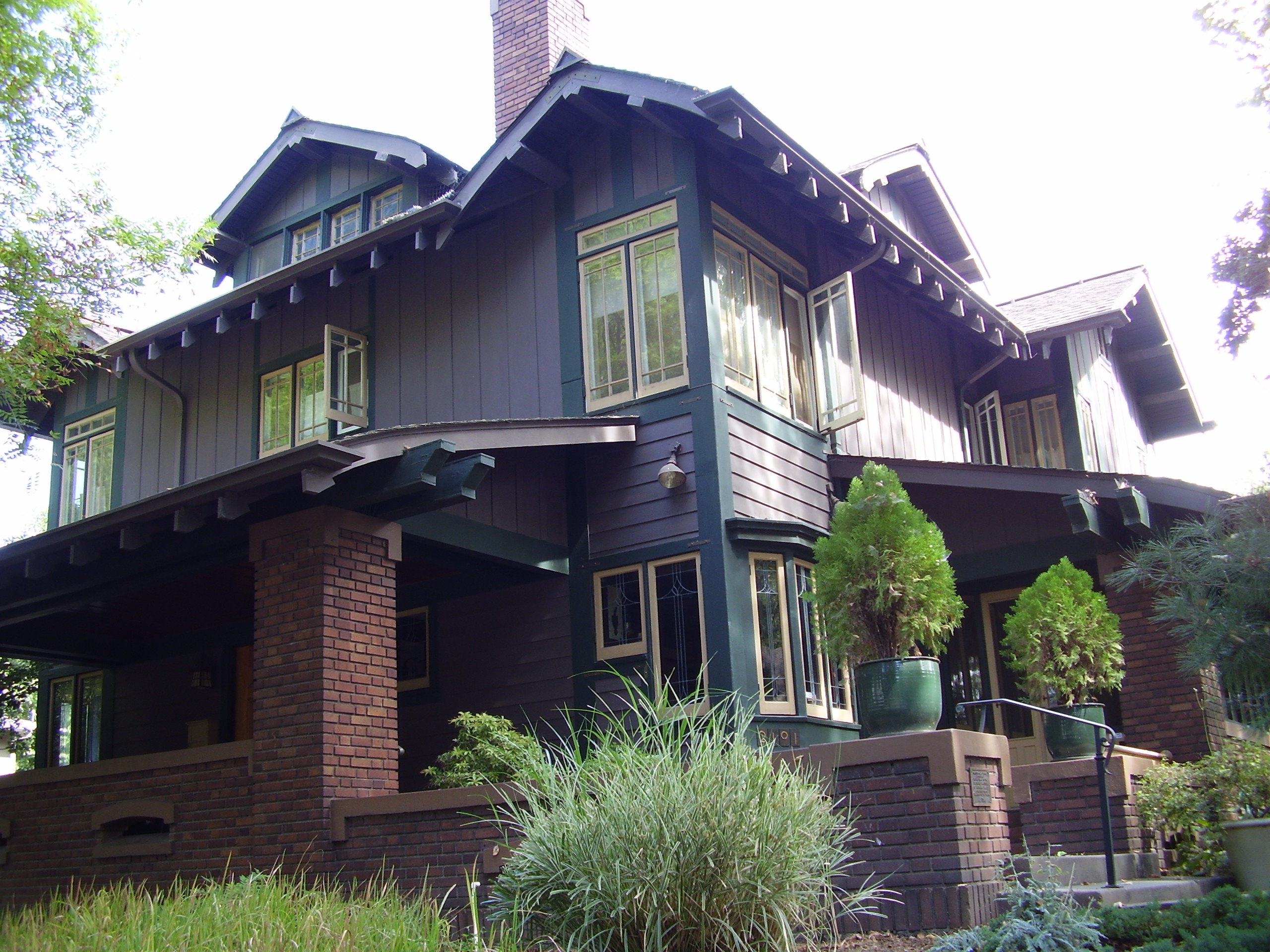
The State Architect's Only House
George Sellon became California's first State Architect in 1907, appointed in the aftermath of the 1906 San Francisco earthquake, when the state realized it needed someone to ensure its public buildings could survive the next one. Before he turned his full attention to government work, Sellon and his partner E. C. Hemmings took on one residential commission in Sacramento: a Craftsman-style home for Robert E. Cranston at the corner of G and Twenty-first Streets in the Boulevard Park neighborhood. They began the house as partners. They dissolved their partnership before the house was finished. The Cranston-Geary House, listed on the National Register of Historic Places, stands as the only residential project the two architects are known to have designed together -- a collaboration preserved in wood, glass, and leaded panes long after the collaboration itself ended.
A Partnership Measured in Months
Sellon and Hemmings had both built reputations outside Sacramento before joining forces. When California created the State Architect position after the earthquake, both men were candidates. Sellon won the appointment in 1907. The two formed their architectural firm regardless, setting up a Sacramento office to pursue private commissions alongside Sellon's government duties. On March 14, 1909, the Sacramento Union reported that Robert E. Cranston was beginning work on a $10,000 residence designed by Sellon and Hemmings. The building permit, issued on May 20, 1909, increased the estimate to $11,000. By early August 1909, the partners dissolved their firm -- while the Cranston house was still under construction. Both architects continued designing homes in Sacramento independently, including at least two more in the Boulevard Park neighborhood, but they never again worked as a team.
What Twenty-Five Thousand Dollars Built in 1909
When the Geary family purchased the house three years after its completion, a Sacramento Bee journalist reported the construction cost had exceeded $25,000 -- more than double the original estimate and a staggering sum for a residential property in early twentieth-century Sacramento. The money showed. The two-story frame dwelling expressed the Craftsman ideal with an originality that set it apart from the many Sacramento homes of the same era that merely borrowed Craftsman elements. Where other houses nodded toward the style with a bracket here or an exposed beam there, the Cranston house committed fully. The result was a home that architectural historians would later call an exceptional example of California Craftsman architecture, distinctive enough to earn a place on the National Register of Historic Places.
Wood, Glass, and the Craftsman Ideal
Step inside the Cranston-Geary House and the first thing you notice is the woodwork. The dining room walls are clad in stained wooden panels, each piece carefully fitted and finished to a warm, dark gleam. The study -- called the den in 1909 -- is entirely surfaced in wood: paneled walls, a beamed ceiling overhead, the room wrapped in timber like the interior of a fine ship's cabin. Leaded glass windows punctuate the first floor, their geometric patterns filtering Sacramento's flat valley light into something more complex. These are not decorative afterthoughts but structural commitments to the Craftsman philosophy that materials should be honest, craftsmanship should be visible, and a house should reveal the skill of the hands that built it. The Sacramento Old City Association has featured the home on its annual home tour and street fair, recognizing it as one of the neighborhood's architectural treasures.
Boulevard Park's Quiet Anchor
The Cranston-Geary House sits in Boulevard Park, one of Sacramento's earliest residential neighborhoods, developed in the years when the city was growing eastward from the river. The neighborhood's tree-lined streets and turn-of-the-century homes give it a character distinct from downtown Sacramento's grid of government buildings and commercial blocks. Known locally as the Bramson Home -- after a later owner -- the house has outlasted its architects, its original commissioner, and the Geary family who gave it its hyphenated name. It endures as the physical record of a brief partnership between two architects who competed for the same state appointment, briefly collaborated, and parted ways before their only joint residential project was complete. The house does not explain why the partnership ended. It simply stands at the corner of G and Twenty-first, offering leaded glass and stained panels to anyone who comes looking.
From the Air
Located at 38.58N, 121.48W in the Boulevard Park neighborhood of Sacramento, east of downtown. Sacramento Executive Airport (KSAC) is 3nm south; Sacramento International (KSMF) is 10nm northwest. Boulevard Park is a residential district roughly bounded by 19th to 24th Streets and E to H Streets. The neighborhood is identifiable from the air by its mature tree canopy and grid of residential blocks between downtown and Midtown. Best viewed at 1,500-2,500 feet AGL.