Crater Lake: The Deepest Lake in America, Born in Cataclysm
Crater Lake exists because Mount Mazama doesn't. About 7,700 years ago, a catastrophic eruption emptied the volcano's magma chamber; the mountain collapsed into the void, creating a caldera five miles wide and 4,000 feet deep. Rain and snow have been filling it ever since. No streams enter or leave - the lake is fed entirely by precipitation and drained only by evaporation and seepage. The result is the deepest lake in America (1,943 feet) and the ninth deepest in the world, with water so pure and blue that photographs appear artificially enhanced. The Klamath people witnessed the cataclysm and recorded it in oral tradition; their descendants recognized the story when geologists reconstructed the eruption.
The Collapse
Mount Mazama was a stratovolcano roughly 12,000 feet tall before its eruption. When it blew around 5700 BC, it ejected roughly 12 cubic miles of material - ash deposits reached as far as Saskatchewan. The magma chamber emptied; the summit collapsed; where a peak had stood, a hole remained. The eruption was among the largest in the Cascades' history, dwarfing Mount St. Helens. The Klamath people's oral traditions describe a battle between sky and earth spirits, the mountain's destruction, and the lake's creation - an accurate account preserved for nearly 8,000 years before geologists confirmed it.
The Water
Crater Lake is fed only by precipitation - roughly 66 inches of snow and rain annually. No rivers enter; no rivers leave. Evaporation and seepage balance the input, maintaining the lake level with remarkable consistency. The absence of sediment and pollutants makes the water extraordinarily clear; visibility extends down 100 feet or more. The depth and clarity produce the famous blue color: sunlight penetrates deep, red wavelengths are absorbed, and blue wavelengths scatter back. The lake appears almost impossibly blue, a color that seems artificial in photographs but is entirely natural.
The Island
Wizard Island rises from Crater Lake's western portion, a volcanic cinder cone formed after the caldera collapse. The island reaches 755 feet above the lake surface, with a smaller crater at its summit. Tour boats land at the island, allowing visitors to hike to the top. The island demonstrates that the volcanic system isn't dead - post-collapse eruptions built Wizard Island and a submerged lava dome called Merriam Cone. The hot springs on the lake floor suggest geothermal activity continues. Crater Lake isn't extinct; it's dormant. The distinction matters on geological timescales, if not human ones.
The Old Man
The Old Man of the Lake is a 30-foot hemlock log that has been floating vertically in Crater Lake for at least 120 years - likely much longer. The cold water (averaging 38°F) prevents decay; the wind moves the log around the lake. Researchers tracked it in 1938, finding it traveled more than 60 miles in three months. The phenomenon seems impossible - wood should float horizontally - but the waterlogged bottom keeps the Old Man upright while the preserved top section floats. The log has become a lake feature, as enduring and mysterious as the blue water itself.
Visiting Crater Lake
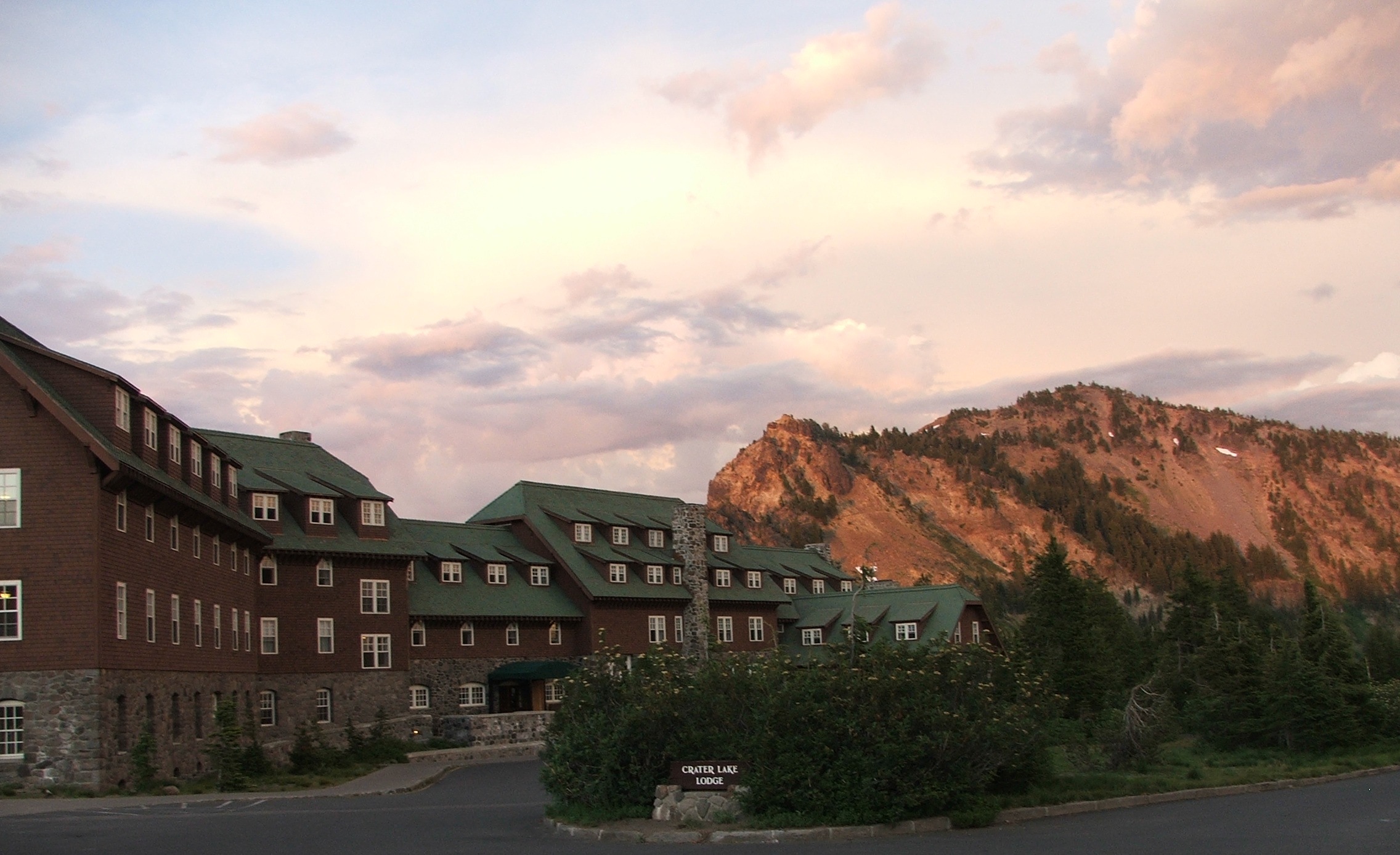
Crater Lake National Park is located in southern Oregon's Cascades, about 80 miles north of Klamath Falls. Rim Drive encircles the caldera; snow typically closes portions from October through late June. Rim Village provides visitor services and stunning viewpoints. The Cleetwood Cove Trail descends steeply to the lakeshore - the only legal access to the water. Boat tours to Wizard Island operate in summer; reservations are essential. Backcountry camping and hiking are available. The lodge at Rim Village operates seasonally; Crater Lake Lodge books months ahead. The experience is dominated by the lake itself - impossibly blue, impossibly deep, the result of a cataclysm that Native Americans witnessed and remembered.
From the Air
Located at 42.94°N, 122.11°W in the Oregon Cascades, about 80 miles north of Klamath Falls. From altitude, Crater Lake is unmistakable - a deep blue circle five miles wide, its color intense against the surrounding forest. Wizard Island rises from the western portion. Rim Drive traces the caldera edge. The absence of inlet or outlet streams is notable; the lake exists only because precipitation fills what a volcano's collapse left empty. What appears from altitude as a perfectly circular blue lake is the deepest in America - 1,943 feet filling a caldera created when Mount Mazama destroyed itself 7,700 years ago.