Crater Lake: The Deepest Lake in America
The blue doesn't seem possible. Crater Lake's color - an intense, almost surreal sapphire - results from depth and purity. At 1,943 feet, it's the deepest lake in America, the ninth deepest in the world. No rivers flow in or out; the lake is fed entirely by rain and snowmelt, filtered through volcanic rock that removes particulates. Light penetrates deep into the water; everything except blue is absorbed. The result is color that photographs struggle to capture and that visitors struggle to believe. The lake fills a caldera - the collapsed remains of Mount Mazama, which erupted 7,700 years ago with force that dwarfs any modern eruption. The mountain that was became the lake that is.
The Eruption
Mount Mazama once rose perhaps 12,000 feet, a major Cascade stratovolcano. About 7,700 years ago, a cataclysmic eruption ejected roughly 50 cubic kilometers of magma - 42 times Mount St. Helens' 1980 output. The eruption emptied the magma chamber; the mountain collapsed into the void, creating a caldera 6 miles across and over 4,000 feet deep. Ash spread across eight states and three Canadian provinces. The Klamath tribes witnessed the eruption; their oral histories describe the battle between Llao (of the below-world) and Skell (of the above-world) that created the lake. The caldera gradually filled with water over centuries, sealing Mazama's violence beneath impossible blue.
The Water
Crater Lake has no inlet or outlet streams. Water enters only as precipitation - about 70 inches of snow and 24 inches of rain annually. Water leaves only through evaporation and seepage. The lake maintains a nearly constant level, the balance between input and output stable over centuries. The absence of external streams means minimal sediment or nutrients; the water is among the purest in the world. Clarity measurements have reached 143 feet - you can see objects at depths most lakes never achieve. The purity creates the color; sunlight penetrating deep water loses all wavelengths except blue. The lake's appearance is function of its isolation.
The Island
Wizard Island rises 755 feet above the lake surface - a cinder cone that formed after the caldera collapse, erupting from the lake floor. The island's perfectly conical shape demonstrates classic volcanic architecture, its crater visible at the summit. A boat tour (seasonal) provides access; a trail climbs to the crater. A smaller island, Phantom Ship, near the southern shore, is a volcanic remnant weathered into spires that resemble a sailing ship, especially in fog. The islands remind visitors that Crater Lake is active volcanic landscape, not static scenery. The Cascades remain geologically alive; another eruption would fill, not drain, the caldera.
The Park
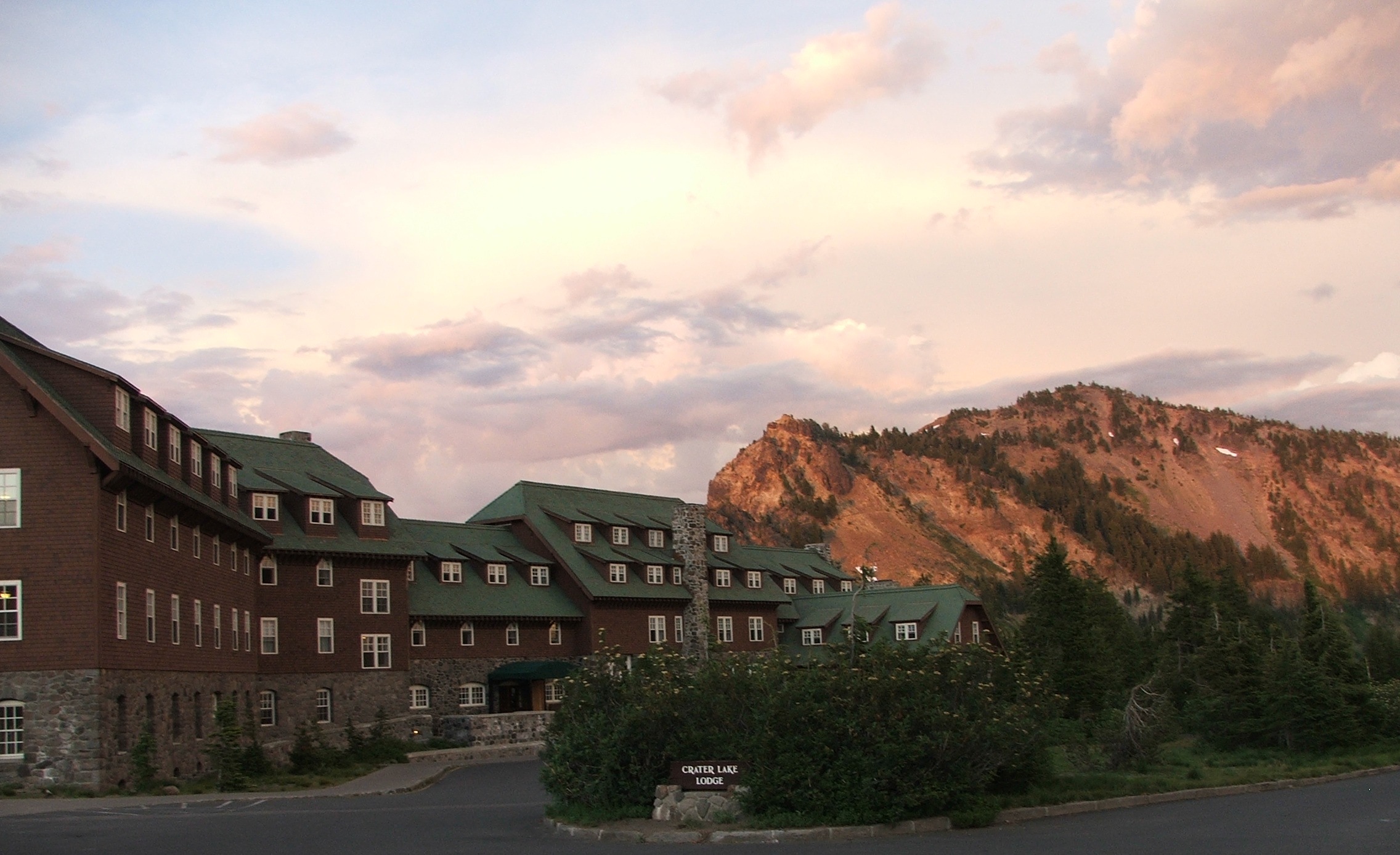
Crater Lake National Park was established in 1902, the fifth oldest national park. The Rim Drive circles the caldera, 33 miles of road offering over 30 overlooks. Snow closes portions of the road typically from October to July; only the south entrance remains open year-round. The lodge and café at Rim Village provide services during summer. Winter brings cross-country skiing and snowshoeing, with snow depths exceeding 40 feet. The park protects more than the lake - old-growth forests, wildflower meadows, and volcanic features extend beyond the caldera rim. The lake is the centerpiece; the park is ecosystem.
Visiting Crater Lake
Crater Lake National Park is located in southwestern Oregon, approximately 80 miles northeast of Medford via Highway 62. Rim Drive is fully open only July through October; check conditions. The south entrance and Rim Village are accessible year-round, though chains may be required. The boat tour to Wizard Island operates summer only, accessed via the steep Cleetwood Cove Trail - the only legal lake access. Lodging is limited inside the park; Klamath Falls and Medford offer more options. The best views are at sunrise and sunset when the color intensifies. Afternoon clouds are common; morning visits often offer clearer conditions. The experience of seeing water that blue justifies the journey, regardless of season.
From the Air
Located at 42.94°N, 122.11°W in the Cascade Range of southwestern Oregon. From altitude, Crater Lake is immediately distinctive - a nearly circular body of intense blue water surrounded by the caldera rim. Wizard Island's cone is visible in the lake's western portion. The Rim Drive traces the caldera edge. The surrounding Cascade peaks include Mount Shasta to the south in California, Mount Thielsen to the north. The lake's color is visible from significant altitude - the blue contrasts sharply with surrounding forest green. The caldera's scale is apparent: this was once a major mountain, now a bowl filled with water. What appears from altitude as an impossibly blue circle is the deepest lake in America, filling the grave of a volcano.