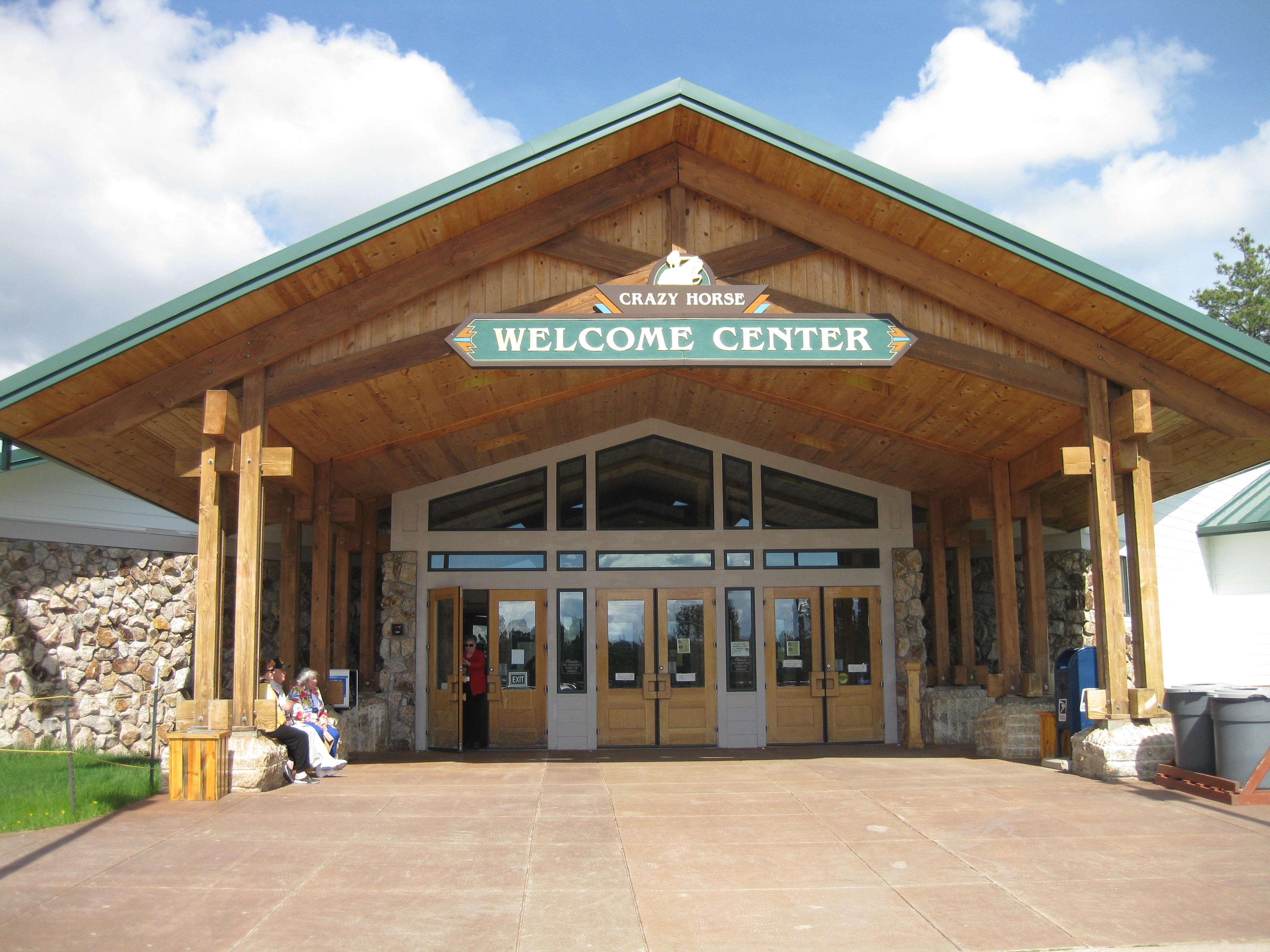
Crazy Horse Memorial
Seventeen miles from Mount Rushmore, in the same granite Black Hills, another mountain is being carved. Crazy Horse Memorial will eventually depict the Oglala Lakota warrior on horseback, arm extended, answering the question 'Where are your lands now?' with the reply 'My lands are where my dead lie buried.' The sculpture, when complete, will be 563 feet high and 641 feet wide - larger than all four heads of Rushmore combined. But after 75 years of blasting and carving, only Crazy Horse's face is complete. The project has been criticized as slow, self-aggrandizing, and contrary to Crazy Horse's wishes (he never allowed photographs). It has also been praised as a Native American answer to Rushmore. Either way, the mountain is being carved, generation after generation, work that may continue for centuries.
The Commission
The Crazy Horse Memorial was commissioned by Lakota Chief Henry Standing Bear, who wrote to sculptor Korczak Ziolkowski in 1939: 'My fellow chiefs and I would like the white man to know that the red man has great heroes too.' Ziolkowski, who had worked briefly on Mount Rushmore, accepted the challenge. He refused federal funding, insisting the memorial would be built by private donations. In 1948, Ziolkowski made the first blast on Thunderhead Mountain. He worked alone or with minimal help for years, living in poverty, driven by the vision of a mountain transformed. He died in 1982 without seeing the face completed.
The Sculptor
Korczak Ziolkowski was a Polish-American sculptor with a flair for the dramatic. He had won first prize at the 1939 World's Fair and briefly worked under Gutzon Borglum at Mount Rushmore before their relationship soured. Ziolkowski was temperamental, independent, and utterly committed to his vision. He and his wife Ruth raised ten children at the mountain; seven still work on the project. Korczak blasted and carved for 34 years, establishing the outline that would guide future generations. His deathbed instructions were specific: finish the project as designed, maintain private funding, and complete his dream. His family has continued the work.
The Progress
After 75 years, Crazy Horse's face was completed in 1998 - 87.5 feet high, larger than all of Rushmore. Work continues on the horse's head and Crazy Horse's extended arm. The memorial receives no federal funding; all work is funded by visitor fees and donations. Progress is slow because funds come slowly. Critics argue the family foundation has accumulated wealth while construction crawls. Supporters counter that refusing federal money preserves independence. The timeline for completion is measured in generations, not years. The horse's head may take decades more; the full figure might require a century.
The Controversy
Crazy Horse Memorial exists in a cloud of controversy. Some Lakota people embrace it as a tribute to their hero; others call it a desecration - Crazy Horse refused to be photographed in life, and carving his image into stolen land violates his memory. The Black Hills themselves are sacred to the Lakota and were taken illegally; some argue that carving monuments there honors the theft rather than protesting it. The Ziolkowski family's wealth and management practices have faced criticism. Yet the project continues, funded by millions who visit annually. The mountain is being carved whether or not all stakeholders agree it should be.
Visiting Crazy Horse Memorial
Crazy Horse Memorial is located on Avenue of the Chiefs (US 385/16) in the Black Hills, 17 miles southwest of Mount Rushmore. The visitor complex is open year-round; admission is charged. The view of the carving is from the visitor center and museum - vehicles cannot approach the mountain. The Indian Museum of North America and Native American Educational and Cultural Center are on-site. Laser light shows illuminate the mountain on summer evenings. Volksmarch participants can hike to the carving arm twice yearly (June and September). Custer has lodging; Rapid City is 30 miles northeast. Rapid City Regional Airport provides commercial service. The face is complete and impressive; the rest is a promise for the future.
From the Air
Located at 43.84°N, 103.62°W in the Black Hills of South Dakota. From altitude, Crazy Horse Memorial appears as a massive carving on Thunderhead Mountain - the completed face is visible as a white granite feature on the mountainside. The scale is enormous - the face alone is 87.5 feet high. Mount Rushmore is visible 17 miles to the northeast. The Black Hills forested peaks surround both monuments. Rapid City is 30 miles northeast. The Great Plains begin east of the hills. The contrast between the completed Rushmore and the work-in-progress Crazy Horse is visible from above - one a finished monument, the other an ongoing transformation of a mountain.