Crenshaw House
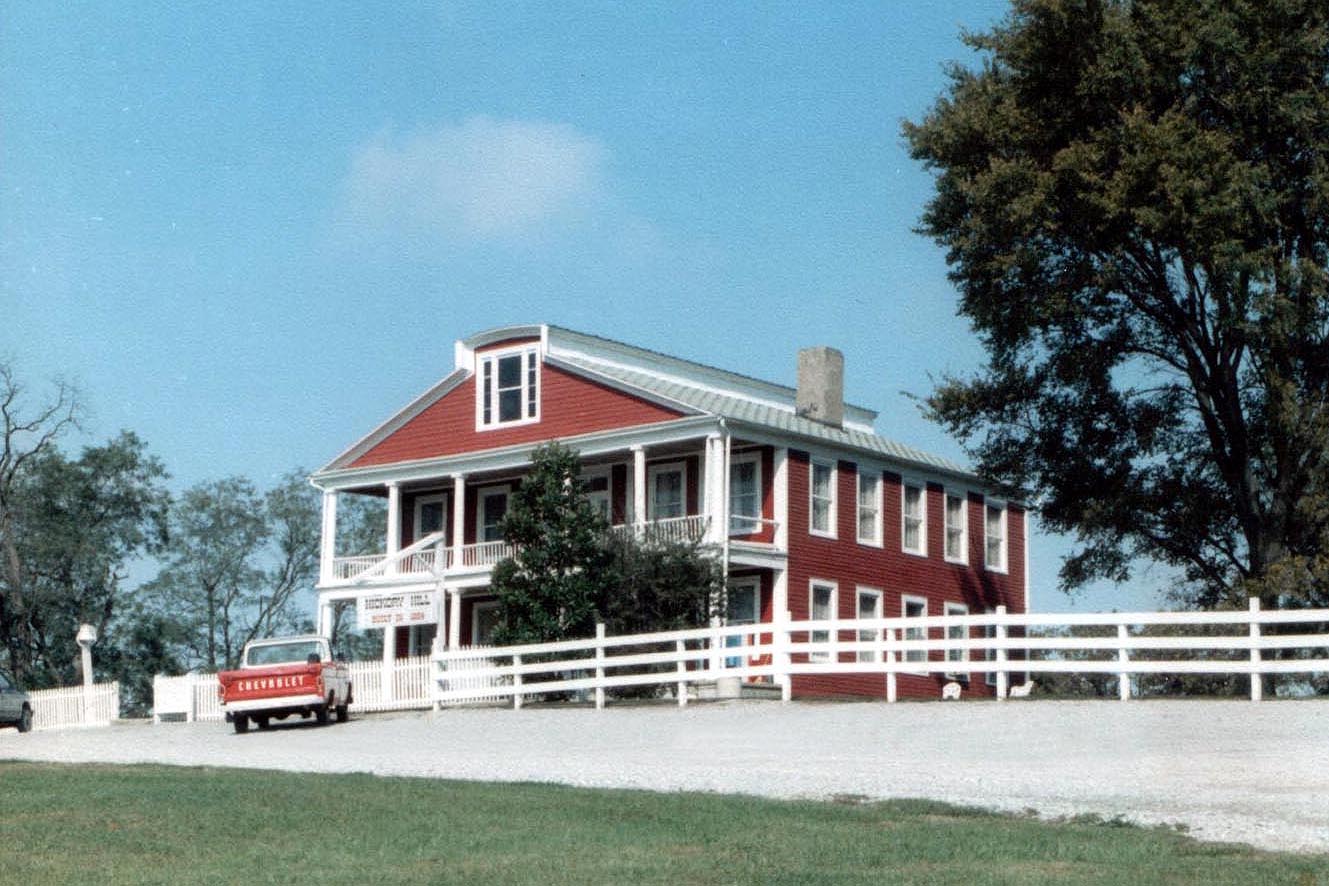
Illinois was a free state. That fact makes the attic of the Crenshaw House so much worse. Built in 1838 on Hickory Hill in Gallatin County, the mansion presents a graceful Greek Revival facade to the countryside -- columns, a wide porch, rooms designed with movable partitions that could convert into a ballroom. But the third floor told a different story entirely. There, narrow cells with heavy doors lined a cramped hallway, purpose-built for holding human beings. The man who built it all, John Hart Crenshaw, ran one of the most brazen criminal enterprises in antebellum America: kidnapping free Black people from a free state and selling them into slavery across the river.
Salt, Slavery, and a Convenient Loophole
Crenshaw's wealth came from salt. He leased the state-owned salt works at the Illinois Salines, two ancient saline springs along the Saline River near the town of Equality that had been important sources of salt since prehistory. Boiling brine into usable salt was backbreaking, dangerous labor, and Illinois law provided a loophole: enslaved workers could be leased from Kentucky to work the salines. Crenshaw exploited this arrangement ruthlessly, but he went far beyond it. He and networks of accomplices kidnapped free Black men, women, and children living in Illinois and spirited them across the Ohio River into slave states, where they were sold. In 1838, Crenshaw and his brother Abraham used the fortune from salt to build the mansion on Hickory Hill, a few miles from the salt works near the town of Junction.
A Ballroom Upstairs, a Prison Above That
The house was designed for dual lives. The second floor featured a hall with movable partitions that could be opened into a grand ballroom for entertaining. In September 1840, Abraham Lincoln himself -- then a state representative attending debates in Shawneetown and Equality -- attended a ball the Crenshaws hosted in honor of the occasion. The future president danced on the second floor. What he knew or did not know about the floor above is lost to history. The third-floor attic contained a row of small cells with heavy wooden doors, fitted with iron rings and chains. This was where kidnapped free Black people were held before being transported south. The house earned its enduring nickname: the Old Slave House.
The Reverse Underground Railroad
While the Underground Railroad moved enslaved people north to freedom, Crenshaw operated in reverse -- seizing free people and dragging them south into bondage. In 2004, the National Park Service officially designated the Crenshaw Mansion as a station on the Reverse Underground Railroad, part of the Underground Railroad National Network to Freedom program. The designation acknowledged Crenshaw's role in condemning free Black citizens to slavery and recognized the house as a site of national historical significance. It stands as one of the few places in the country where the physical infrastructure of this lesser-known horror is preserved in brick and timber.
Tourist Attraction, Then Silence
For decades, the Crenshaw House operated as a private museum. Visitors paid to walk the cramped attic hallway and peer into the cells. Ghost hunters came too -- the house earned a reputation as one of the most haunted places in Illinois, with stories of unexplained sounds echoing from the third floor. In 1996, owner George Sisk Jr. retired and closed the museum. In December 2000, the Sisk family sold the house and ten acres to the state of Illinois for five hundred thousand dollars. The state closed it to the public while determining its future. Reopening would require extensive renovations, a new road and parking lot, and a separate structure with restrooms -- all estimated to cost at least seven million dollars. The mansion sits quietly on Hickory Hill, its columns still standing, its attic still intact, waiting.
From the Air
The Crenshaw House is located at 37.73N, 88.29W in southeastern Illinois, in Equality Township, Gallatin County. The mansion sits on Hickory Hill, a few miles from the town of Junction. The surrounding landscape is flat to gently rolling farmland along the Saline River valley. The nearest significant airport is Barkley Regional Airport (KPAH) in Paducah, Kentucky, approximately 30nm to the south across the Ohio River. Williamson County Regional Airport (KMWA) in Marion, Illinois, lies approximately 40nm to the west. The area is rural with scattered small towns -- look for the town of Equality along Route 1 and the Saline River as key landmarks. Best viewed from 2,000-3,000 feet AGL.